Fair Isle trip: Midnight storm

During my two weeks on Fair Isle, I was volunteering at the Bird Observatory bar. This meant that I could cover my accommodation costs by working in the evenings and go birding during the day. It was very enjoyable and worked out well. I was able to chat to those stopping at the Fair Isle Bird Observatory (FIBO) and Islanders, meaning I learnt even more about the island community and how the island functions.

Not only this, but it meant that I didn’t miss any birding during the day, or at night. On three different occasions, after my shift had finished, at 12 midnight I made my way down to South Harbour and the boat house to watch and experience storm petrels being rung.

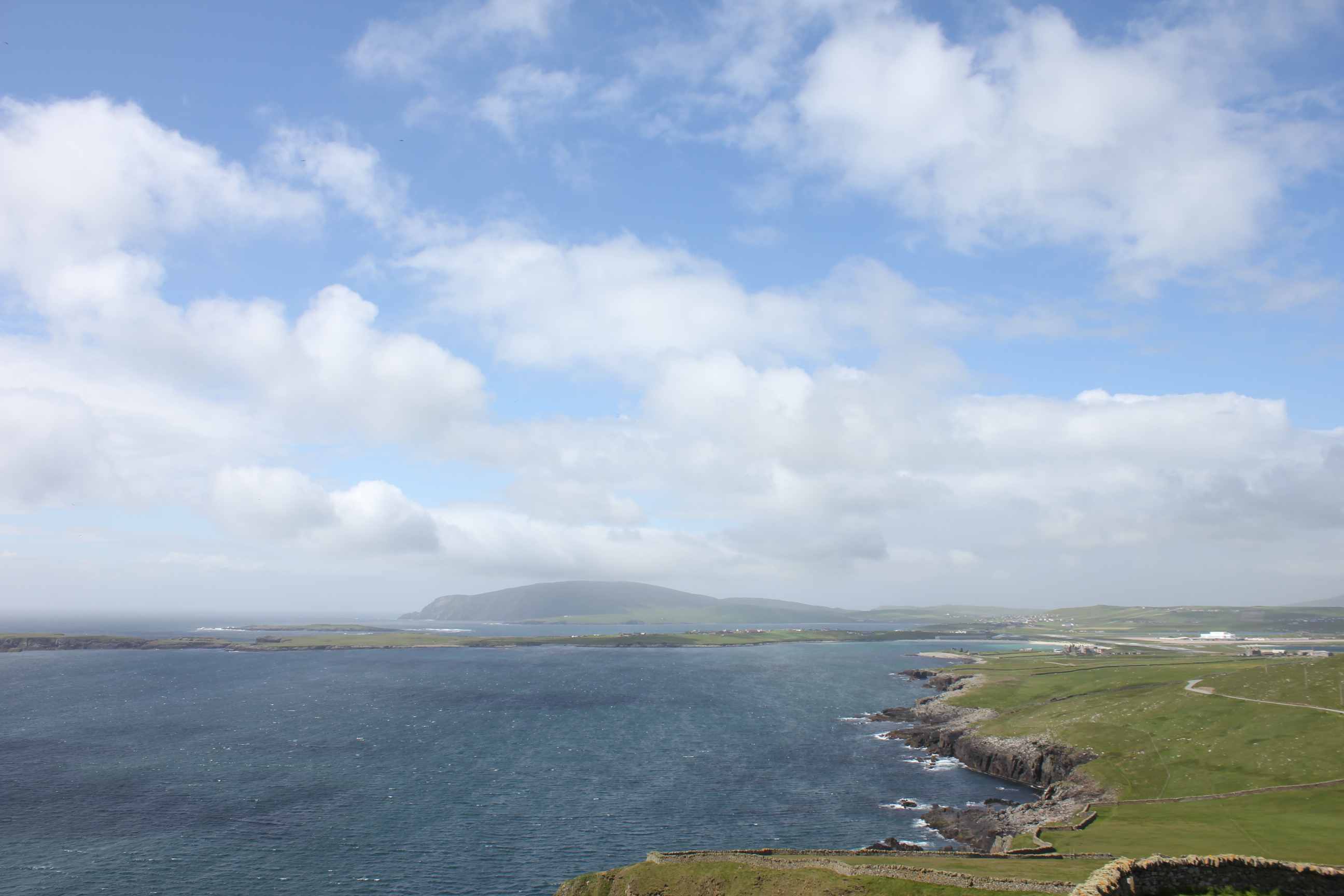
This was a superb experience for myself, mainly because I’d never seen a storm petrel before. However, I had seen many photographs and heard plenty of stories about how much of a fantastic bird they are. Standing outside at 1am in the morning, especially in such a remote location, you would expect it to be pitch black. In fact, it was almost light and felt more like sunrise. With a pink sky in the distance and the faint, washed out silhouette of Shetland.

The process of catching and ringing storm petrels included setting up mist nets in the shape of an ‘L’ then placing a speaker in the centre, which played the call of a storm petrel. Only one or two ringers sat close to the net whilst others (non-ringers and ringers) stood further back to avoid any overcrowding and so that the birds weren’t discouraged from the area. Once a bird flew into the net, it was quickly extracted and taken to ringers in the boat house who recorded measurements and rung the bird before it was released again.

The storm petrels that were caught were European Storm Petrels, which are the most common petrel species to the UK. However, at Fair Isle, they have recorded rarer species including Leach’s Storm Petrels and in the last few years, Swinhoe’s Petrel, which have only been recorded a hand full of times in the UK.

On my first evening, I stood well back from the nets with a group of others who were also keen to see a stormie. We attempted to focus our eyes on the nets to distinguish when a bird flew in, despite it not being pitch black, the nets (known as mist nets) can be difficult to see. However, it was obvious when a bird had entered the net as one of the ringers, those sat by the net, would suddenly run over to the bird. It was almost like watching a tennis match, but instead of the ball boys/girls retrieving tennis balls, they were retrieving storm petrels!

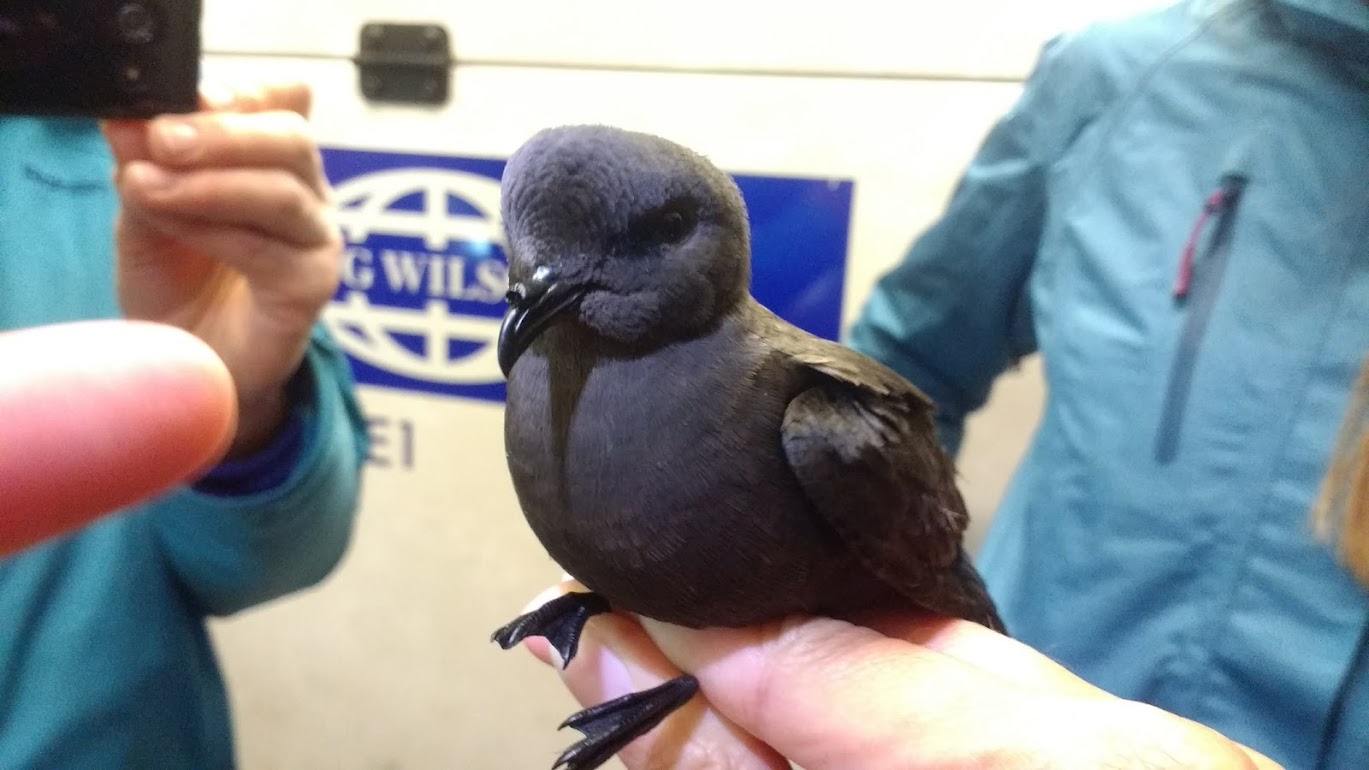
When the first bird was brought into the boat house to be rung, I almost couldn’t contain myself! The ringer held the petrel in a cloth bag, which I could see slightly moving as the bird inside wriggled about. In the bag, was my first storm petrel! As they brought the bird out of the bag, I had to bite down on my hand to prevent myself from making a noise so that I didn’t frighten the bird, but I was so excited! It was a bit smaller then I imagined, but the first thing I noticed was the smell. An incredibly distinctive smell which I wish I could capture and describe in some way. It was an almost pleasant scent though. By the end of the night, after letting a few birds go from the palms of my hands, my hands stunk of them! I really didn’t want to wash my hands. It just reminded me of how exciting the evening was and how much of a superb bird they are!

Stormies are hardy little things that spend most of their life out at sea in all kinds of conditions. Which is hard to believe when you see how delicate they look. Two of the birds I saw in the hand were in fact missing feet. This is due to them skimming their feet along the surface of the sea to collect one of their staple foods, plankton. However, this can prove dangerous, as sometimes a predatory fish may just take a nibble. Nonetheless, such deformities don’t seem to affect the bird’s chances. Spending most of their lives at sea, you can’t help but look at them in awe and wonder what they’ve seen and experienced. Thus, they have a great deal of character. The smell was definitely the best, along with the little bit of chattering they did whilst being handled. It is possible that Stormies can locate each other by smell whilst at sea. There have, in fact, been some dubious, controlled indoor experiments done of Leach’s to test whether, in make-shift mazes, they head towards the smell of their mate more than towards either no smell at all or other smells. It turns out, they head towards the smell of their mate. As they return to their nests during the night when it is likely pitch black, their use of smell is obviously important. They are incredible birds, and I really enjoyed learning about them from those at the observatory.

North West Way: One week to go

Exactly one week today, I will be setting off on my North West Way walk from Preston to Carlisle. At the moment, I’m really looking forward to getting stuck in and enjoying all of the fantastic scenery and places that I’ll pass along the way. The thought of spending all day, every day outside for 10 days is exciting and I look forward to birding along my way. The walks route will take me through some superb areas of countryside. From along the Ribble Way, Malham Cove and areas of the Yorkshire Dales. Many of the areas and paths that I’ll follow are ones that I haven’t before, therefore I’m very excited.

On the other hand, it’s going to be a challenge. The walk is 191 miles long and I will be doing this over 10 days. Meaning that after I include all the times I’m likely to get lost, on average, I’ll be walking 20 miles a day for 10 days. Along with this, I’ll be stopping in different accommodation every night and have to carry all the clothes and equipment that I’ll need for the 10 days in a rucksack. Physically and mentally, it’s going to be very tough. However, not only will I get to experience and visit some incredible areas, but I’m raising money for a very worthy cause. A cause which I’m very passionate about.

Swifts are superb birds. My favourite! However, this wasn’t always the case. There seems to be a story behind everyone’s favourite bird, by that I mean, why that bird is their favourite. For me, this is due to my trips to Spurn. Spurn is a brilliant place to see swifts on migration. In fact, right now great numbers are passing through daily. I remember on my first trip to Spurn, I joined other birders up at one of the points used to observe visible migration, known as Numpties. Within an hour, I’d seen more swifts then I’d ever seen in a single space of time before. This passage of streamline squawkers sent me into a phase of awe as I began to realise how brilliant they are.

There is no better way to spend a day then counting swifts on migration. Bird after bird, you never get bored, but in fact, more excited as the numbers increase and the thought of where they’re going curdles your mind. When I was revising for my A levels, there was no better way to encourage and motivate working then opening my window and listening to swifts.

It would be a real shame to see a bird favourited and enjoyed by so many decline further. Therefore, the research and work being done by the BTO is incredibly important. I am very pleased with the amount that I have raised so far and very thankful for all the donations I have received. If you haven’t yet, you can donate by clicking this link.

Fair Isle trip: Killer experience

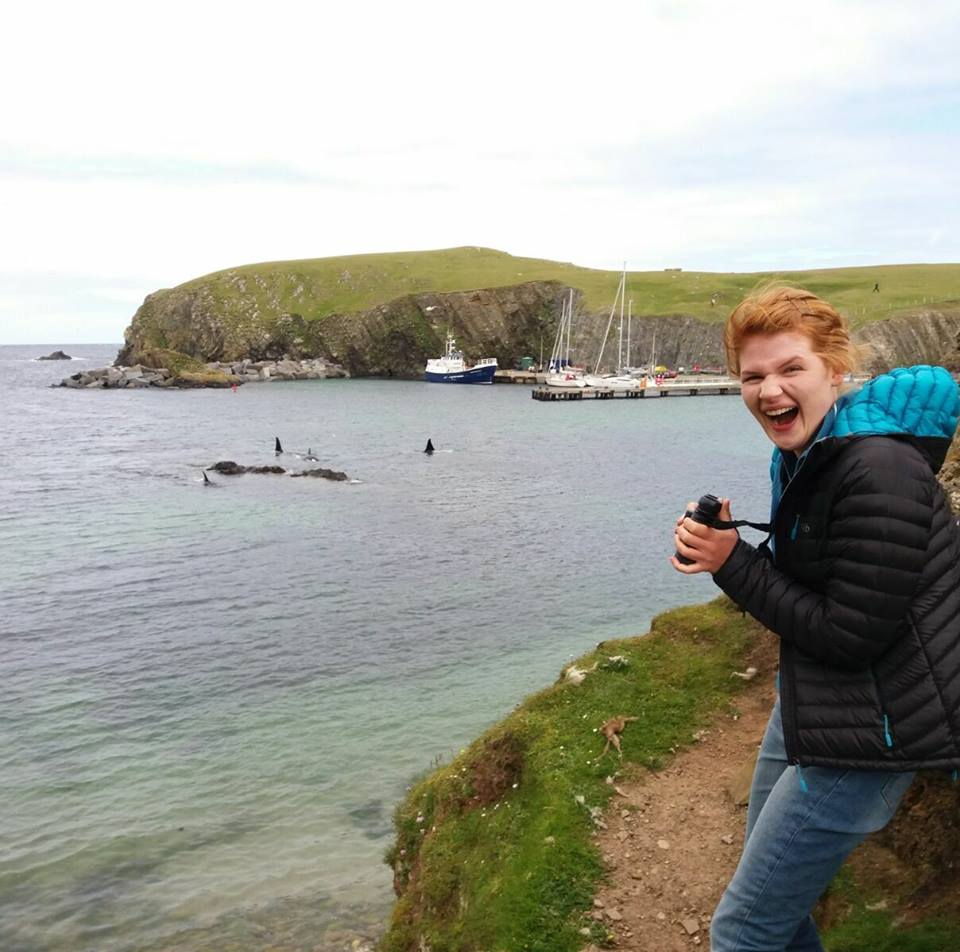
The population of Fair Isle is around 55. On the day that I arrived on Fair Isle, two guests stopping at the Fair Isle Bird Observatory accommodation were getting married. The whole island was invited to their wedding. The turnout was good, but not half as many as those who appeared when a pod of eight killer whales were sighted off the coast of Fair Isle on Wednesday afternoon.

They were first spotted in an area known as North Haven at around 14.20. At this time, I had just finished my lunch and was sat in the Observatory lounge drinking a cup of tea and contemplating what to do with my afternoon. All of a sudden, around the waters’ edge at North Haven, a couple of folk started running back and forth and making a fuss. We knew that something was up. At this point I had no idea what was going on, until someone shouted through the Observatory building ‘Killer Whales, North Haven’.

I had never been in such a panic in all my life. I grabbed the necessaries, my binoculars and coat, and fled down to North Haven. In doing so I tripped over multiple times, there was no time to do laces! The rush was surreal. Trying to describe the excitement at this point is impossible, I was about to see my first killer whale! Not only this, but the pod was only around 100 metres from where I stood. ‘Where I stood’ is a bit of an exaggeration. I could barely stand up, keep still or shut up.

We observed the pod in North Haven from 14.30 until 14.35. In swimming out of view, they left behind a bunch of giddy and breathless observers. Along with an injured seal, which towed itself across the bay before dunking out of view.

15 minutes later, we were treated to a second experience. The pod swam around the headland and into South Haven. There they displayed around the perimeter of the bay before carrying on south. Here, me and my friend Sarah watched from the headland above, meaning we got a bird’s eye view of the whales moving through the water. Flat areas appeared on the surface of the sea, we knew that an appearance was looming. The suspense was unbearable. You knew at any moment one would come into view.

In South Haven, we watched them for around 20 minutes before they continued moving south. This time around, we drove to the south point of the island, where it was highly likely they were going to pass. And there they were. We scrambled down the cliff and across the rocks to get as close as possible to the waters’ edge. Again, they were a matter of metres offshore. Here we had the privilege of watching them for 25 minutes until they disappeared.

The excitement and hysteria of seeing such a fantastic species, and so close, was incredible! Perhaps one of my greatest wildlife experiences.

You can view photos of the pod, taken by FIBO staff, by clicking here.

A video recorded by the FIBO.

Fair Isle trip: An unexpected two days on Shetland

I knew that travelling to Fair Isle by public transport wasn’t going to be easy. After my last A Level exam on Thursday, I caught the train up to Aberdeen on Friday morning, which took 7 hours, then the overnight ferry from Aberdeen to Lerwick, Shetland. Despite my lack of sleep on the ferry due to the excitement of visiting Shetland and Fair Isle for the first time, the crossing was fantastic. From the boat, I spotted three dolphins just after leaving Aberdeen and got splendid views of fulmars, gannets, auks and other sea birds up until 11pm. Stepping off the boat at Lerwick, in terms of climate, was like stepping back 2 months in time. A spring morning: crisp and a bit chilly. Quite different to the 30 degrees and sunshine that I’d experienced back home just a few days before.

Once I’d arrived on Shetland, I had to get the bus from Lerwick to Grutness, where I was due to be getting the ferry to Fair Isle. On the bus journey, I got my first view of Shetland. I was absolutely memorised by how beautiful the scenery was. It partly reminded me of areas of the Peak District where I’ve spent hours walking, but this was contrasted with an incredible coastline and some spectacular formations. The bus journey was quite an experience, even the bus driver was a character. At the post office he pulled up, leaving the bus running, and ran in. He then returned with a bottle of Iron Brew. At the junction of my stop, he pronounced with his broad highland accent ‘Grutness’.

Whilst walking down to the ferry terminal, lugging my suitcase, I paused every few metres to watch the common terns doing their thing over the water. I arrived at the terminal 40 minutes early so once I’d found the waiting ‘shed’, I dumped my luggage, grabbed my binoculars, braved winds that I hadn’t experienced since at least January, and explored the water’s edge. Immediately after stepping out of the waiting room, a Bonxie (Great Skua) flew straight over my head. Wow! This was very exciting! Skuas are one of my favourite birds and to see one that close when I’m used to watching them miles out at sea, was incredible! It wasn’t long until I’d seen a few more bonxies, along with lots of fulmars, common terns, a pair of common scoter with chicks on the sea and a few auks.

It was a good job that I enjoyed the bus ride so much and a good job that I’d fallen in love with Shetland already, as the next morning I found myself back on the same bus heading for Sumburgh. After waiting at the ferry port well past the time that the boat was supposed to depart, I discovered that due to the weather, all sailing had been cancelled. Thus, I had to sort some accommodation for two nights as it was unlikely that there would be any sailing until Monday now. Although this was a bit of pain, I seized the opportunity of spending some time on Shetland for the first time.

After researching the best places to visit, I concluded that since I was relying on public transport, I would visit an area known as Sumburgh Head. The area is an RSPB nature reserve at the very south of the island. On the cliffs in the area, there are breeding seabirds such as guillemots, razorbills, puffins, fulmars, along with skuas (Bonxies and Arctic) breeding on the hills nearby and the fairly regular orca sightings. The bus ride to Sumburgh was another interesting journey. This time an oystercatcher got hit by the bus! Once I arrived, since I’d missed my morning cup of tea, I headed for the café. En route, I watched an Arctic Skua mobbing common terns and observed the puffins, fulmars, cormorants and other birds on the cliff side.

The view from the café was incredible. It looked over the Sumburgh area with views of lovely Shetland beyond. As I sat sipping my tea (I opted out of a slice of cake as I had a bag of jam donuts for lunch), I watched skuas and fulmars gliding past at eye level. A fantastic experience.

Following this, I found myself a sheltered area along the cliff, set my scope up and did some sea watching for a few hours. I had an excellent day. I particularly enjoyed flicking from sea watching to observing those birds on the cliff side. The skuas were the highlight though. Despite there only being a few individuals about, observing them so close was fantastic! The only other place that I had seen skuas before was at Spurn. A part from the odd bird closer inland, I’m used to seeing little dots through my scope that are miles out at sea, so this was something special!

However, little did I know that in 24 hours’ time I would have arrived on Fair Isle and be watching arctic skuas with chicks and on eggs.