GE2015 Day Five: Wildlife Crime

If you read my introduction blog you’ll know that throughout this week, running up to the general election, I am doing a blog a day about some key issues which affect wildlife in the UK and in some cases on a world wide scale. As I only have six days and I’m currently taking my GCSEs I’ve only been able to include six topics but of course there are many more. With these blogs I hope to show people the problems our wildlife faces, what we can do, who it affects, what will happen if we don’t address the problem, see if there’s been any mentions in party manifestos and much more! I’m also trying to exaggerate the fact that we should be voting for nature and the environment. Along with sending the posts to party leaders, MPs etc. It’s key that we address problems facing wildlife now so it’s not too late as when it is too late we’ll be in serious trouble.

Wildlife crime is a big subject to cover. First of all, the species of which the crime has been committed against, then what type of crime it is, e.g. shooting, poisoning. Then onto the law about this crime, how the criminal is caught, how it’s policed and much more. In an urban area say someone breaks into a shop it has most likely been caught on CCTV so it’s easy to catch the criminal, it’s most likely obvious that this crime has been committed and people know full well this is a crime too. For wildlife though, say in rural areas, the story is completely different. For a starters there is no CCTV so it has to be done by people themselves. But if there are people around they may not notice as they don’t realise this is a crime and therefore don’t report it. So how is this criminal supposed to be caught or punished? If there’s no evidence of what they’re doing and there’s no idea that they’re committing a crime anyway then there’s no hope! Also there is the worry of the issues not being policed properly, wildlife crime is rising yet there are still only a few wildlife crime officers for an area. In most cases the wildlife crime officers are just normal officers and deal with wildlife crime as a part time job. Fortunately in some cases people do realise what they’ve seen, for example wildlife enthusiasts which are aware of the on goings, and saboteurs.

In this blog I’m going to go through some examples of crimes against wildlife, the party manifestos, and how we need to stop wildlife crime through things like the general public which will bring me nicely on to tomorrows topic about inspiring and educating the next generation.

There are lots of different types of wildlife crime which are all awful and towards different species, whether it be here in the UK or on a global scale. On this blog I’m only going to look at birds and mammals, then more specifically within those topics.

Birds

The Wildlife and Countryside Act 1981 is the primary legislation which protects animals, plants, and certain habitats in the UK. This obviously includes wild birds. However this gets quite complicated as this Act only covers species which are resident or are a visitor to the European Territory of any member in a wild state. Birds including wood pigeons, carrion crow, rooks, magpies, jackdaws and gamebirds (within the open season) are legal to shoot under a General License.

Other protection for birds (under the Wildlife and Countryside Act 1981 – Part 1) include

  • Kill, injure or take any wild bird
  • Take or destroy the egg of any wild bird
  • Take, damage or destroy the nest of any wild bird whilst it is in use or being built
  • Use traps or similar items to kill, injure or take wild birds
  • Disturb any wild bird listed on Schedule 1 while it is nest building, or at a nest containing eggs or young, or disturb the dependent young of such a bird.

All these types of crimes against birds takes place. It’s horrible to know this as it shows people don’t appreciate, understand or enjoy such things which give many of us so much pleasure and happiness. From amateur bird watchers which watch the birds visit the garden fielders to those who are avid and experienced birders who will spend a life time enjoying them. Not to mention the whole ecosystem and diversity they are part of within our landscape and countryside.

Punishment

The maximum penalty that can be imposed for an offence under the Wildlife and Countryside Act (single bird, nest or egg) is a fine of up to £5000 and/or six months imprisonment.

Mammals

Unlike birds the law for mammals varies, mainly from species to species. Even though all of our British mammals are very important and equal I have decided to go through three different species to give a taster.

Badgers

Even though Sundays blog was partly to do with the welfare of badgers I have decided to include them again here. As mentioned before badgers are highly protected however experience disgusting crimes against them. Badgers actually have their own Act to protect them which you can see here – http://www.legislation.gov.uk/ukpga/1992/51/contents

As stated above, badgers are protected under the Badgers Act 1992 and any incident involving a badger is most likely to be a crime. A sum up of laws on this Act include

  • Kills, injures or takes a badger or attempts to
  • Treat a badger in a cruel way
  • Dig for a badger
  • Disturb or damage the sett
  • Uses any badger tongs in the course of killing or taking, or attempting to kill or take, a badger
  • Causing a dog to enter a sett
  • Disturbing a badger when it is occupying a badger sett

Recently I’m regularly seeing horrific stories in the news about cruel acts against badgers which is truly disgusting. This is most likely linked to the recent badger cull.

Bats

When you think of wildlife crime and mammals I doubt bats come to mind. However in Britain bats and their roosts are protected by both domestic and international legislation. Bats are protected under the Wildlife and Countryside Act 1981, the Countryside and Rights of Way Act 2000, the National Environment and Rural Communities Act 2006 and the Conservation of Habitats and Species Regulations. This is the legislation for England and Wales.

To sum the up, crimes against bats include

  • Deliberately capture, injure or kill a bat
  • Intentionally or recklessly disturb a bat in its roost or deliberately disturb a group of bats
  •  Damage or destroy a bat roosting place
  • Posses or advertise/sell/exchange a bat (dead or alive)

Again it’s really important that these laws aren’t broken as in recent decades bats have declined and therefore need urgent protection.

 Deer

I have decided to choose deer as they are again different to the two subjects above. The laws around deer are similar to those of the badger as they are mainly protected under a particular act which is the Deer Act 1991. In the UK we have six species of deer, of these two are truly native (Roe and Red deer) whilst the other four (Muntjac, Fallow, Chinese Water and the Sika deer).

Like I mentioned about grouse before they can only be shot at certain times of the year, these vary for the different species. Landowners are also allowed to shoot deer if they are shown to be causing damage.

From the Deer Act 1991 here are a few points I have summarised

  • Shoot from a moving vehicle
  • Shoot at night
  • Shoot out of season
  • Use anything except legal firearms to kill deer

Again deer poaching is another problem across the country. When I go along to my local police forces wildlife crime meetings it’s obvious that this issue is popular in the country.

Working together

As there can’t be security cameras dotted around the countryside or paid workers waiting patiently behind a tree for someone to commit a crime we have to think of a different solution. One solution is everyone being aware of the crimes which take place within the countryside and understand how they’re just as bad as urban crimes. To do this we obviously need to educate people so they know what to look out for and know why it’s against the law. This can be done by educating the next generation which is vital to end these hideous ongoings in our countryside. In tomorrows blog I will be going into more detail about this and other reasons into why we need to inspire and educate the next generation.

Manifestos

When looking through the manifestos for subjects relating to wildlife crime this is what I found:

Labour – in the Labour manifesto there was the mention of strengthening the hunting act (the idea of hunting with a dog/dogs) and dealing with wildlife crimes associated with shooting.

UKIP – Nothing

Conservative – They say that they will protect hunting, shooting and fishing, by this they mean protect the ableness to do it. They will also repeal the hunting act.

SNP – Nothing

Plaid- Nothing

Greens – In the Greens manifesto it says that they will ban the practise of grouse shooting and other ‘sport’ shooting.

GE2015 Day Three: Badgers and Witney March

If you read my introduction blog you’ll know that throughout this week, running up to the general election, I am doing a blog a day about some key issues which affect wildlife in the UK and in some cases on a world wide scale. As I only have six days and I’m currently taking my GCSEs I’ve only been able to include six topics but of course there are many more. With these blogs I hope to show people the problems our wildlife faces, what we can do, who it affects, what will happen if we don’t address the problem, see if there’s been any mentions in party manifestos and much more! I’m also trying to exaggerate the fact that we should be voting for nature and the environment. Along with sending the posts to party leaders, MPs etc. It’s key that we address problems facing wildlife now so it’s not too late as when it is too late we’ll be in serious trouble.

Today’s blog is slightly different to the last two as I would of done a blog today anyway about the march I went on in David Cameron’s constituency, Witney, yesterday. But as I don’t want to go out of sink with my General Election blogs I’ve decided to do this one about badger persecution and the cull, then include the march I went on in Witney yesterday.

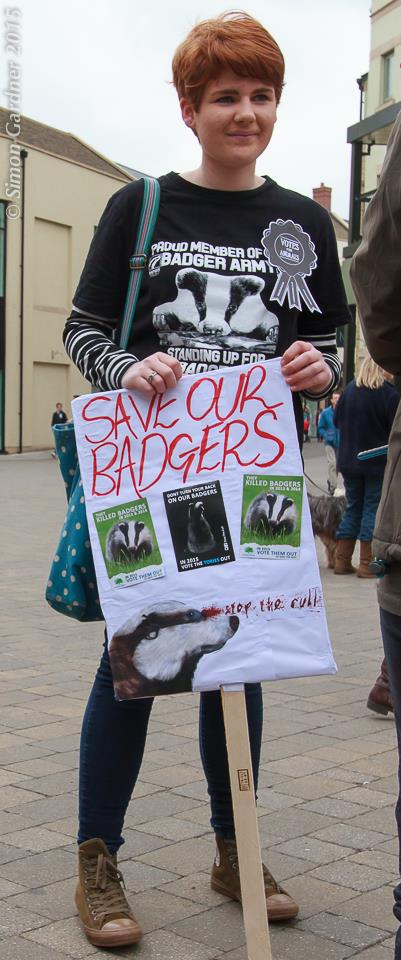
In the UK badgers are one of the most protected species under The Protection of Badgers Act 1992 however they are the most persecuted. Since the badger cull was rolled out this has brought all sorts of problems for badgers, for example an increased number of cruelty against them. Every month around 2000 badgers are illegally killed. This includes petrol being poured down setts, snares, dog fighting, glass being put down setts and many more disgusting acts. What makes it worse though is the cull which has been rolled out over the past two years, which has led to an increase in badger persecution, doesn’t even work. Even though badgers have always been a victim to wildlife crime, over the past few years, due to the cull, hundreds and thousands of badgers have been slaughtered and targeted by cruelty.

The badger cull is a very controversial subject. Some think it is humane and effective yet many others disagree with this and believe that it is barbaric, inhumane and inefficient. This is a mixture of a political and scientific debate. There are lots of reasons behind why the badger cull won’t work, I’m not going to go into detail on this post but you can read previous posts where I have spoken about why it won’t work or follow this link to the Badgergate website where Chris Cheeseman explains all – http://www.badgergate.org/guest-articles/why-a-badger-cull-wont-work/

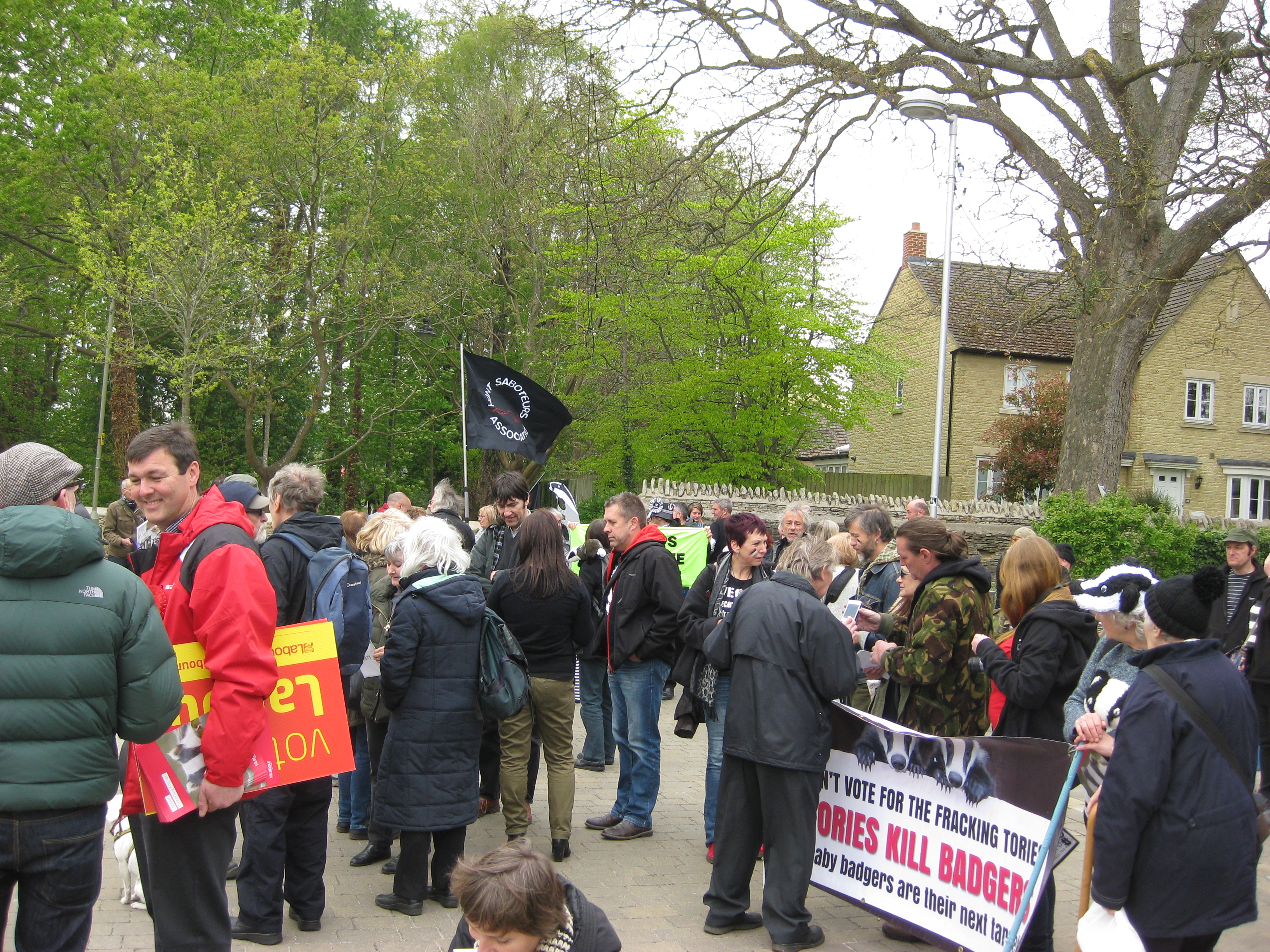
As I just mentioned, a lot of people disagree with cull. So much so that over the past 18 months 30 marches have brought thousands of people from all round the country together to protest against it. Yesterday I went along to the last march before the General Election on Thursday. This wasn’t as such a badger march but it was a march to show how much we care about wildlife and how much it matters. The march took place in Witney, Oxfordshire. This is David Cameron’s constituency and is a Conservative strong hold. Unfortunately even though we’d invited Mr Cameron he didn’t come along but other parties also hoping to represent Witney did. This was the Green Party candidate, Stuart Macdonald, and the Labour candidate, Duncan Enright.

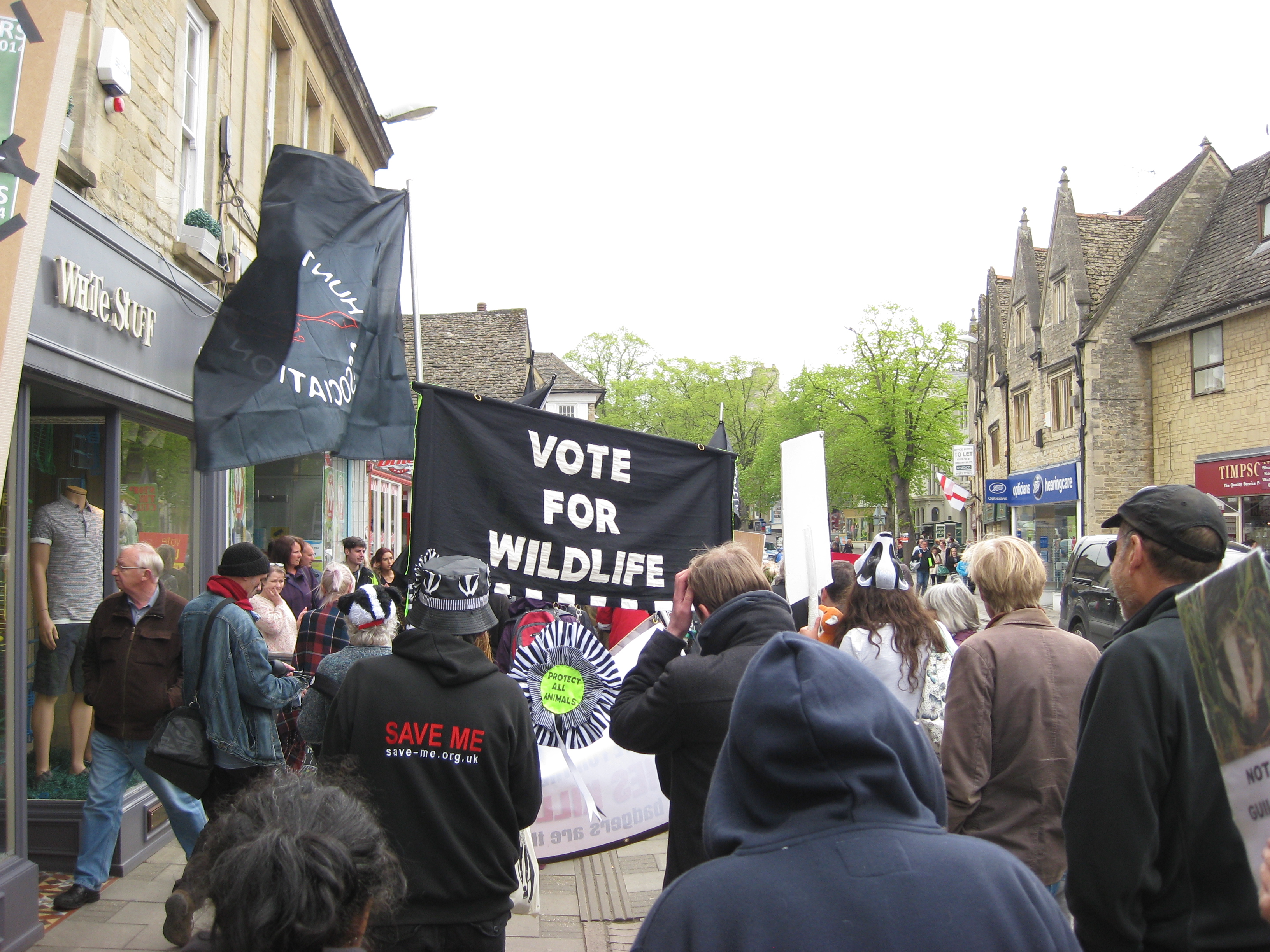
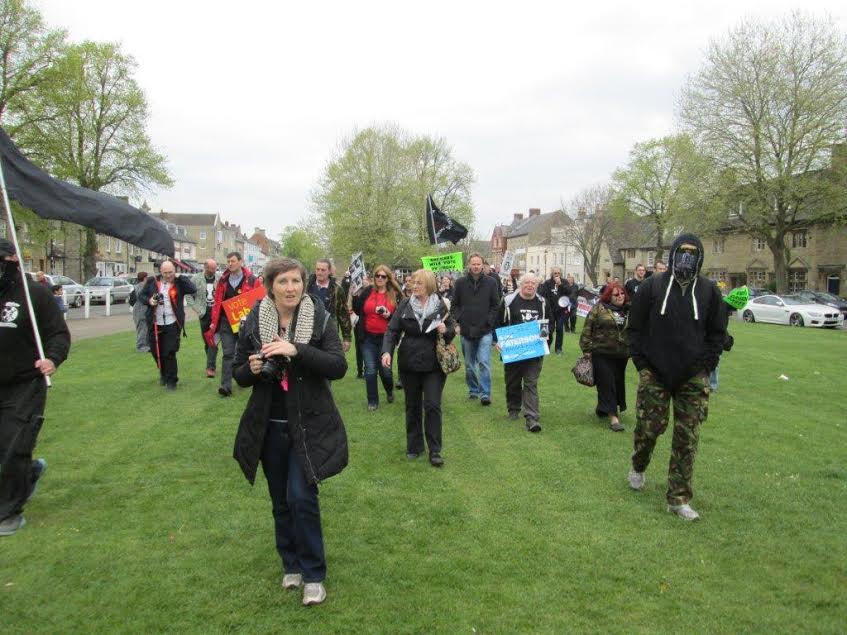
For 1pm everyone on the march met in the town centre. Photos were taken of the banners, placards and supporters, and it was good to catch up with some familiar faces and also meet some new people too. Once we were all ready we set off down the high street. Overall there was probably about 100 people. Even though there wasn’t as many as in Worcester the week before we all made some noise and held our banners and placards high. Whilst making our way through the town we definitely got plenty of attention as it was a busy Saturday afternoon so there were lots of people about. Again it was a great feeling to be surrounded by these people and it was a fantastic atmosphere. I went on my first march a few months back and since then I have tried not to miss any as they are so great to go on. Even though they are good to go on I hope yesterday’s was my last, depending on what happens on Thursday.

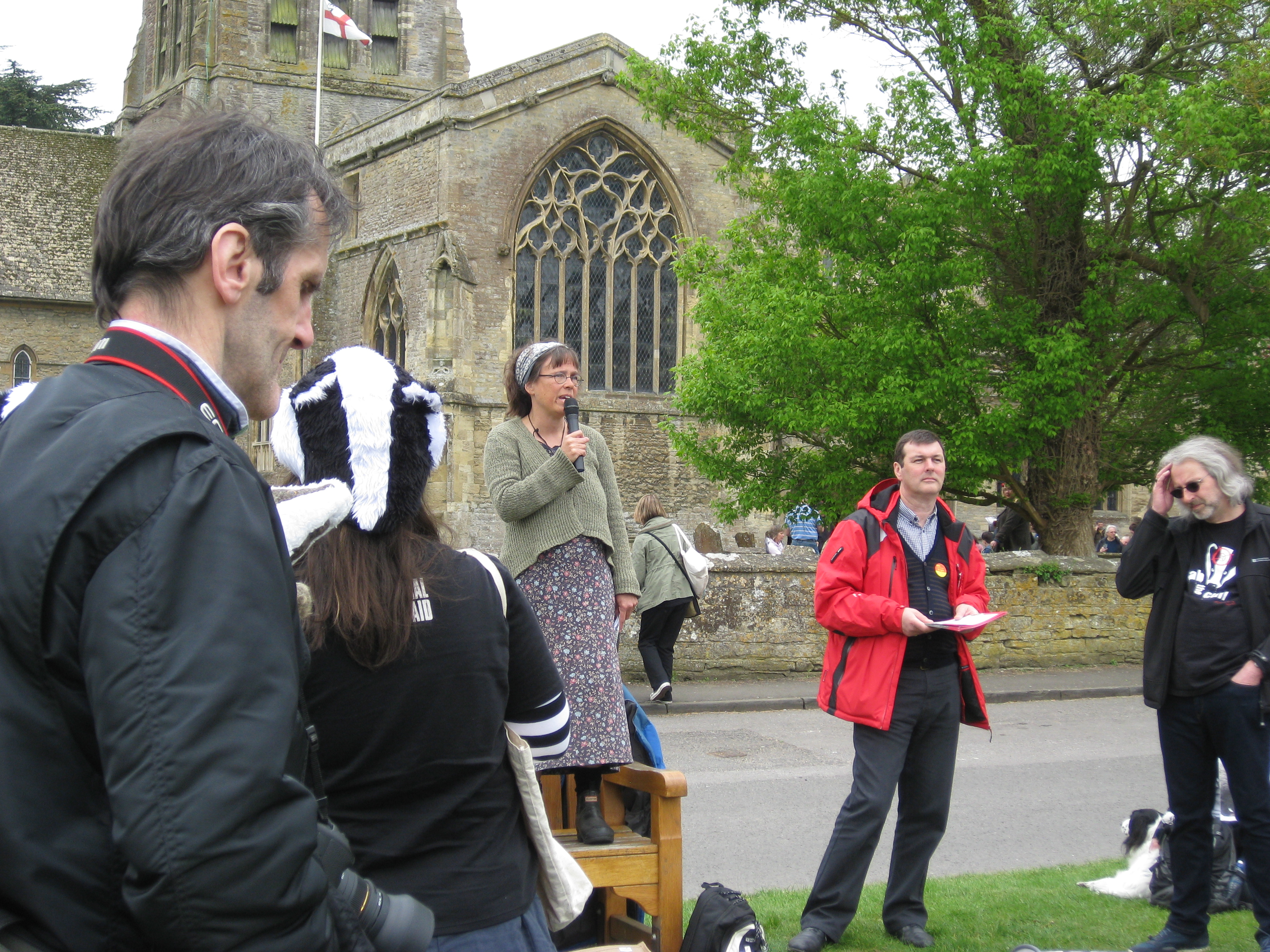
After we’d made our way through the town we ended up on Witney Green where we gathered round and listened to the speakers. First to talk was Lynn Sawyer. She spoke last week in Worcester and as I mentioned then she’s done some fantastic work. She spoke about the badger cull and how we should be looking out for setts, no matter what happens on Thursday, hunt monitors, the Heythrop Hunt and their disgusting ongoings, setts being badly affected by hunts, strengthening the hunting act and much more. After Lynn’s talk, the Green Party and Labour Party representatives spoke about their polices linking to animal welfare and the cull. It was quite funny as these were all great representatives and it shows that even in a Tory strong hold like Witney, Cameron has parties fighting against him.

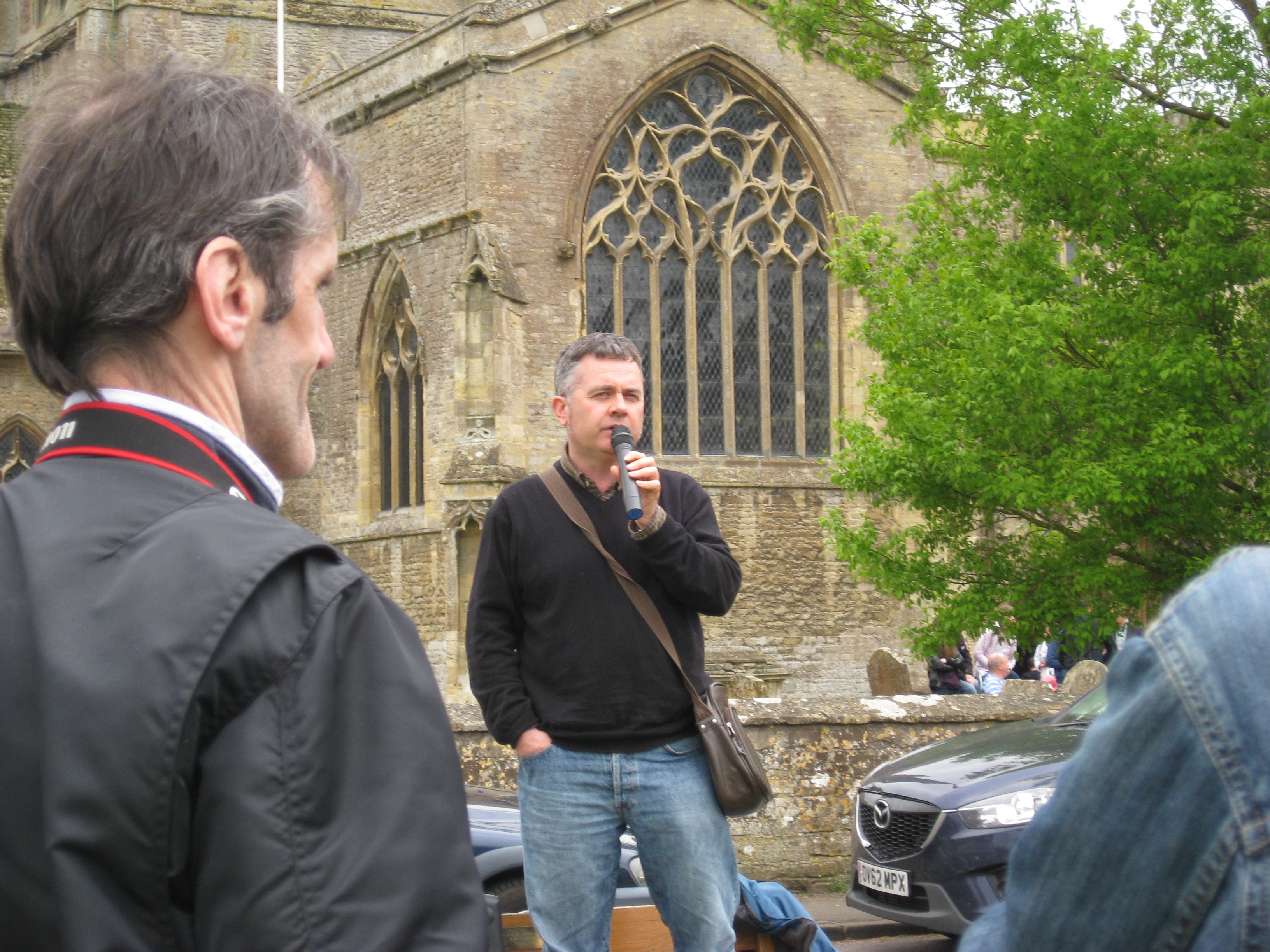
Next to talk was Dominic Dyer. I’ve heard him speak many times over the past few months, including in Worcester last week. He is a brilliant wildlife campaigner and activist who always speaks very passionately and about a number of key issues facing our wildlife in the UK, and gave some examples from abroad too. Last to speak was Nigel Tolley who read out a letter which we were about to post through Cameron’s door. The letter had been written by the organiser, Emily Lawrence. In the letter she stated issues like the badger cull and hunting. This letter was to be poster to Cameron because over the past five years he rolled out a two year badger cull, hasn’t done anything for our wildlife and threatens to roll out the badger cull to more areas and repeal the hunting act if he gets into power again next Friday. This was a reason why the march took place in Witney.

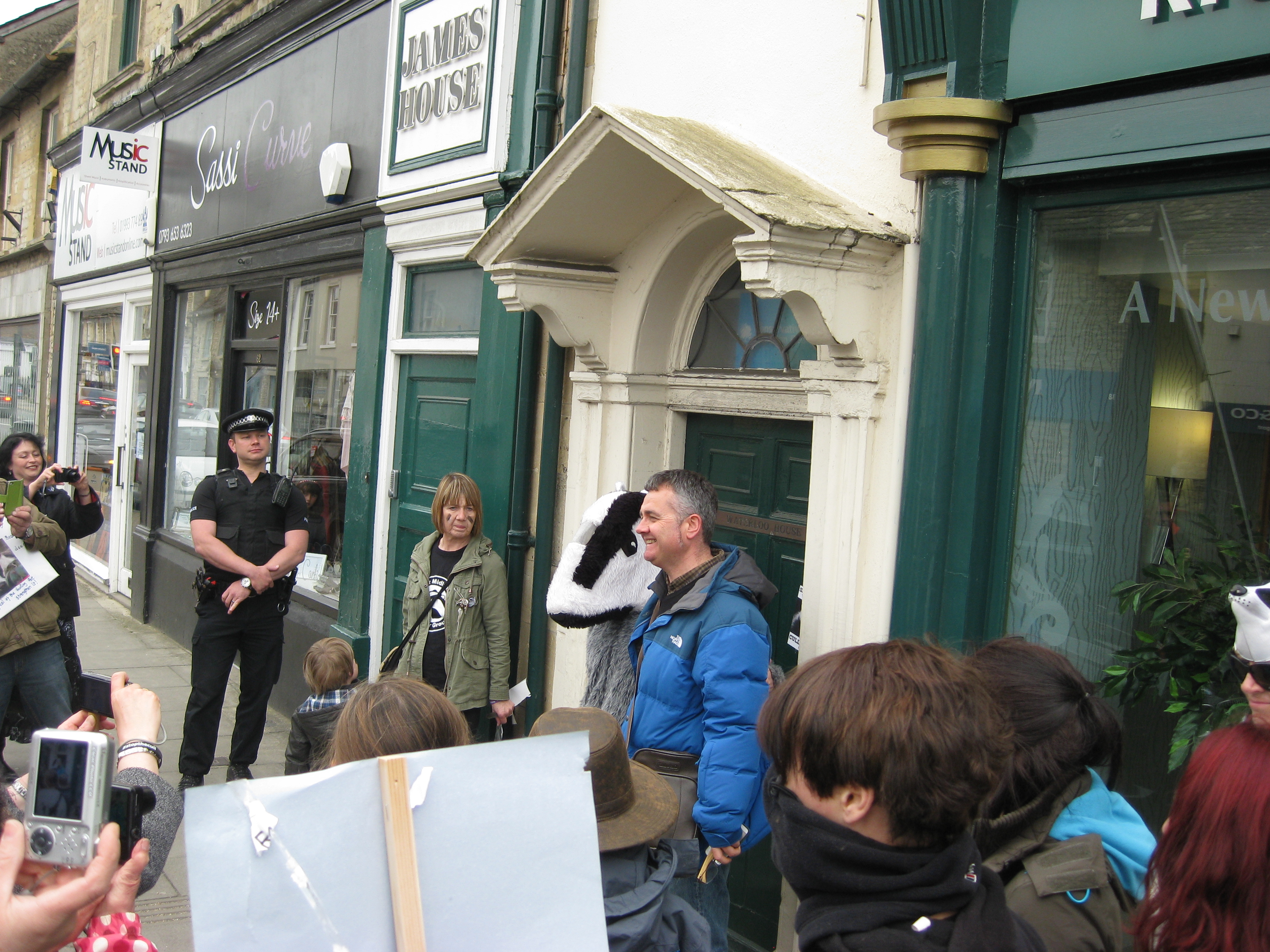
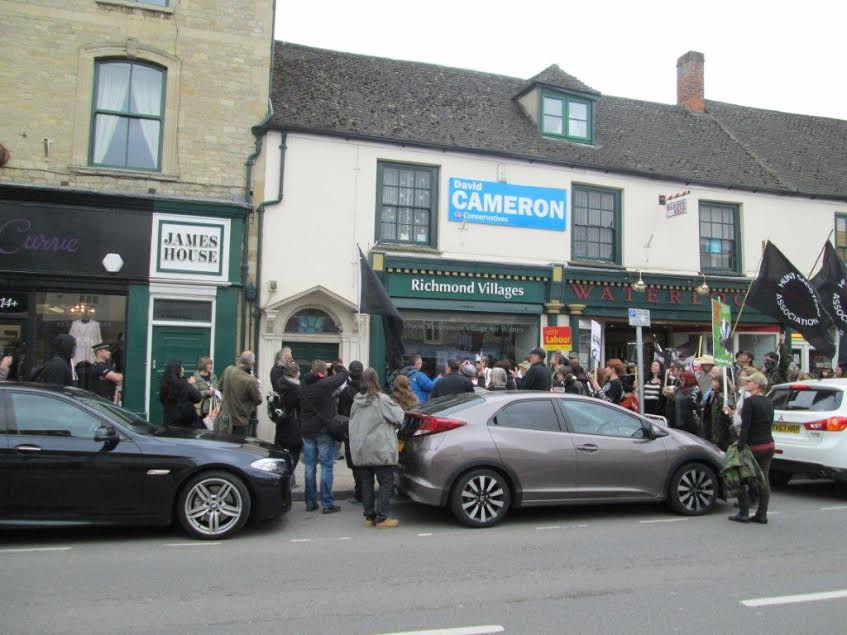
So we all headed back down into the main town centre with the banners and placards held high again, and the shouting echoing down the high street to Mr Cameron’s office. As I mentioned before, unfortunately he wasn’t in but we gathered round outside, the letter was posted and photos were taken too.

Here are a few photos from the day

IMG_1432

Dominic Dyer speaking

unnamed

Myself, the organiser Emily (in the badger suit), and fellow young blogger, Alex.

IMG_1443

Gathering round David Cameron’s office door

IMG_1427

Lynn Sawyer speaking

IMG_1419

IMG_1405

badger march

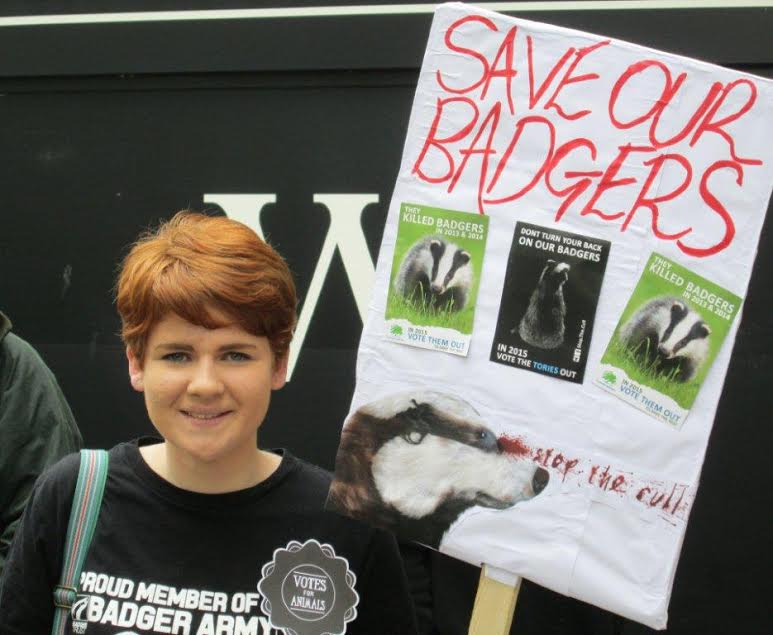
Myself with the placard I made

unnamed (5)

unnamed (7)

unnamed (8)

Outside David Cameron’s office

unnamed (9)

GE2015 7 Day Blogs: Speaking for Wildlife

A week today most of you will have a good idea on what party you want to vote for and why you want to vote for them as the polls have opened and you have until 10pm that night to vote. Maybe some of you have no idea at all! For me, I have a great idea of who I’d vote for but unfortunately I can’t as I’m 16.

When we decide who we’re going to vote for we consider many different things. Whether we agree with the parties policies (most definitely) , you support the local MP or perhaps you’re vote is tactical. When I think about what party I’d vote for the first thing that comes into my head is what are they planning to do for our natural world. Do they have an action plan? – As this is necessary. Would their plan be effective? Or do they realise how important our natural world is, is this obvious with what they have said and stand for?

Everyone has different reasons for voting for different parties, most likely it’s because you agree with something they stand for which affects you. As I said, for me that’s nature. But I think more people need to think about nature when they vote. Not just for those who enjoy it and get great pleasure from it but for themselves. Nature helps everyone in all sorts of ways, for most they don’t even know. From the bees which pollinate the food they eat to the trees which reduce flooding and give us the oxygen we breath. It also helps us in a way that we enjoy being outdoors, whether it be due to illnesses like depression or just for pure enjoyment and escaping. At the end of the day, if you look at the bigger picture, nature affects us all in so many different ways which we all need to understand and consider. If we don’t act now though then our nature is going to carry on declining and they’ll be no going back. Due to this it worries me hugely for future generations.

When looking at the manifestos there is a big difference from one to another. Some are very supportive and obviously care greatly about the environment yet others seem to have forgotten that it exists!

Here are some key things I took when looking through all the party manifestos which link to the environment and nature:

Labour

  • The first point I took from their manifesto, to do with the environment, was that a Labour Government would play a leading global role in tackling climate change. It says that this will not be enough to get rid of the threat of climate change but we must adapt to its damaging effects, which are impacting us today
  • They also plan to produce a ambitious adaptation programme and prioritise investments in flood prevention.
  • Deal with the problem of air pollution by giving local authorities the powers they need
  • Keeping forests in public ownership and promote access to green spaces in local planning
  • Support the work of the National Capital Committee to protect and improve wildlife habitats and green spaces, and make them part of our thriving tourism industry
  • End to the badger cull
  •  Improve the protection of cats and dogs
  • Ban wild animals in circuses
  • Defend the hunting ban
  • Deal with wildlife crime associated with shooting

UKIP

  • Not allow the countryside to be over developed with housing. They believe that our countryside must be preserved so it can be enjoyed by future generations
  • Match fund grants made by local authorities towards rural capital projects, such as creating a lake, wetland, repairing traditional stone walls etc. Which will enhance the local environment, encourage rural education, or help recovery from environmental disasters
  • Triple the maximum jail sentence for animal cruelty
  • Keep the ban on animal testing for cosmetics

Conservative

  • Protect hunting, shooting and fishing
  • Give Parliament the opportunity to repel the Hunting Act
  • Put in a ‘Blue Belt’ to help protect precious marine habitats
  • Keep forests in the trust of the nation and plant another 11 million trees
  • Tackle the illegal wildlife trade
  • Spend £3 million, which will enable them, to clean up rivers and lakes, protect stonewalls and hedges, and help our bees to thrive
  • Allow councils to give a fixed penalty on fly tipping,
  • Charge 5p for a plastic bag
  • Go ahead with HS2
  • Tackle international wildlife trade
  • Continue badger culling to control bTB

Scottish National Party (SNP)

  • Continue to support a moratorium on fracking
  • Commitments for carbon reduction

Plaid Cymru

  • Animal welfare law to end animal cruelty
  • Work across Britain and Europe to prevent the spread of invasive alien species, both flora and fauna

Greens (here goes)

  • Protect, expand, properly fund and improve non-car access to our national parks
  • Protect forests
  • Dramatically reduce the pesticides and priorities non-chemical farming methods through improved agri-environment schemes, legislation, education and the promotion of good practise in farming, as well as increased support for organic farming
  • Improve the management of woodland through new planting and the local use of sustainable woodland products
  • Aim to insure through planting that everyone is within 5 minutes walk of a green space
  • Help bees by reducing pesticides, ‘greening’ farming, improving planning guidance to preserve/create bee habitats, and making bees a priority species in biodiversity strategies
  • Promote landscape-scale conservation
  • Repeal the Nationals Planning Policy Framework
  • Work with local communities, scientists, and conservation groups to expand the UK’s network of Marine Conservation Zones
  • Play our part in creating a Southern Atlantic Reserve and champion internationally the protection of the Artic
  • Produce a strategy for capturing carbon and reducing greenhouse gases
  • Creating a healthy water environment
  • Prohibit developers from being allowed to destroy unique habitats by way of biodiversity offsetting elsewhere.
  • Support the conservation of the environment of the Oversea Territories
  • A complete ban on rabbit and hen cages
  • Tougher regulations on animals transportation
  • Action to stop the use of antibiotics in intensive animal farming
  • End of the badger cull
  • End of the use of snares
  • End the practise of grouse shooting and other ‘sport’ shooting

This is just a short list of the policies that the Green party have included in their manifesto about the environment and nature, if you’d like to have a better look, click here.

Liberal Democrats

  • Creating 200,000 new green jobs
  • Planting 1 million trees
  • Introducing a 5p charge on plastic carrier bags

From tomorrow until next Wednesday, the day before the general election, I will do a blog everyday looking at a variety of a few key topics which affects British wildlife and, in some cases, on a world wide scale. Then next Thursday, I will be summarising all that I have wrote about over the 6 day period.

In the posts I will go through why it’s important to deal with this issue, who it affects, what will happen if we don’t address the problem, see if there’s been a mention on any party manifesto and much more. With this I hope to help people see some problems we face within the natural world, what parties have said they’ll do to solve this (if anything at all) and be an eye opener. I then plan to share my blog with party leaders and MPs (etc) in the hope they’ll see the problems with these issues and why they need to be dealt with.

Another reason why I’ve decided to do this is because nature and the environment has been barely mentioned during general election campaigns. This is quite upsetting, it’s obvious we don’t understand that nature is extremely important. Therefore its important to express the issue in any way we can.

Obviously there are many issues which face our wildlife in the UK and world wide but unfortunately I only have six days and because I’m currently extremely busy revising and taking my GCSE exams so I’ve had to focus on them a lot too.

The topics include:

Friday – Saving our Oceans. In this blog I’ll be including the massive impact oceans have on all of us, why they need our help and how we can help.

Saturday – Snares. In this blog I’ll be including how evil snares are and why they should have been made illegal years ago!

Sunday – The badger cull. Where I’ll be including all from the badger march in David Cameron’s constituency, Witney, from the day before.

Monday – Helping our bees. In this blog I’ll be including problems facing bees, why we need to help them and how we can help them

Tuesday – Wild persecution/Wildlife Crime. In this blog I’ll be including a range of subjects, from birds of prey to foxes. Also how we need to stop the persecution through things like the police and the general public (which we bring me nicely onto Wednesdays topic).

Wednesday – Inspiring the next generation. Where I’ll be including the replies from my local MPs regarding my Vision for Nature

IMG_1370

We Will Not Be Silenced

As you most likely know the general election is approaching fast, in fact just 10 days away. It is becoming very tense as the current polls are close. However it’s not just tense for us Humans, it’s also very tense for our wildlife and animals. Although they can’t vote we need to vote for them, give them the voice they need.

Unfortunately, as I’m 16, I can’t vote but that doesn’t mean that I haven’t been interested in the parties manifestos, their campaigning but also the other campaigning that’s been going on. In fact, when I’ve been able to, I’ve been getting involved with the campaigns. From getting involved on social media and supporting thunderclaps to doing blog posts, writing letters to local party candidates and getting involved with protests.

One protest which caught my eye this week was the suffragette-themed march on Parliament to launch the “Votes for Animals” campaign where a variety of organisations, charities and individuals got together. They proceeded the streets of London with their striking masks, costumes and signs with their main aim of giving animals a voice and encourage the public to vote for animals on May 7th. You can read more about the Vote for Animal protest in London by clicking here.

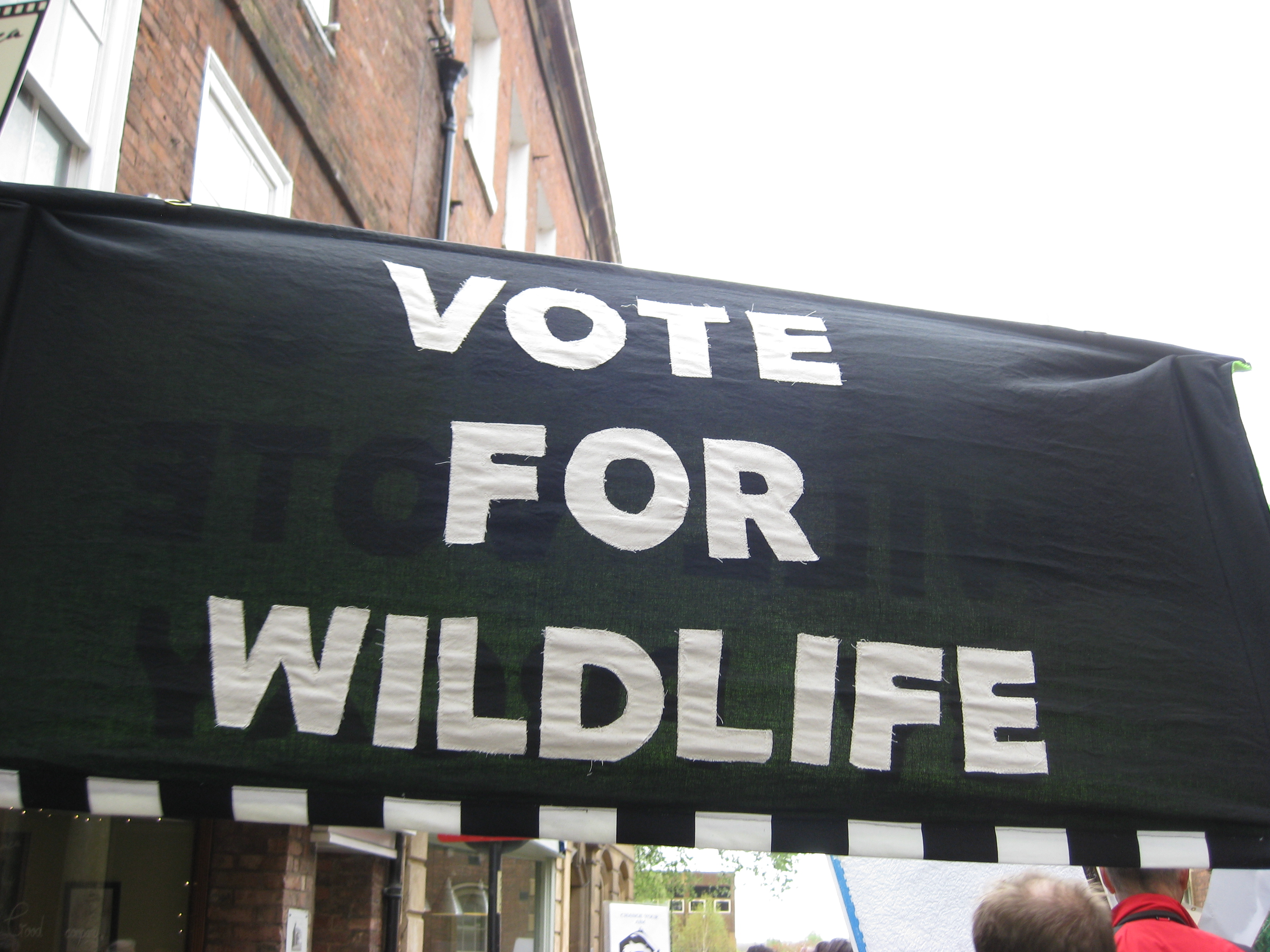
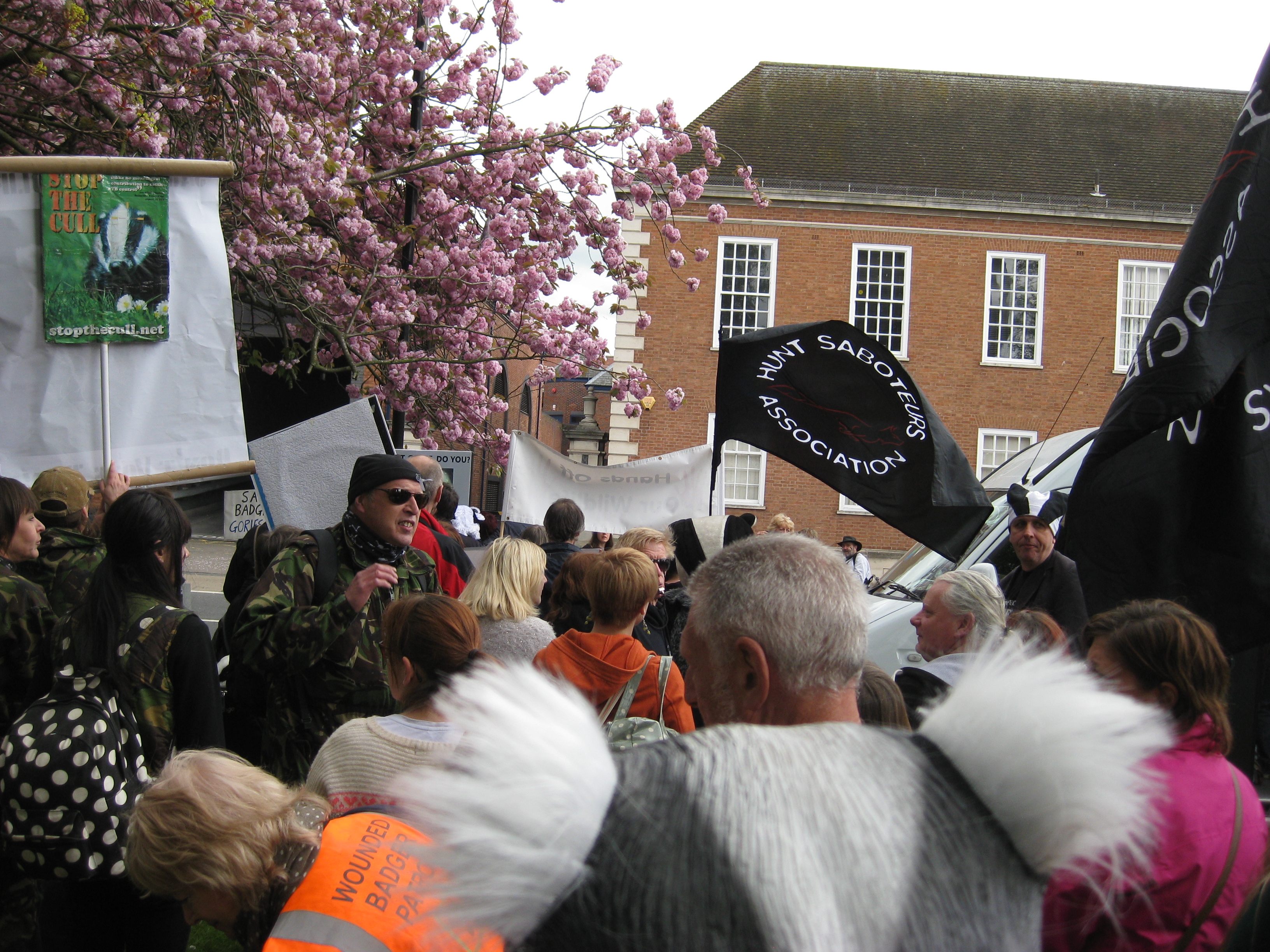
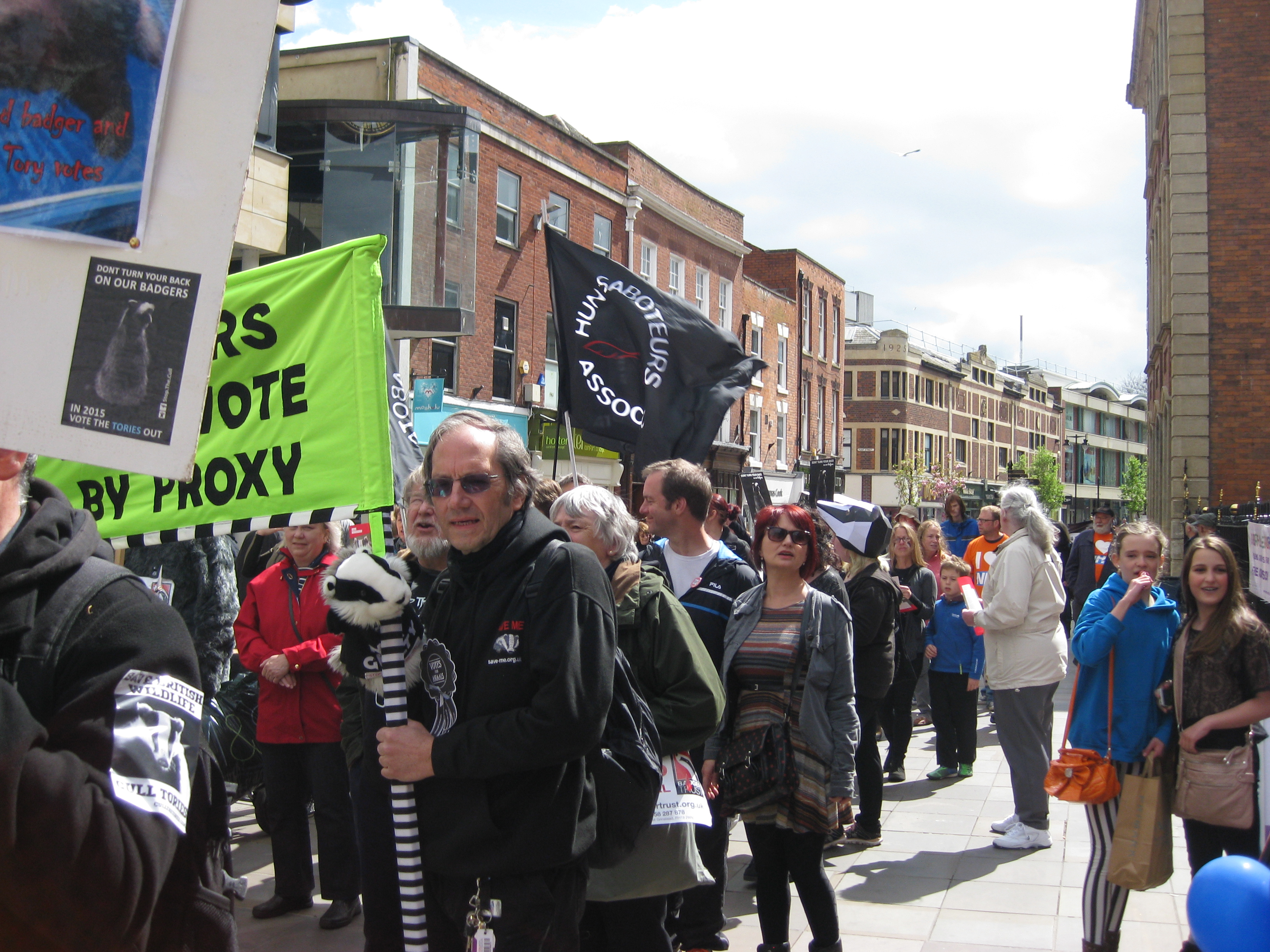
Yesterday though was another day where I went out and helped do my part to give nature a voice. I was up nice and early as I had two trains to catch and was very excited for the day ahead. I was off to join the badger army and wildlife defenders for their march in the streets of Worcester. Once we arrived in Worcester we went for a quick coffee then headed down to St. Andrews Park where the march began. This was my second march, the last one I went on was back in February and took place on the streets of Birmingham. The one in Birmingham was more of a festival as there were more speakers and stalls, you can read more about it by clicking here. It was also brilliant to go yesterday after the Badger Trust Seminar in Bristol last weekend as it great to see some familiar faces. By 1pm there was a good crowd of a few hundred people and everyone was ready to go. There was people dressed up, plenty of signs and flags, megaphones, hats and much more. It was pretty obvious that it was going to be a successful protest.

But before we could begin addressing the streets of Worcester there was three speeches. First was the main organiser, Chris Swan, who spoke about the fact that there is still the worry of badgers being culled, the threat badgers face and also read out a poem about badger persecution which had been wrote a hundred years ago but in many ways applies to today’s world. The second to speak was Lynn Sawyer who has done inspirational work over the past 12 months which resulted in 100’s of badgers life’s saved. She spoke about the fantastic work of hunt and cull saboteurs, the importance of looking out for local setts and read a book extract about the fact that Btb travels on the feet of those horses, humans and hounds. Then before the march began Nigel Tolley spoke. He is a very active member of badger army and a great wildlife activist. He spoke about the fact that even if the cull does stop, depending on who gets into power on May 7th, there is still the major problem of badger persecution. He stated that over 2000 badgers are killed every month throughout the UK which is well over the amount killed in the culls. He also spoke about how we need to encourage people to go out, recognise and report wildlife crime.

After these two talks the march was raring to go. There was a set route through Worcester, which we followed. Everyone was shouting either ‘Save our Badgers, Stop the Cull’ or ‘Save our Badgers, Tories out’. It was such a brilliant atmosphere, everyone was so passionate and determined to get the message across. Signs and flags were high in the air, leaflets were being handed out and stuck everywhere, and the shouting echoed down the high street. There was no doubt that we were making our mark and spreading the message. We then stopped outside of the Guild Hall where three more people spoke. The first was the Labour candidate for the area, then the Green candidate. They both spoke about the policies of their party. One of the common policies was putting a stop to the barbaric unscientific badger cull.

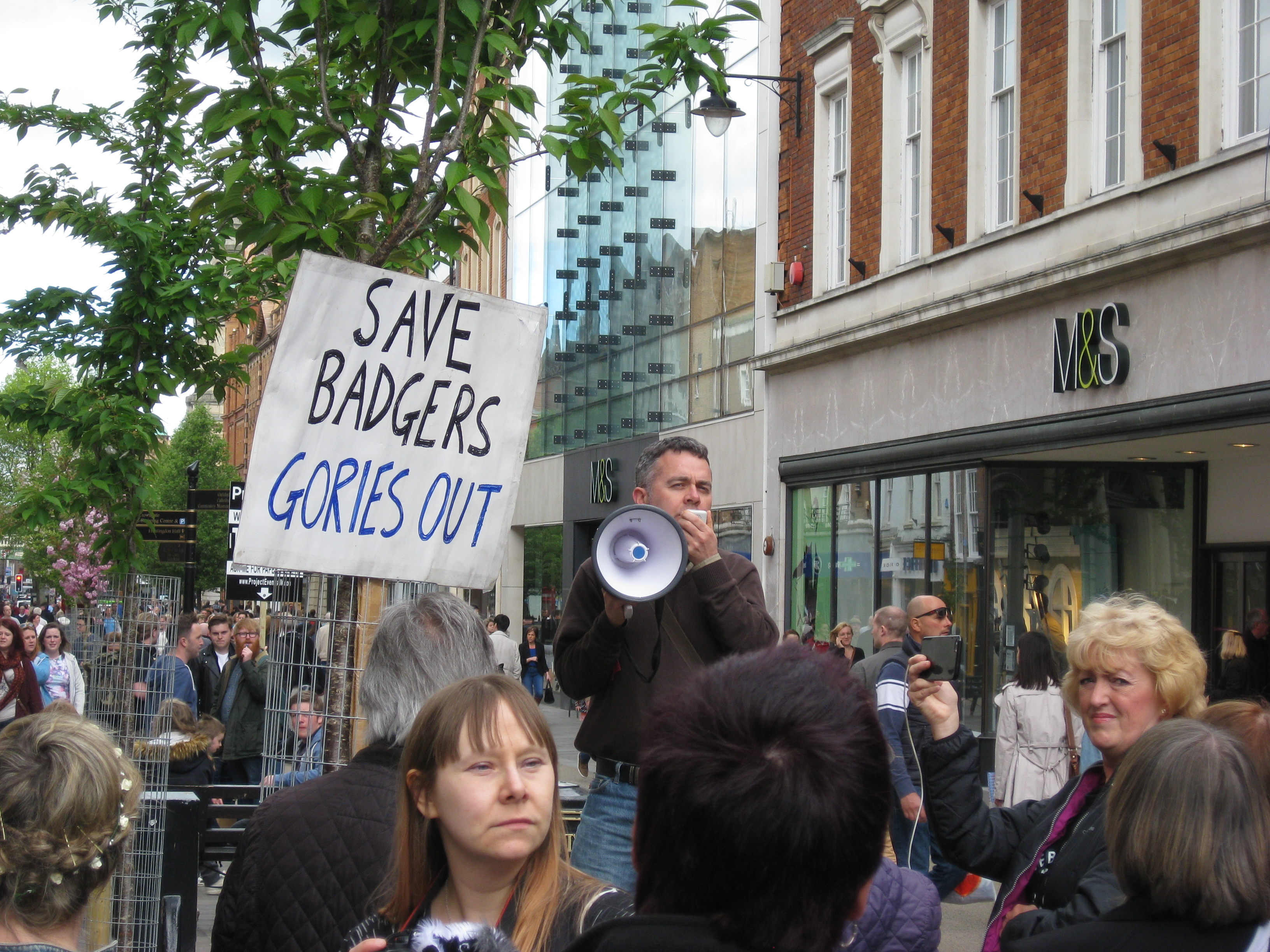
Before getting started again Dominic Dyer, wildlife campaigner, gave a speech. Over the past few months I’ve heard him talk a number of times and what he says is always very inspirational. He stood up on a park bench with a megaphone and spoke about a number of issues. From the badger cull to wildlife crime. He also stated that we will not be silenced.

As I heard a few times yesterday, to be able to protest in Worcester yesterday it took a lot of hard work from the organisers. This is partly due to the election approaching and in different ways it’s jeopardising the chance for parties to win seats because the badger cull, and wildlife crime, is among a key issue for many politicians.

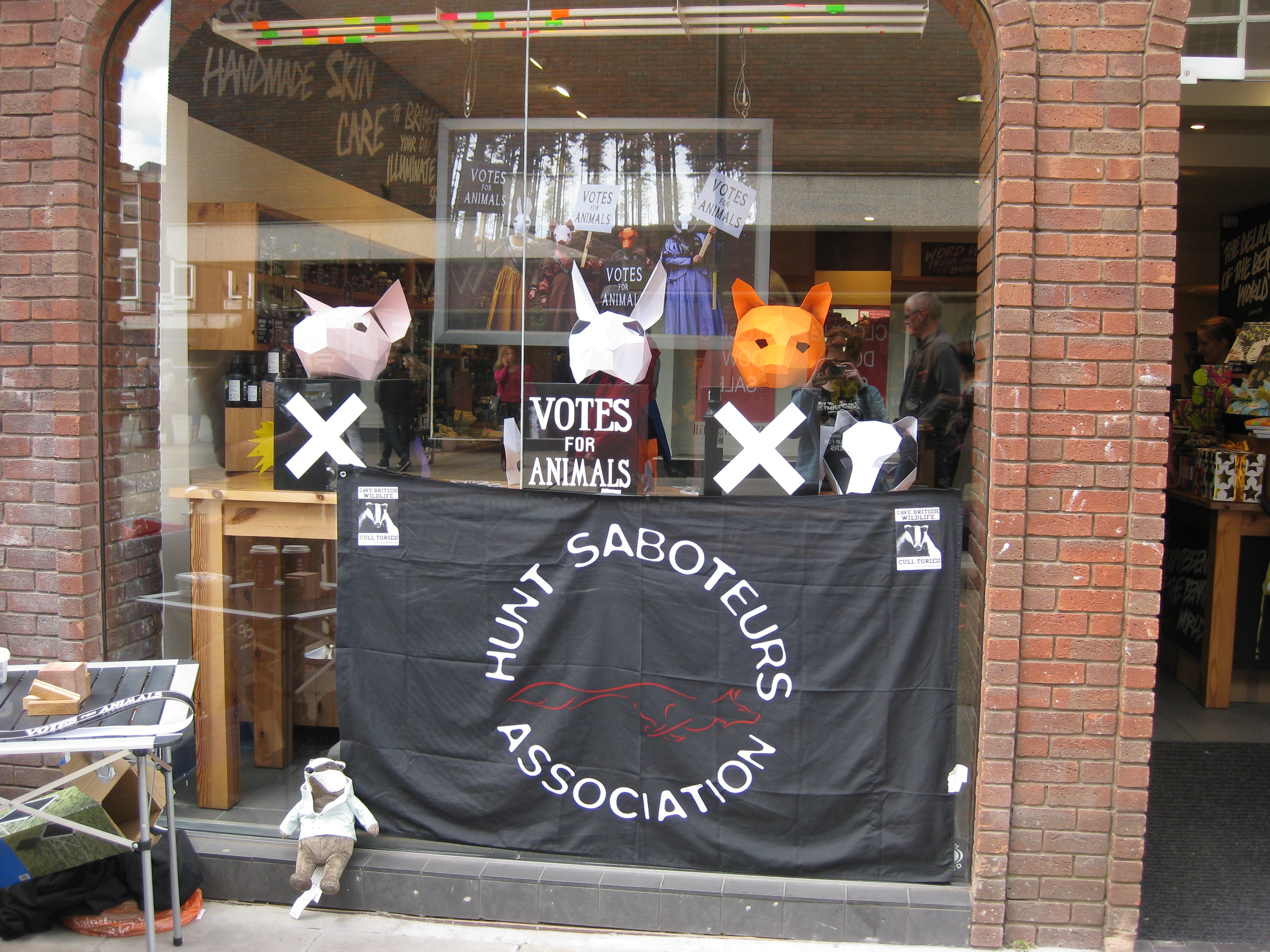
We were then back to the protest through the high street in Worcester, feeling more passionate and enthused after more inspirational speeches. On our way back to St. Andrews Park we passed the Lush store in Worcester which had a few signs outside and their window display was about the ‘Votes for Animals’ campaign. This was another great feature to the protest.

Once back at St.Andrews Park all those on the protest stood together for a photo. It made a fantastic photo as it showed everyone’s passion and willingness to be there. Then with the outfits, masks, hats and signs it showed what we all stood for.

Here are a few photos from the day.

IMG_1344

IMG_1347

IMG_1353

IMG_1358

IMG_1366

IMG_1370IMG_1371  IMG_1385

IMG_1387

IMG_1379