Dear Mr Gibb…

If you read one of my latest posts, Thanks Mr Gibb but nature is important, you’ll know that back in July I met with my local MP and then went onto write to Nick Gibb, Minister of State at the Department of Education, about the need for outdoor/environmental education on the National Curriculum.

After Nick Gibb’s very unhelpful, but predictable, reply I have gone on to set up a very exciting project/campaign that I hope to share with you all in the next few days. Along with this I also wrote back to him. I haven’t received a reply yet but I’ve decided to share the letter that I wrote with you all.

Dear Mr Gibb


Thank you for your reply to my letter, a copy of which I have attached. I’m pleased you took the time to reply to what I had to say regarding the need for more outdoor education at primary level.


However, I would like to reply and add to my point. In the letter it seems you have stated what is on the National Curriculum at the moment, I had done my research before sending you the letter so knew this already. I feel as though you have not considered my point and you don’t reply to my statement that we need more young people coming through into either professions in conservation etc or the importance of why every child needs to have a connection with their natural surroundings. I don’t mean to be rude but do you not understand that nature is important?


You mention how the environment is included in biology and geography. When I think back to any environmental education throughout my primary education I can’t think of one example. I asked my brother and he said he may be able to think of one, however this was organised solely through the school. The only reason why he remembers this is because it was practical, which is what’s so important. It imprints in your mind due to the amazement you experience.


I go into local primary schools and do activities with younger children through community based projects. some of which I’ve helped set up myself. The last visit into a school was just a couple of weeks ago when we did bug hunting with year 2’s. None of them had done anything like this before. When a blackbird flew past, they had no idea what it was.


My point is, if there is a teaching of nature in schools which is already on the curriculum then it simply isn’t enough. One of the children said that it was one of the best days of his life! It not only benefited him in the way that he learnt something new but it made him feel better, made him happy. Isn’t making a young child at school happy something that you should aim for? Improving a child’s education? Except I know that he will most likely never do anything like that again. It was a one off project, the school have obviously not enrolled in something like this before or else he would have been able to tell me. In today’s society when most parents worry about dangers and so called ‘dangers’ he probably won’t be encouraged to do it again either.


A question I’d like you to ask yourself is when you were younger, how did you fill the time when you had nothing to do or just for something to do in general? If you were like my parents and grandparents then it was the case of just going outside. Climbing trees, riding bikes, playing sport in big open fields, appreciating the wildlife around and so on. Perhaps it was something you took for granted as it was always there and always an option? Your parents had no problem with it and nether did society. As well as this, at the moment, deep down I’m sure you understand and know what towards nature has positive and negative impacts. From Wikipedia I know you were born in 1960. From the State of Nature report I also know that since 1970, when you would of been 10, 60% of animals and plants studied have declined.  Along with other threats too. Now isn’t that scary? Well more then scary, nature not only in the UK but abroad too is in some trouble. We can do what we can now but what about the future? What way will it go? With figures showing only 1 in 10 children connect with nature, I’m very worried and it could well be very bleak.


But why is that so important to be acting for nature? Well you just think back to what you had to eat last night, everything on that plate was only there because of the natural world. All the ecosystems. It’s why we’re here today so not only is it beautiful and enjoyable but important to all of us.


I’ve gone a bit away from the point but I wanted to make myself clear. Even though some outdoor education is there, I know it varies from school to school. A child isn’t going to develop any type of interest when they have a couple of lessons in year 2 then a couple in year 5. I’m sure you’re very aware that it doesn’t work like that. Although out of school outdoor activities, sessions etc for children are very important, not every child has the privilege to attend.


I have many more points that I can add to my argument and I would appreciate it if you could take some more time out and we could arrange to chat about this extremely important subject in person.


Yours sincerely


Georgia Locock

Thanks Mr Gibb but nature is important

I’m a strong believer that outdoor education, actually being taught outside and learning about the natural world around, needs to be something that’s taught in every school. Throughout the whole of my education nature is something that I was never really taught about in school. Thinking back to primary school, I’m trying to remember what we did which was wildlife related. I’m really struggling to think of anything. I mean we went on days away, one trip was five days up to the Lake District and we went out walking a few of the days but I don’t remember much a part from some sight-seeing. One thing I do remember from primary school though was that I felt like my interest was not encouraged. Thinking back, it wasn’t that bad but at the time I was only about eight or nine. What I remember is going to York for a day trip and the Headmaster had said ‘Has anyone been to Yorkshire before?’ and the weekend before I’d been to Bempton Cliffs so I shot my hand straight up and told him a bit about it. His reply was a mutter and that was about it really.

In primary school I was known to be a bit mad and everyone seemed to think I knew everything about wildlife, this was obviously because they knew not much at all. I remember the teacher visiting a website on the big board in front of where we all sat and the banner of the site displayed a lake with a large bird of prey. The teacher asked me if I knew what it was, I replied with stating it was an osprey and everyone seemed amazed.

These are just a few of my own memories. I also decided to ask my brother what he remembers, he’s two years younger, and he told me that the only nature based thing he remembers was dissecting pellets the one time. That was it.

There’s two reasons why I’m doubting my old primary school, well the curriculum in general, for the lack of nature themed lessons. In a world like today when we’re distracted by new incredibilities like gadgets, we all need to be aware of what is the truest to us all. What we all come from and what, without, we wouldn’t be here. Also, with the huge plummet of species, rise in climate change, more consumption etc, we need to understand what we can do to help and the fact we need more people then ever coming through to help in these situations.

As I mention, with more and more distractions about like gadgets and parents not always pushing their children to go outside. Whether that be because it’s easier to give them a phone, they think it’s too dangerous with the scare of the media nowadays or they just don’t think of that as an option. This reconnection needs to happen somewhere.

There are still parents who encourage their children, like families going out for afternoon walks, but still there’s that danger stigma or the fact times have moved on. Yes, that’s right, obviously times have moved on but we still rely on the natural world.

There’s also fantastic organisations and charities, whether national or independent, that open their doors to children for weekly or school holiday wildplay events. I’m a leader of a Wildlife Watch group at the National Memorial Arboretum and once a month we have sessions where we’ll do a range of activities. As much as it’s great for those kids that do turn up, sadly it’s the same kids every month. No matter how much advertising it’s not very often we get a different face.

Could this be the case with some other groups like this? Are these the kids with parents who do encourage them? My point is, not every child is fortunate enough to join groups like this and get encouragement this way. Whether their parents don’t have time to take them, they don’t find out or they don’t see much of a point. These are some of the exact reasons why I think more needs to be done in schools so EVERY child is given the opportunity too.

An example that made me realise this was from some of the outdoor education things I have done in schools. A project, that I’m very involved with, approached a local school and they were interested. We normally spend a day or the afternoon rotating around the classes. When I was speaking to a group of children the other week at an afternoon event, one lad was telling me how much he enjoyed it all and that he’d never done it before. This also backs up that every child has that connection there and love for nature, but are they exposed to it and are they aloud to let this flourish?

By saying ‘education’, it can sometimes make it seem like it’s made really serious and perhaps boring. Obviously this isn’t something that should be happening and I think actually getting outdoors could take this away and have many more benefits. By the getting outside part, it does make you remember as it’s hands on and practical. I was speaking to someone just a few days ago and they said when they think back to school, one thing they remember is going pond dipping. This was interesting seen as they’re probably about mid-60s and have had a life long career in conservation. It’s that sort of stuff that inspires people. But a one off outdoor lesson or a one off module learning about the food chain in Year 2 isn’t something that entices the child even more. With regular lessons they are given time to develop, learn more and see other opportunities. Perhaps nag their own parents and go along to groups and sessions.

I could go on about this subject all day long, it’s something I’m passionate about. Young people are the future and from a first hand experience of being surrounded by people my age who have no interest it’s very worrying. I feel as though they’ll just be a bunch of us in about 30 years time fighting against everything, especially with declines, extinctions, climate change and problems like this ever getting worse and worse. They don’t listen now so what makes sure they’ll listen in the future when there may well be even less people speaking out.

Obviously it isn’t all doom and gloom. Sometimes people in power do realise, let’s hope it’s not before it’s too late, but more importantly there are some great young people out there fighting for the cause of the natural world. There’s also some great communities and support out there too.

I’ve gone on a lot more then I wanted to now. The purpose of writing this blog was to share that I’d had another reply re my idea and thoughts on outdoor education in schools. A few months back I decided to meet with my MP, Michael Fabricant. He told me to write down all my points and thoughts then to send them to him and he’d forward them onto the Minister of State for Schools, Nick Gibb. After finally summing it all up into less then about five pages, I sent it off and got a reply today.

Before I got really involved and before meeting my MP etc, I decided to do a bit of research into what is actually on the curriculum today. However my reply proves there wasn’t much point as this is basically what Nick Gibb has stated in his letter.

In the first paragraph he agrees with my point ‘about the importance of outdoor education’. He then goes onto say that the new National Curriculum provides the ‘opportunity to acquire a core of essential knowledge in key subjects’. My first thought to that was nature is a key subject but he points out that nature and interaction outside the classroom is only included. He states that this is ‘across the curriculum, in particular, in geography and science which aim for children to learn about the natural world’. He has a good point there, it is included but this is against what I said in the first place. Lessons like this aren’t regular. They’re topic based and it varies from year to year throughout school. As I mention before, throughout my primary school experience I remember science lessons but not many about nature at all.

In my letter to him I also state that declines in recent years are scary and the low figures that show young people aren’t connected match this. More nature education in school could help reverse the amount of children not connected for obvious reasons but he does not mention this in his reply. A part from what’s happening at the moment. The new curriculum, from last September, is very similar to the one before.

So, I’m sorry Mr Gibb but your reply only states what the curriculum states at the moment. Nature is more important. It’s the same as any other subject. Take History.  We’ll always have that ability to look into the past with professions like Historians and evidence. The past never goes but if we don’t encourage primary school children (the next generation) to explore, enjoy and look after their natural surroundings then they’ll be no future for it. Whether that be people doing there bit as an individual or people going into the profession of conservation, natural science etc. It’s disappearing before our eyes now, we can’t let this carry on.

I plan to write back to him within the next week.

Follow up – Green revision

It seems so long since I did my last set of exams that I can’t even remember what it was like when I was revising. Even though I may not have thought it at the time, there is another side!

Some of you may remember that I wrote a blog about how I was getting through the stress of my exams and revision. I found all the advice that I was given from the school and others very stressful so I took a step back and did what I enjoy more then anything, just chilling out by going out on my local patch. Even though I always find this extremely beneficial I didn’t think I’d find it as helpful as I did when doing my exams. It was something that I thought would only get better if I got on with them and the revision.

It was a great discovery I made. I thought that surely others would find it as useful as I. Just going out and being surrounded by greenery. Without over thinking it though, this is obvious. It’s like some sort of ‘nature programming’ in everyone’s mind. Forever humans have been surrounded by, worked with and took from nature. It leaves me very confused that this isn’t understood and that nowadays people think they know better with new techniques, gadgets etc when this is what’s in our blood and has always been.

Anyway, my technique of taking breaks and going onto my patch helped a hell of a lot. It completely destressed me and by the look of my results worked wonders! I’m not saying that my results are all down to this but the only two techniques I used were actually getting on with the revision and getting out. None of this take a break to make a drink or go and watch telly for five minutes.

If you’d like to read the blog I did ‘Green revision’ whilst I was in the midst of my exams click here.


United in a weekend for Hen Harriers

This weekend was superb. If you went to a Hen Harrier event you’ll know what I’m on about but if not then make sure you do next year! If I were to sum it up in five words, which is difficult, they would be very inspiring, exciting, lots of motivation, fervent and uplifting.

But why am I using such positive words to describe events which are about a depressing and serious matter? Well, when you hear a lot of negative stories, including the five Hen Harriers which disappeared (yeah, OK) this year, an event like this makes you feel incredibly positive as you see so many people joined together showing their support and feeling the same as yourself. Even though I knew all of these people existed and most of the country, a part from SOME, are and would (if only they knew about what goes on) be opposed and saddened by ongoings of wildlife crime everywhere including upon the upland moors, again it was very positive to be there, see it with my own eyes, and to see that change is definitely happening and that we will win.

Whether it’s the fact many species, including raptors, are being illegally persecuted to protect ones own interest, a bird of prey is being pushed to extinction,  habitats are being damaged or the burning is having a role to play with global warming and flooding, the activity of driven grouse shooting upon upland moors needs to end. This was a key message expressed by all of the speakers at the Hen Harrier events I went too. Along with this the fact that we’re right, we’re backed by science and we deserve justice.

If you’d read a few of my latest posts, follow me on Twitter or even saw me there yourself I spent my Hen Harrier Day up at the Goyt Valley near Buxton, Derbyshire.  As well as this I went along to the Hen Harrier Eve event at The Palace Hotel in Buxton on Saturday. 

When we arrived in Buxton on Saturday afternoon, whilst walking around waiting for the evening event to start, I bumped into quite a few people who were going. Either wearing their t-shirt or I knew who they were already. We even got sat next to two ladies going to the events when we went for something to eat along with some others at our B&B the following morning. Hen Harrier supporters had taken over Buxton!

But this was great! I often see this when I go on street marches, all the people passing by take an interest by what it says on their t-shirt or placard. This also had the same effect at the Goyt Valley when walkers, runners and cyclists passed, along with at the afternoon event in the Pavilion Gardens, Buxton. I heard quite a few people passing and muttering ‘what’s with the black t-shirts’ and so on.

Once at The Palace Hotel for the Hen Harrier Eve event it was great to have a chat with some old and new faces before the talks began. Overall there were a variety of things talked about by each speaker along with a variety of speakers.

First to speak was Mark Avery who was one of the organisers and introduced the evening. He has also had a massive impact on the fight to ban driven grouse shooting with the work he’s done, including his recent book Inglorious and the ban driven grouse shooting petition he set up again this year after last years success of it reaching over 10,000 signatures. So far this year the petition has over 11,000, you can sign it by clicking here.

He was followed by the other organiser, Susan Cross, and also Gordon MacLellan who presented some literature about the Peak District and Buxton, and also included context about Hen Harriers. After this the RSPB’s skydancer video was introduced by Amanda Miller and CEO RSPB Mike Clark said a few words about their hard work on helping the Hen Harrier. It was brilliant to have two people from the RSPB talk, along with Jeff Knot (RSPB) speak at Hen Harrier Day. As well as the RSPB, Jo Smith who is the CEO Derbyshire Wildlife Trust also spoke at the Hen Harrier Day event.

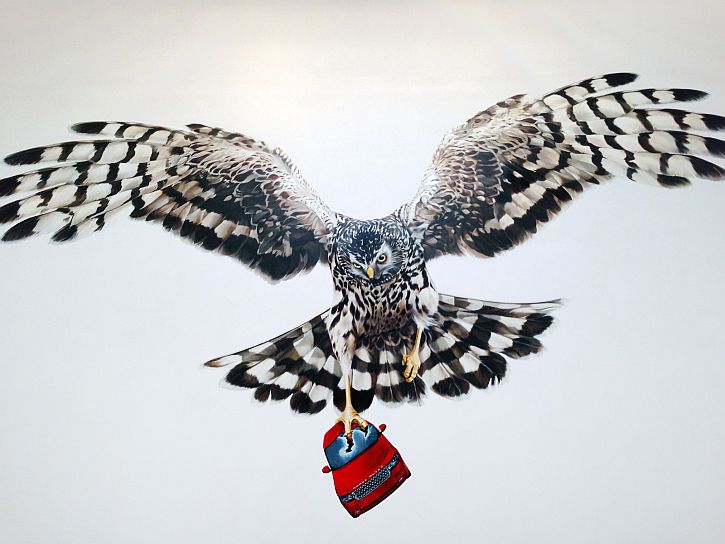
Next was Mark Cocker in conversation with Jeremy Deller. Jeremy Deller is a Turner Prize winner (2004) and has produced such art work as ‘A good day for cyclists’ which shows a massive Hen Harrier clutching a blood red Range Rover in its talons. Whilst in conversation with Mark Cocker he spoke about a lot of his work, including this piece, which was very interesting.

Jeremy Deller, the artist featured in the British pavilion, had one of the most talked about installations at the Venice Biennale preview, attended by critics, curators and collectors from around the world. Photo by mary Louise Schumacher

Then after the interval Mark Cocker gave his own talk. This was about birds of prey in culture across the world with references to his book. As well as Hen Harriers.

Next to speak was Findlay Wilde who said a few words about Hen Harriers before going on to how he made two new brilliant models. One was a grouse butt and another was a massive bottle of poison. With this he showed a video mash-up of how he did so with a sound track created by his younger brother, Harley.  He also announced how he’d persuaded Ecotricity to support satellite tagging of Hen Harriers next year.

Then there was another video mash-up about the adventures of Henry the Hen Harrier around the UK which was created by Phil Walton from Birders Against Wildlife Crime. If you don’t already follow Henry on Twitter then please do at @HenryHenHarrier.

Last, but one, to speak was Chris Packham who was superb and inspiring as usual. He spoke very passionately and expressed his anger of persecution of Hen Harriers, the huge decline of wildlife, Cecil the Lion and much more.

To finish of the evening of talks, there was a quick announcement from Charlie Moores (BAWC) about the exciting arrangements of the next day, Hen Harrier Day.

As I walked up to the venue of Hen Harrier Day at 10am the Hen Harrier thunderclap went out. This reached almost 5.7 million people which was just amazing, lets hope all those people took note of what they read. The thunderclap read…

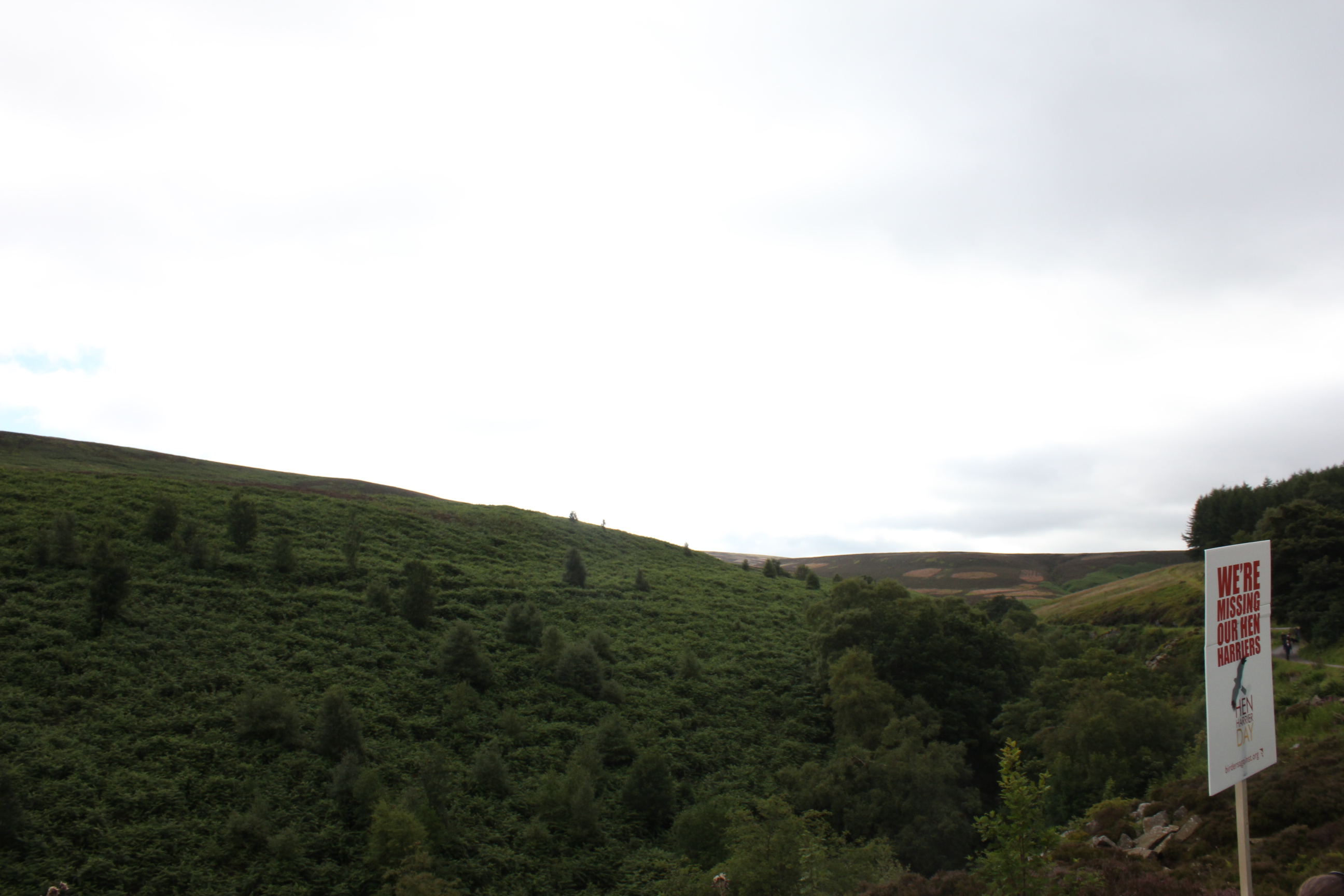
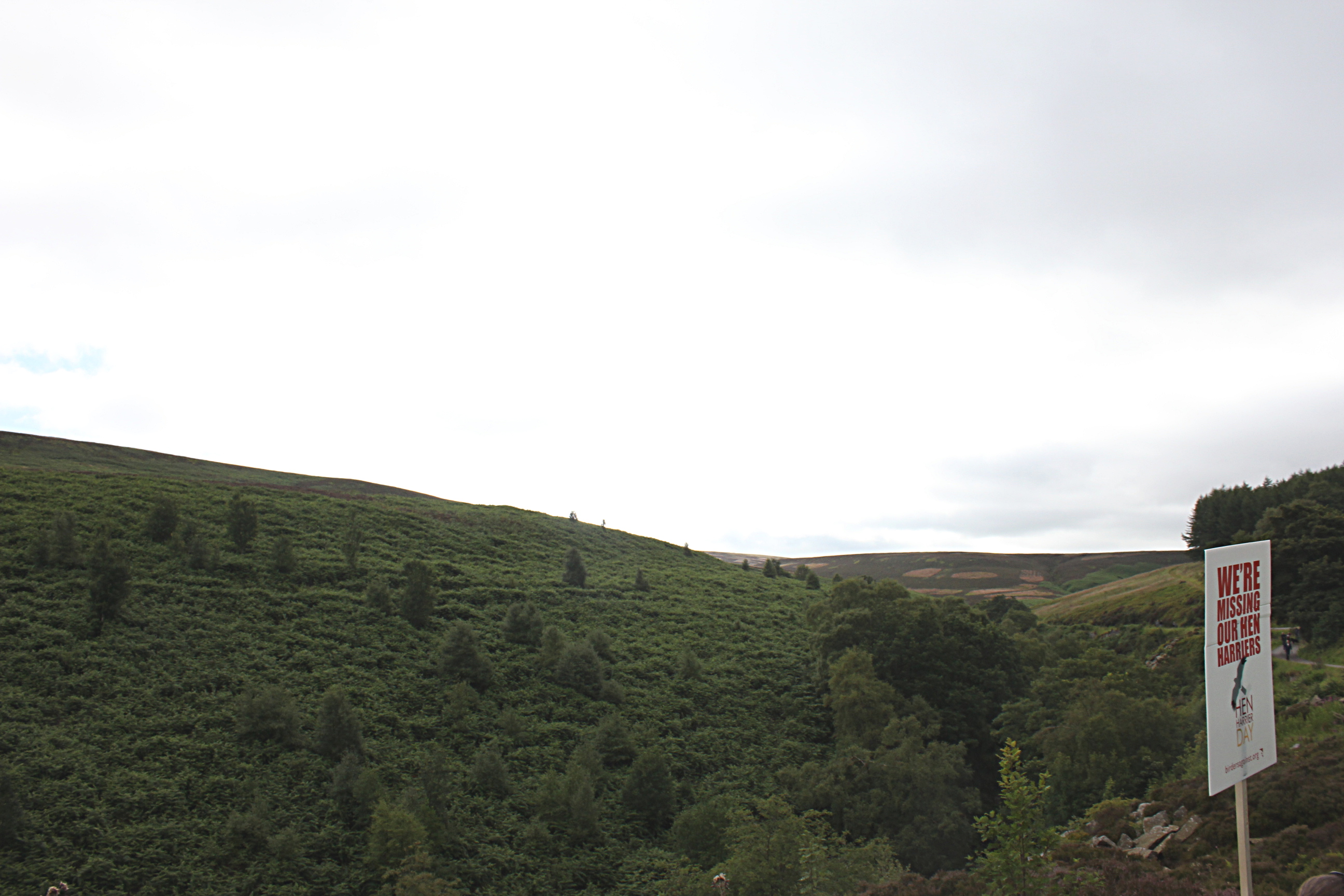
The location of Hen Harrier Day, in Buxton, was perfect. As the speakers said what they wanted to say you could gaze over onto the moorland. When they spoke you could just picture their dream, and your dream, of what they want that area to look like one day. You could visualise the aim. Along with this, at this location Hen Harriers have been spotted here in the past.

However the image of what we’d all love the upland before us to look like was somewhat shattered and taken over by what it really looked like at that moment. Not a bird in sight, it looked dead and you could see the areas where it’s been burnt for intensive driven grouse shooting. But this brought no one down, in fact it gave more motivation. Along with the inspiring and wise words from those who spoke and being surrounded by those who care immensely.

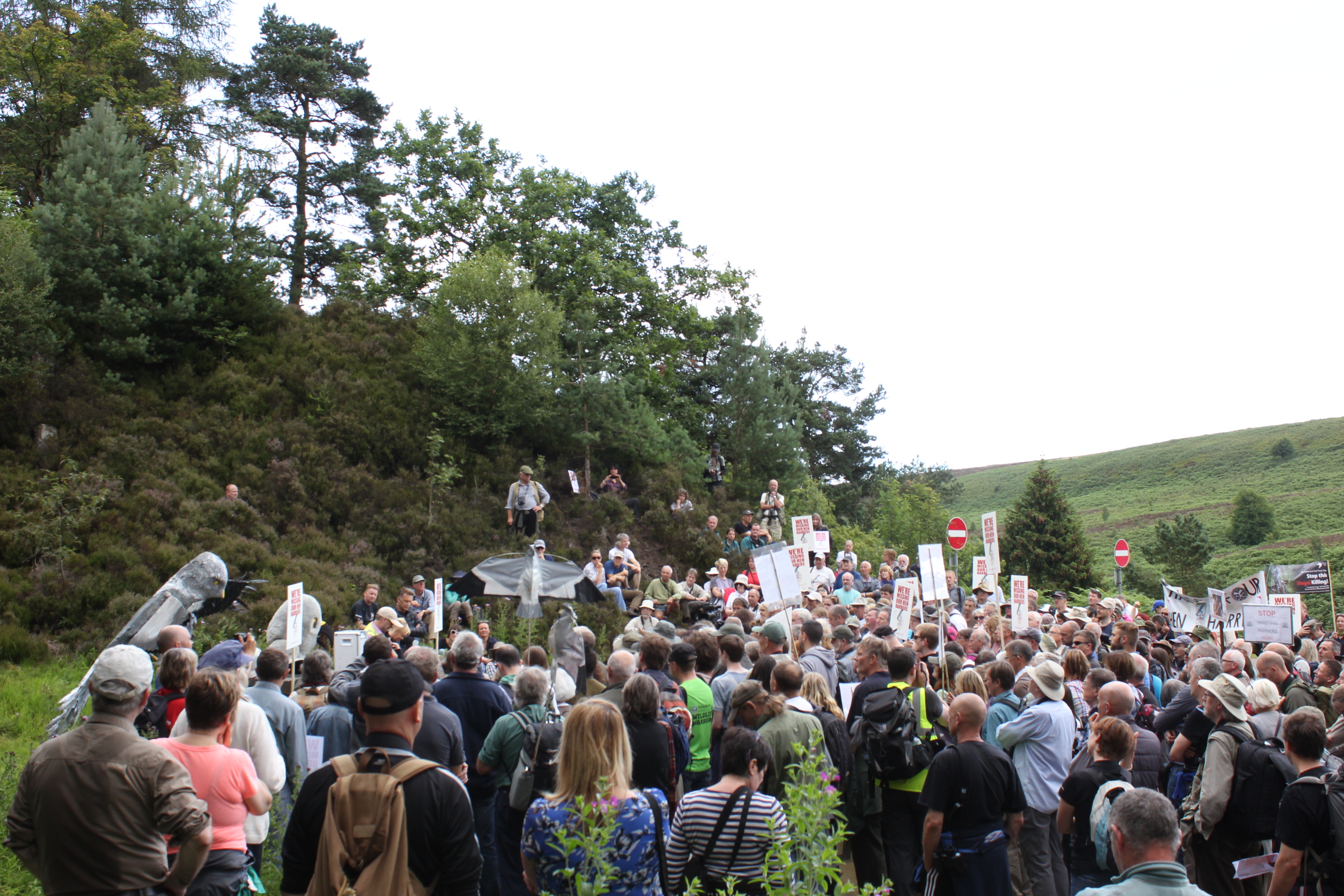
Speaking at the event was Charlie Moores, Mark Avery, Chris Packham, Jeff Knot (RSPB) and Jo Smith (The Wildlife Trust). The talks started about 11am and ended just before 1pm. Then after that many still gathered, chatted and after a while some headed down to Buxton Pavilion Gardens as there were a few stalls, along with lots of interest from people passing by.

As I’ve mentioned, and you can probably tell, it was a fantastic weekend as I’m sure were all the other events happening around the country and I look forward to next year. It feels very odd today after such an exciting weekend! But also on a more serious note, lets hope yesterday made an actual difference and this continues as we won’t be stopping until it does.

Here’s another tweet from Birders Against Wildlife Crime which sums it all up very nicely.

Here are some photos from the weekend.

unnamed (1)

2


1