GE2015 Day One: Saving our Oceans

If you read my introduction blog you’ll know that throughout this week, running up to the general election, I am doing a blog a day about some key issues which affect wildlife in the UK and in some cases on a world wide scale. As I only have six days and I’m currently taking my GCSEs I’ve only been able to include six topics but of course there are many more. With these blogs I hope to show people the problems our wildlife faces, what we can do, who it affects, what will happen if we don’t address the problem, see if there’s been any mentions in party manifestos and much more! I’m also trying to exaggerate the fact that we should be voting for nature and the environment. Along with sending the posts to party leaders, MPs etc. It’s key that we address problems facing wildlife now so it’s not too late as when it is too late we’ll be in serious trouble.

For someone who lives in the Midlands I only get the chance to visit the seaside a few times a year. Obviously many others are in this position too but does that really mean that we shouldn’t care about it? Well the answer to that is no. Even though we don’t live near the sea and we don’t enjoy it’s beautiful scenery that doesn’t mean that it doesn’t do anything for us.

What do the oceans do for me?

First of all, we need oceans to survive. Oceans generate half of the oxygen people breathe, they’re the most promising source of new medicines to combat cancer, pain and bacterial diseases, and they absorb carbon dioxide from the atmosphere and reduce the impact of climate change. It’s safe to say that without this critical carbon dioxide collection process that the oceans take on we would literally all suffocate. As well as this they give us the weather to grow crops, water to support the smallest and largest animals on earth and 80% of all species, vast ice flows to help regulate our climate, millions of jobs and a life-time of pleasure. The incredibly vast size of them means they affect people all round the world. They also provide $21 trillion in food and other benefits yearly. If you do live by the sea or visit the sea you’ll know that they are extremely beautiful places and is thriving with a whole manner of different species.

Below the water

Below the water it is estimated that there are between 700,000 and one million different species. Other species are also affected by the sea too, for example sea birds and seals which get their food source from beneath the water. Oceans are home to some of the most magnificent and unusual creatures on Earth. There are still huge areas of the ocean that humans have never seen. Biologists estimate that there could be between 500,000 and 5,000,000 marine species down there that we have not yet discovered. Earth’s longest mountain range is not on land but under the sea, the Mid-Oceanic ridge is four times longer than the Andes, Rockies and Himalayas combined! They’re also home to some of the longest-lived animals on our planet, including the orange roughly which is a fish that can live up to 200 years. As you can see saving our oceans isn’t just something we should be doing here in the UK but world wide, as oceans are all across the globe!

What’s the problem?

So if the ocean does all this good for us, surely we should do the same back? Yes we should but whether we are doing that is a different story. We’re damaging our oceans in a whole manner of different ways. From persecuting and culling the species within it, over fishing, pollution, build up of rubbish (litter), and many more reasons.

The global fish fleet is 2-3 times larger than what the oceans can sustainably support, this obviously has a massive impact on the waters environment. It’s not just the fish that are affected, each year billions of unwanted fish, like dolphins, turtles, seabirds, sharks and corals, die due to inefficient, illegal, and destructive fishing practises.

Rubbish like plastic bags, balloons, glass bottles, shoes, packaging ends up in our oceans, if not disposed of properly. Most of these materials dispose very slowly and is often mistaken for as food by marine animals. High concentrations of plastic material, particularly plastic bags, have been found blocking the breathing passages and stomachs of many marine species, including whales, dolphins, seals, puffins, and turtles. Plastic six-pack rings for drink bottles can also choke marine animals. This rubbish can also come back to shore, where it pollutes beaches and other coastal habitats.

The species living in our waters are also being slaughtered and culled. This is happening all over the world but one example is from Japan. Each year from September to May over 20,000 dolphins are slaughtered. Fishermen round them up by the hundreds using sound barriers. These animals are then selected and sent off to marine mammal parks while the unselected ones are killed in the most inhumane way, which can only be described as a massacre.

What can I do?

  • Minding your carbon footprint and reducing energy consumption
  • Make safe, sustainable seafood choices
  • Use fewer plastic products
  • Help take care of beaches
  • Support organisations working to protect and save our oceans

Manifestos

Labour – When looking through the Labour manifesto there is no actual mention of oceans or protecting them. However there are lots of mentions of climate change. Our oceans are obviously affected by climate change so in a way this does link as they haven’t been specific in what they’ve said.

UKIP – Whilst reading through the policies on the UKIP manifesto I found no comment to do with oceans or anything that could relate to that.

Conservative – Whilst looking for this subject in the Conservative manifesto I did find some comments on climate change. These included that they would push for a “strong global climate deal” in Paris, support the UK Climate Change Act, and work to assist the world’s poorest people in adapting to climate impacts. There was also a mention of oceans, it said a ‘Blue Belt’ would be introduced to safeguard marine habitats around the UK’s 14 Overseas Territories.

SNP – No mention at all of oceans, but there was a mention of a carbon reduction which in a way does link to oceans.

Plaid – Whilst looking through this manifesto I didn’t find anything either.

Liberal Democrats – The only thing they have put which links to oceans is a 5p charge on carrier bags. This could link to oceans as they are a problem here.

Greens (save best until last) – Firstly, they state how they will work with local communities, scientists and conservation groups to expand the UK’s network of Marine Conservation Zones to create areas specifically for the protection of mobile species as well as reference areas off limit to fishing and other extractive activities. They also said how they will produce a strategy for capturing carbon and reducing greenhouse gases. Another is ensuring that conservation of the environment of oversea territories, including marine areas, is funded to a equal level to their global significance. As well as working to ensure sustainable fish policies. Also work for stronger international protection of endangered sea creatures, and end to the killing of porpoises, whales and dolphins in all waters and keeping these animals for commercial purposes.


Tomorrows blog is on the topic of snares.
image

We Will Not Be Silenced

As you most likely know the general election is approaching fast, in fact just 10 days away. It is becoming very tense as the current polls are close. However it’s not just tense for us Humans, it’s also very tense for our wildlife and animals. Although they can’t vote we need to vote for them, give them the voice they need.

Unfortunately, as I’m 16, I can’t vote but that doesn’t mean that I haven’t been interested in the parties manifestos, their campaigning but also the other campaigning that’s been going on. In fact, when I’ve been able to, I’ve been getting involved with the campaigns. From getting involved on social media and supporting thunderclaps to doing blog posts, writing letters to local party candidates and getting involved with protests.

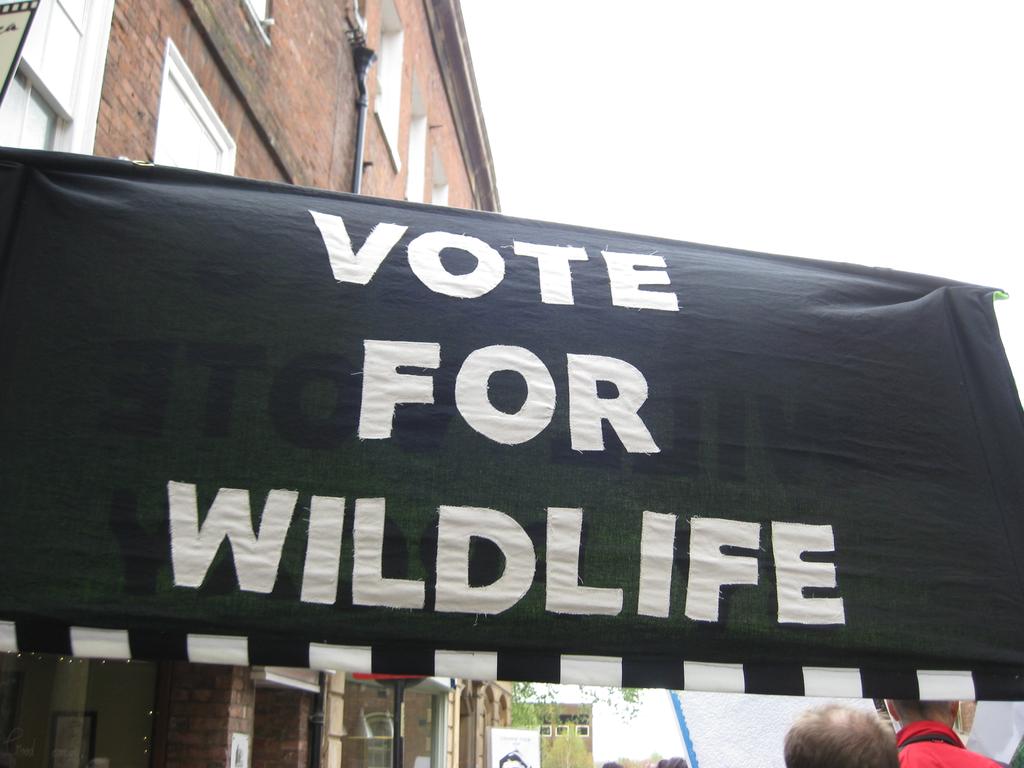
One protest which caught my eye this week was the suffragette-themed march on Parliament to launch the “Votes for Animals” campaign where a variety of organisations, charities and individuals got together. They proceeded the streets of London with their striking masks, costumes and signs with their main aim of giving animals a voice and encourage the public to vote for animals on May 7th. You can read more about the Vote for Animal protest in London by clicking here.

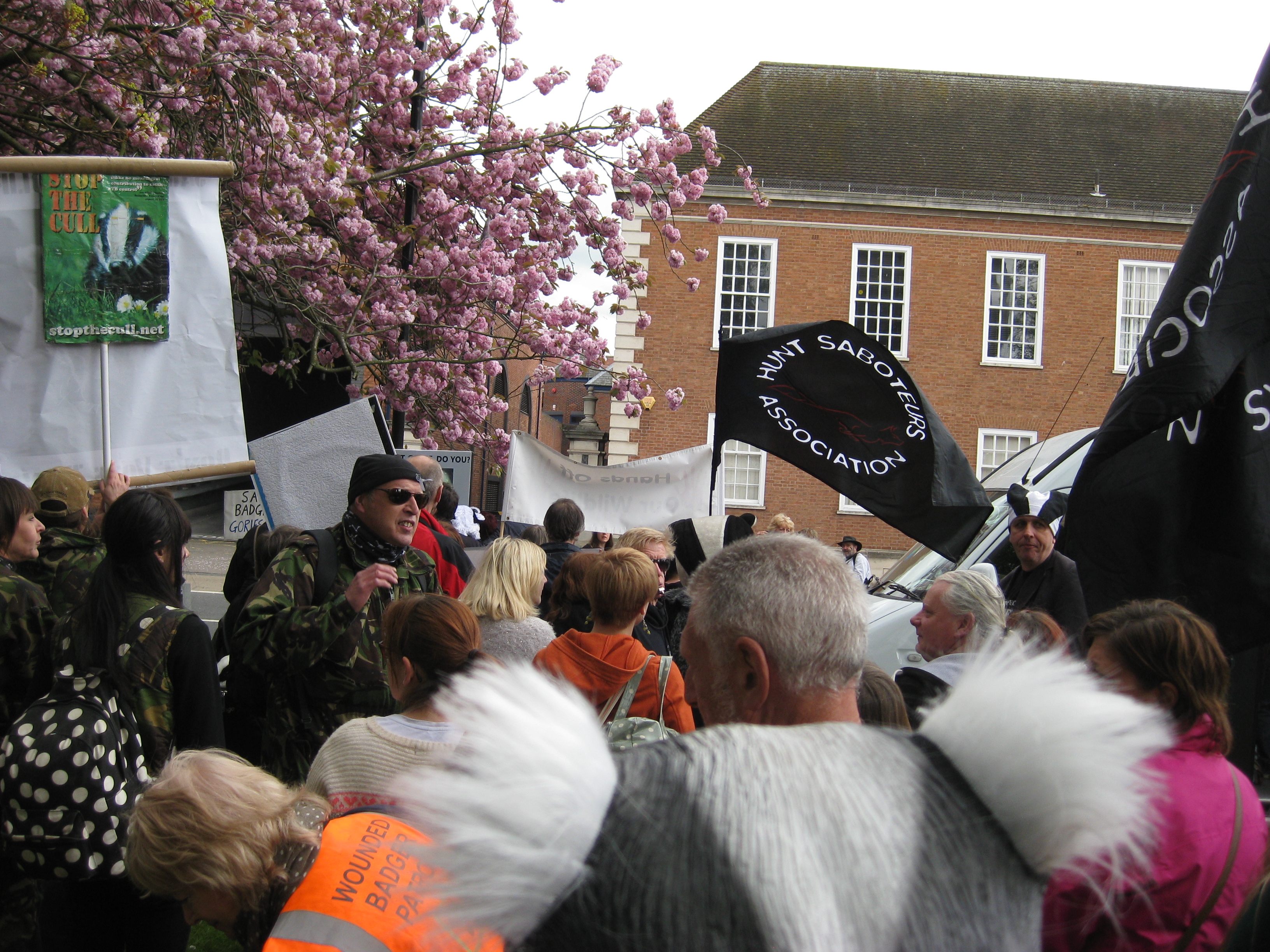
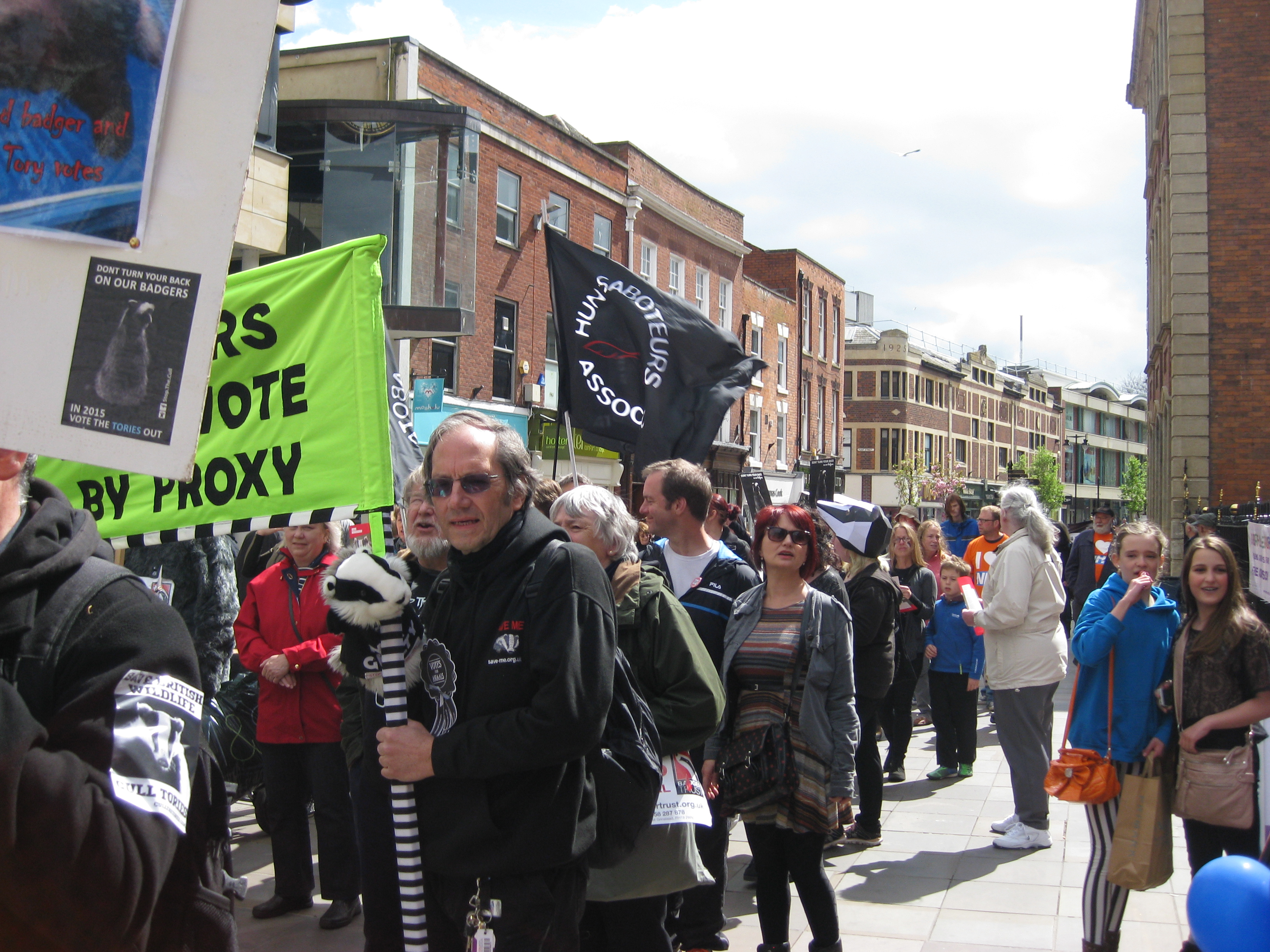
Yesterday though was another day where I went out and helped do my part to give nature a voice. I was up nice and early as I had two trains to catch and was very excited for the day ahead. I was off to join the badger army and wildlife defenders for their march in the streets of Worcester. Once we arrived in Worcester we went for a quick coffee then headed down to St. Andrews Park where the march began. This was my second march, the last one I went on was back in February and took place on the streets of Birmingham. The one in Birmingham was more of a festival as there were more speakers and stalls, you can read more about it by clicking here. It was also brilliant to go yesterday after the Badger Trust Seminar in Bristol last weekend as it great to see some familiar faces. By 1pm there was a good crowd of a few hundred people and everyone was ready to go. There was people dressed up, plenty of signs and flags, megaphones, hats and much more. It was pretty obvious that it was going to be a successful protest.

But before we could begin addressing the streets of Worcester there was three speeches. First was the main organiser, Chris Swan, who spoke about the fact that there is still the worry of badgers being culled, the threat badgers face and also read out a poem about badger persecution which had been wrote a hundred years ago but in many ways applies to today’s world. The second to speak was Lynn Sawyer who has done inspirational work over the past 12 months which resulted in 100’s of badgers life’s saved. She spoke about the fantastic work of hunt and cull saboteurs, the importance of looking out for local setts and read a book extract about the fact that Btb travels on the feet of those horses, humans and hounds. Then before the march began Nigel Tolley spoke. He is a very active member of badger army and a great wildlife activist. He spoke about the fact that even if the cull does stop, depending on who gets into power on May 7th, there is still the major problem of badger persecution. He stated that over 2000 badgers are killed every month throughout the UK which is well over the amount killed in the culls. He also spoke about how we need to encourage people to go out, recognise and report wildlife crime.

After these two talks the march was raring to go. There was a set route through Worcester, which we followed. Everyone was shouting either ‘Save our Badgers, Stop the Cull’ or ‘Save our Badgers, Tories out’. It was such a brilliant atmosphere, everyone was so passionate and determined to get the message across. Signs and flags were high in the air, leaflets were being handed out and stuck everywhere, and the shouting echoed down the high street. There was no doubt that we were making our mark and spreading the message. We then stopped outside of the Guild Hall where three more people spoke. The first was the Labour candidate for the area, then the Green candidate. They both spoke about the policies of their party. One of the common policies was putting a stop to the barbaric unscientific badger cull.

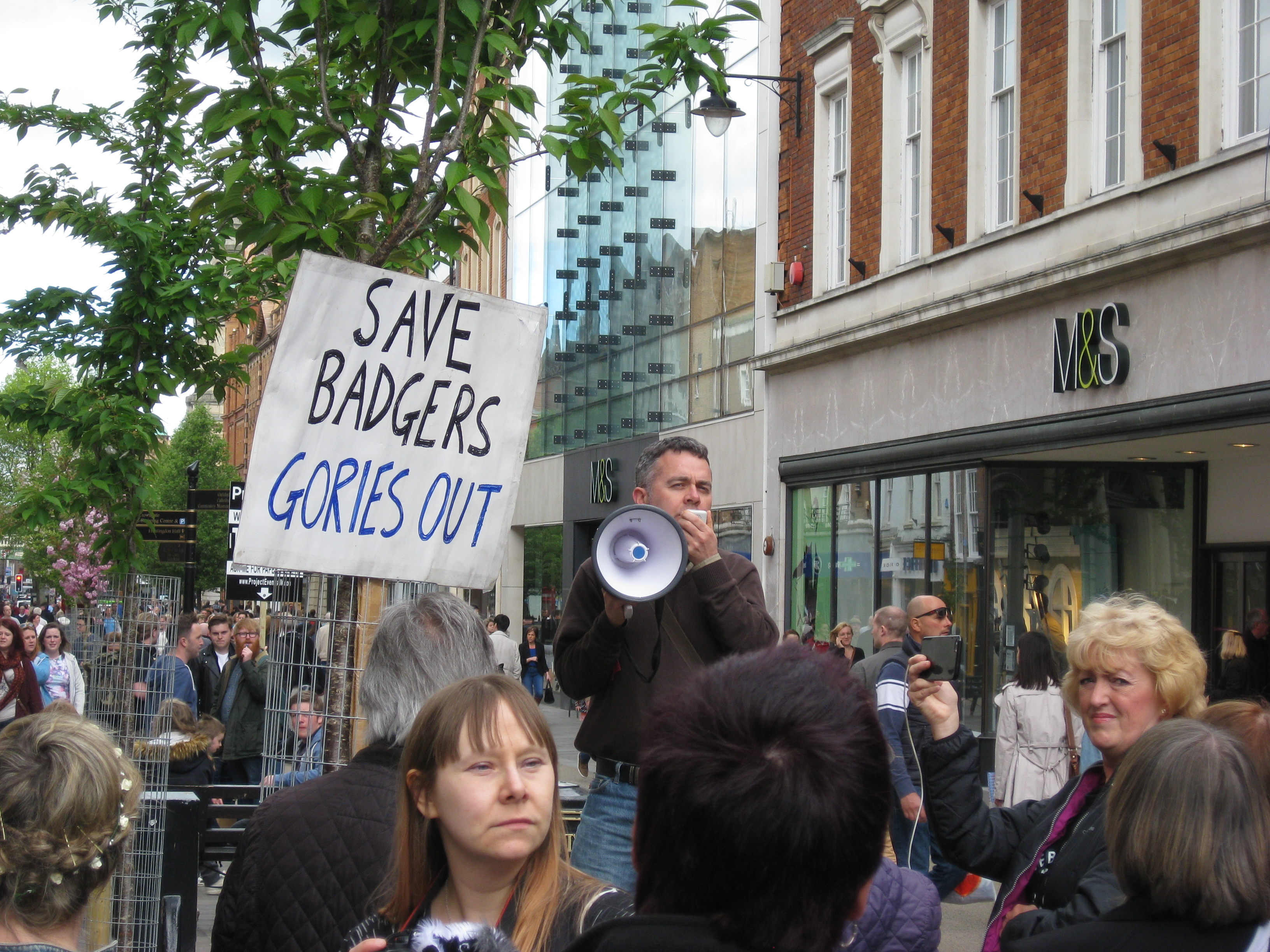
Before getting started again Dominic Dyer, wildlife campaigner, gave a speech. Over the past few months I’ve heard him talk a number of times and what he says is always very inspirational. He stood up on a park bench with a megaphone and spoke about a number of issues. From the badger cull to wildlife crime. He also stated that we will not be silenced.

As I heard a few times yesterday, to be able to protest in Worcester yesterday it took a lot of hard work from the organisers. This is partly due to the election approaching and in different ways it’s jeopardising the chance for parties to win seats because the badger cull, and wildlife crime, is among a key issue for many politicians.

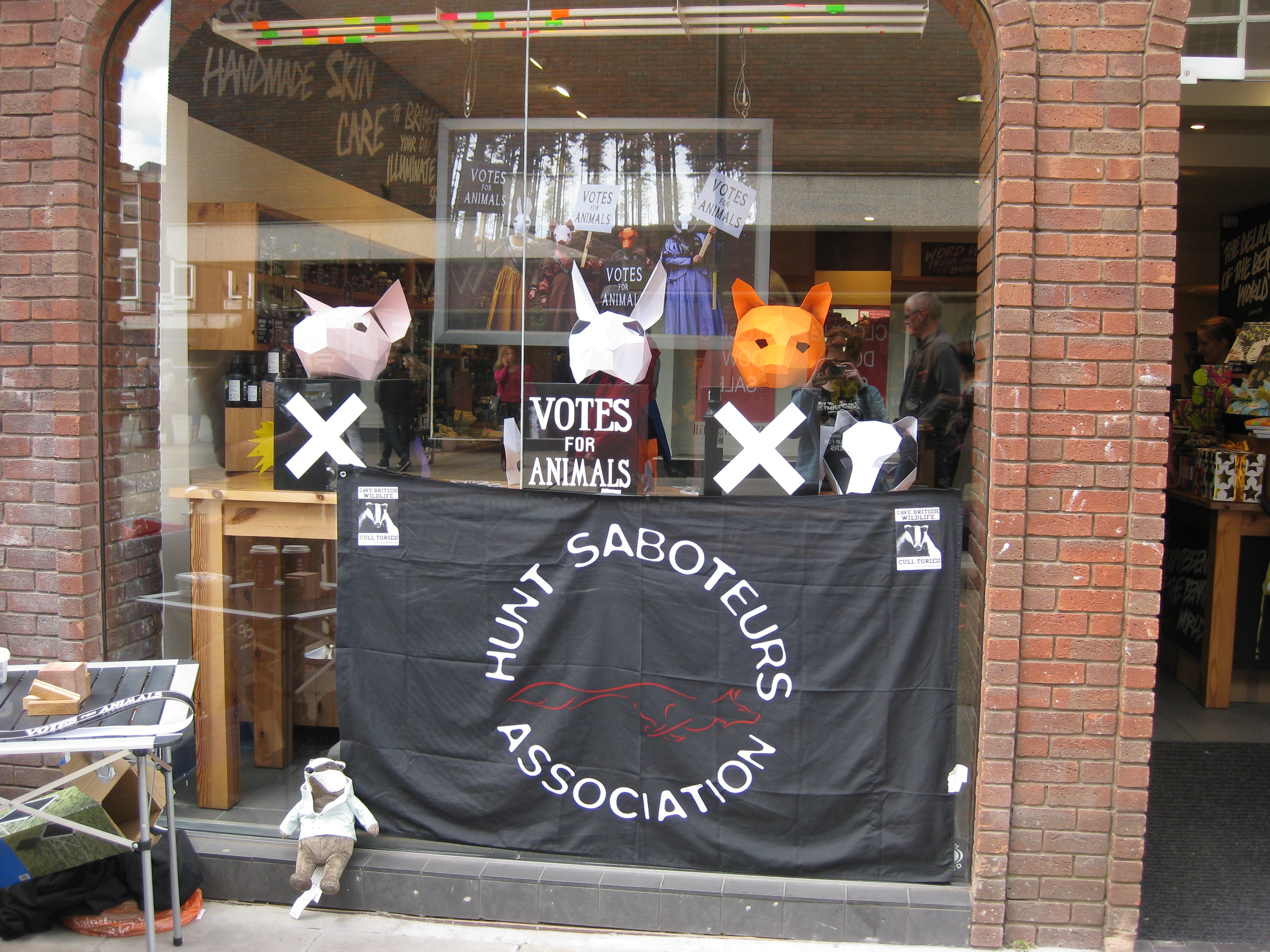
We were then back to the protest through the high street in Worcester, feeling more passionate and enthused after more inspirational speeches. On our way back to St. Andrews Park we passed the Lush store in Worcester which had a few signs outside and their window display was about the ‘Votes for Animals’ campaign. This was another great feature to the protest.

Once back at St.Andrews Park all those on the protest stood together for a photo. It made a fantastic photo as it showed everyone’s passion and willingness to be there. Then with the outfits, masks, hats and signs it showed what we all stood for.

Here are a few photos from the day.

IMG_1344

IMG_1347

IMG_1353

IMG_1358

IMG_1366

IMG_1370IMG_1371  IMG_1385

IMG_1387

IMG_1379

Badger Trust Seminar 2015

After collecting my trail camera I was thrilled to see that not only had I filmed the adult badgers but I had also filmed badger cubs for the first time this year! I set my camera up near the sett last Saturday and there was no sign of cubs so this was obviously one of the first times they had emerged from the sett. I was thrilled with the footage, It was fantastic to see the natural behaviour of badger cubs exiting the sett for one of the first times. I filmed a variety of activity from cubs playing, the adults having a good scratch and one of the adults dragging one of the cubs back in to the sett by the scruff of its neck. Here’s one of the clips, I’ll be doing a blog post with more later on in the week.

I didn’t have that much time to look through as I had a long journey ahead of me to the Badger Trust Seminar in Bristol. As I was eager to go and my parents were working I managed to get a lift from a member of the South Derbyshire Badger Group which was great and I was so pleased I went! There was a prompt start at 11 for the AGM then after lunch the afternoon of debates began.

First debate – The Badger Cull

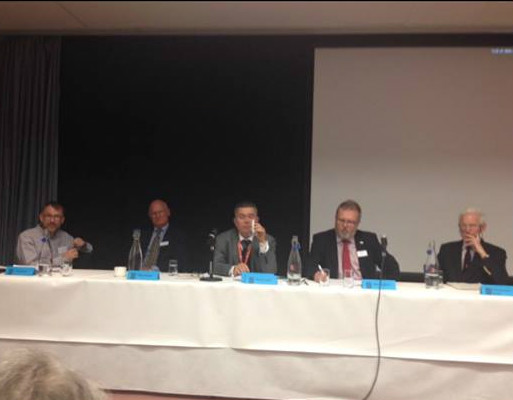
The first debate was on the badger cull. Sat on the panel was Professor John Bourne, the Chairman of Independent Scientific Group, Roger Blowey, Livestock Vet, John Blackwell, President of British Veterinary Association and Mark Jones, Vet and Wildlife Protection Campaigner. As you can see, from the variation of panel members, it was very interesting and resulted in a fantastic debate with a mixture of discussion from the panel and comments from the audience. This debate was very important as it’s not very often you get people like this together. Before comments from the floor the members of the panel introduced themselves and give a small introduction then Dominic Dyer, Badger Trust CEO, asked them a question on what they had said.

However before long this got a bit out of hand and the debate became very intense. For me it was a great experience and to hear so many people express their opinion in such a strong way, against the cull, was truly inspiring. Also the fact that they weren’t afraid to speak out against those on the panel which are in favour of the cull.

The first to speak was John Blackwell, President of British Veterinary Association. This was interesting as the British Veterinary Association had released their statement on the badger cull just a few days before the Seminar. In the statement they had made a U-turn from their original idea which was culling free running badgers was the way to go. Instead, in their latest statement, they stated that the pilot culls should continue but badgers should be caught in cages before shot as they believe it’s a ‘humane and effective’ way.

This was then followed by Roger Blowey, a recently retired Livestock Vet and author of report on the possible impact of culling lowering TB rates in cattle. I’ve read comments from him in many articles stating the fact that he believes ‘the culling of badgers in the county is the only reason why farmers are now testing negative for bovine TB for the first time in a decade’. Roger Blowey made many more comments and suggestions like this one throughout his introduction and in the debate.

Without a doubt, this fired the debate up. Many people in the audience got involved which was timed nicely with the great introduction from Professor John Bourne. It was obvious he knew what he was talking about as he destroyed any scientific, economic or animal welfare justification for the current badger cull policy. He went into great detail, along with giving examples from other countries, that the negligence and deceit within the Government, Farming and Veterinary Industry has led to the demonisation of badgers for spreading bTB when all the evidence points to poor bTb testing and cattle controls as a key factor for the increase in Btb. He also stated how millions of pounds has been wasted, wildlife destroyed and how farmers and tax payers have been let down by a disastrous bTb reduction policy which has focused on badgers far too much.

The last one to speak was Mark Jones who is a vet and wildlife protection campaigner. His introduction went through different reasons why the cull isn’t and won’t work. He presented his points in a very organised way and put his points across clearly. He also made the very valid points on how badger persecution is rising which is no doubt related to the badger cull.

Overall it was an extremely interesting and tense afternoon, I was very pleased to be there. Obviously, as you all know, I’m against the cull, full stop. So being there during the debate was a fantastic experience. The atmosphere was incredible and I felt privileged to be surrounded by people that care so passionately. Going to an event like this makes me realise, more so, why I am against the cull and makes me more determined to help do my bit to rule it out and resort to other ways to reduce bTb.

11169840_739399219504704_144552064817865544_n

Second debate – Wildlife Crime

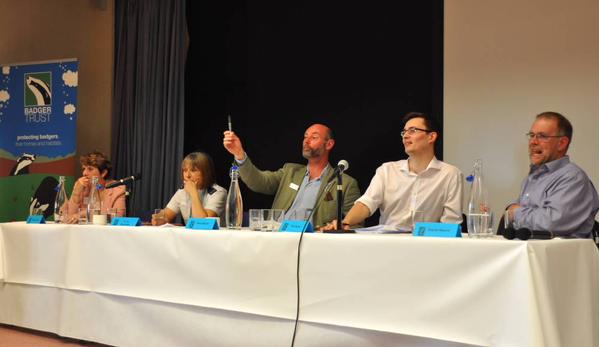
The afternoon didn’t stop there though as there was another debate which was on wildlife crime. I must say, this debate wasn’t as intense but it was still very interesting. The panel was chaired by the new Badger Trust chairman, Peter Martin, and on the panel was Charlie Moores, Birders Against Wildlife Crime, Tom Quinn, Director of Campaigns at League Against Cruel Sports, Pauline Kidner, Founder of Secret World Wildlife Rescue and Lee Bainbridge who is the wildlife Crime Officer from the area.

Starting it off was Charlie Moores who is the Chair of Birders Against Wildlife Crime. He gave a summary about what BAWC is about, his views on wildlife crime and tackling wildlife crime. Birders Against Wildlife Crime is a campaign group which was set up last year by a group of experienced birders and conservationists who are sick of the number of crimes being committed against wildlife. I went along to BAWC’s first conference a few weeks back which was a fantastic day and you can read more about it by clicking here.

This was followed by Tom Quinn who is the director of campaigns at League Against Cruel Sports. He spoke about how reducing wildlife crime is a massive priority for The League, wildlife crimes including fox hunting and badger persecution, increased promotion of wildlife crime on social media, how the badger cull is having an impact on badger persecution and how wildlife crime data is uncoordinated and underfunded. He also spoke about the work The League do and convicting the wildlife criminals.

For this debate, most likely due to the fact that we all had mutual feelings, it was more organised and the speakers had the chance to speak before the debate. Next up was the wildlife crime officer for Avon and Somerset, Lee Bainbridge. She spoke about reporting wildlife crime, the role and increase of wildlife crime officers and how the training is improving. I think the talk from Lee Bainbridge could relate to most of us as if you’re one for being outdoors and observing wildlife you come across wildlife crimes. I came across one which had been committed at a badgers sett last year and got in touch with my local wildlife crime officer and the Badger Trust. Fortunately the result was very good.

Before the audience could ask questions there was one more talk which was from the Founder of Secret World Wildlife Rescue, Pauline Kidner. She spoke about the increase of injured badgers which is linked to the cull, wildlife traps and snares and reporting and recording wildlife crime. Another thing she spoke about was something that she believes is important that we need to do to help tackle wildlife crime and that is by starting with educating the youth. I was pleased she brought this up as it’s a subject which is also very important to me.

When I go to school I’m surrounded by young people that have no idea about the ongoings in our countryside. This is partly to do with things like technology which have taken over. If young children aren’t able to go out and engage with the outdoors from a young age and learn about it when they grow up then how are they supposed to be able to report wildlife crime, help protect species and habitats, and most of all put their opinion across on what they think should be going on in the countryside and to our wildlife, without being brainwashed.

This debate was different to the one on the badger cull as everyone on the panel had mutual feelings. However there was a lot of discussion about the problems with reporting wildlife crimes and how it isn’t being taken seriously enough. There was also a discussion about fox hunting and the illegal on goings which aren’t dealt with.

CC9UQ89XIAA-1Lt

After a fantastic day it was finished perfectly with a talk from the actor and animal ambassador, Peter Egan. He gave his comment from the discussions which had gone on and read out a very inspirational poem about Moon Bears.


Twenty First Century Badgers

As I’ve been off for the last two weeks I’ve made the most of it and tried to get out as much as I can. Whether it be on my local patch, nature reserves or setting my trail camera up. Unfortunately I have some important exams approaching so I’ve had to make time to revise for them too.

However a few nights ago I returned back to a badgers sett which I hadn’t filmed at since last Autumn. This time last year I managed to film a few of the adults but it wasn’t until the end of the month when the cubs first appeared. When I collected my trail camera on Sunday morning it was pretty much the same, adults but no cubs yet. I set two cameras up, one of my normal ones that I use and a new one which my Dad has been working on recently. It works through something called a Raspberry Pi, not an actual pie but a type of computer. He then added the camera, motion detector and then printed out a case with his 3D printer. It’s very clever and it was great to try it out for the first time. Unfortunately It didn’t go completely to plan but he’s made some adjustments and we’re going to set it up again soon.

Here’s some of the footage I got. It includes badgers and a tree climbing rat. I hope to film the cubs in the upcoming weeks.