Back from the text books

On Thursday morning, I had my last A Level exam. Meaning that I have officially finished school. After spending the last two years pushing and shoving myself through lessons and to commit to my A Levels, this is a huge relief and incredibly exciting. I’m now looking forward to not only what the next few months will hold, but what I’ll be doing post-school.

Over the last few months, I’ve felt as though I’ve been very quiet. Thus, I’ve felt quite guilty about this. Very few and no regular blog posts or writing elsewhere, spending fewer and fewer hours a week on my local patch as the weeks went by and the constant pressure to give up doing the things I love doing to stick my head in text books for hours on end instead. Although this was the ‘necessary’ thing to do so that I could succeed in my revision, pressure so bad that you have to give up what you enjoy doing altogether has its toll. However, it’s all over and hopefully the struggle will have paid off.

On the other hand, I strongly believe that exam results don’t represent anyone’s true intelligence or what they’re capable of achieving. This is a key lesson that I’ve learnt over the last two years. All the information that I retained in my lessons will never match what I’ve learnt when I’ve been out birding, using trail cameras or out walking. If you ask me a question related to what was in my English exam on Thursday in a month’s time, I could almost guarantee that I won’t have a clue what the answer is. Something that reflects this is my predicted grades. In English, I’ll be lucky if I get a C grade, however in a project I completed as part of an AS level (known as an Extended Project Qualification) about the impacts of Nature Deficit Disorder, I’m predicted to get an A grade. The difference being, although I enjoyed English as a subject, I was forced to retain information that may appear in my exam but for my EPQ, I wrote about something that really interests me.

However, I couldn’t keep myself completely absent from everything over the last few months. For a starter, I’ve been practising for my 191-mile trek that I’m doing next month to raise some cash for the BTO’s swift project. Practising has been a great excuse to take a break from my revision, get some exercise and spend some quality time outdoors. From cycling the lanes close to where I live in Staffordshire to long distance practise walks every few weekends. And since the beginning of May, these outings were made even more delightful by the accompaniment of swifts.

So far, I’ve raised over £1000, which I’m thrilled about. This cash will go towards funding the BTO’s swift project, which includes tagging and monitoring them to find out the reasons for the decline that we’ve seen in recent years. It’s incredibly important work. You can read more or support my walk by clicking here.

A momentary moment for me in the last few months, which I didn’t get the chance to blog about at the time, was voting for the first time! Some may remember my multiple blog posts around the time of the EU referendum last year and the 2015 General Election. I wrote about how the way in which the country voted was important when it came to future protection of the natural environment. I also wrote about my disappointment in not having a voice due to not being able to vote. The argument to be able to vote at 16 is a very valid one. Although many believe that young people are either not educated enough about politics or simply don’t care enough to make the right decision, I think after the results of the recent General Election, young people are beginning to prove those who doubted them wrong.

I was pleased with the result too. It was a rare occasion as I felt positive. After losing her majority, Theresa May’s attempt to repeal the Hunting Act has now been torn apart and with rising popularity of the Labour Party and Jeremy Corbyn, it gives a glimmer of hope as the end of the Tory government and chaos might be within reach. This could spell the end to the badger cull, bring better protection for the environment post-Brexit and bring in a government that understands and realises the importance of the natural world. Unlike last week’s events when Michael Gove was made secretary for the environment. A man who believes that environmental protection is a nuisance, attempted to remove climate change education from the curriculum whilst he was secretary for education and doesn’t see a problem with pesticides.

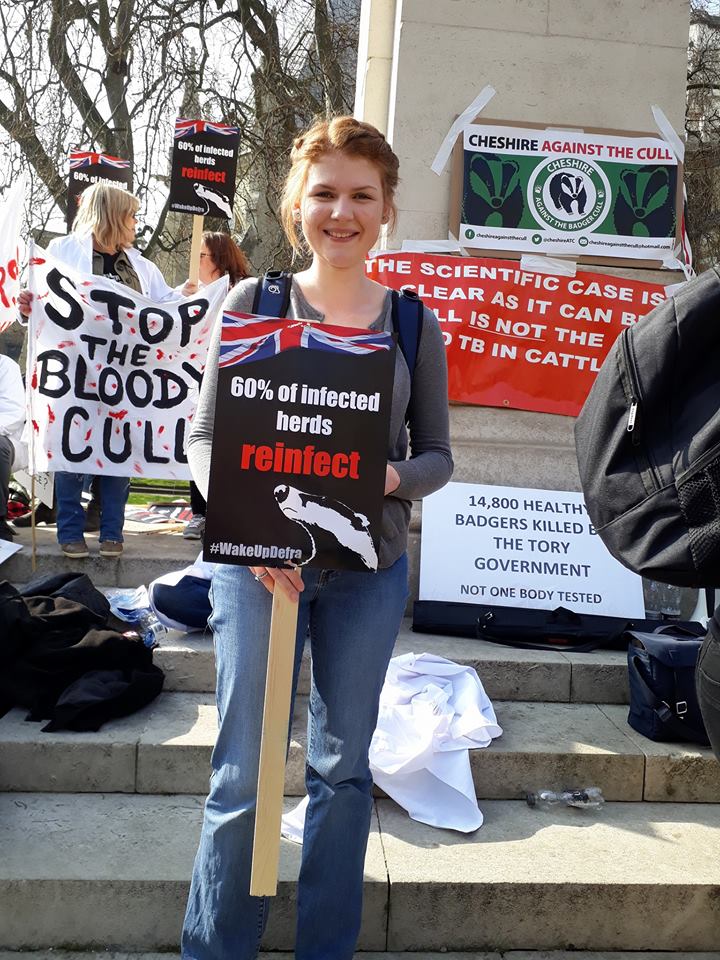
In the run up to the General Election, I did manage to attend a few rallies and demonstrations. A few weeks before the General Election, there was a debate on the badger cull following the success of Simon King’s petition that reached over 100,000 signatures. Although it was certain that the result of the debate was unlikely to bring any positive change, I was desperate to make it down to London so that I could join others outside the Houses of Parliament before the debate began. Unfortunately, the attendance of ministers and MPs was as it was expected to be, very poor. As was any ‘debating’ or any outcome. Following the overall uncertainty in the UK and for the government over the last few months, it’s going to be interesting to see what happens with the cull this year. A few months back, it looked as though it was going to be the worst cull yet with further cull zones across the UK and more freedom for land owners. However, recent events and challenges facing the government could force them to change their minds.
Another interesting march I went on was one of the ‘March for Science’ events that were taking place across the world. The one I attended was in Bristol. It was another excellent day and I was surrounded by passionate individuals fighting for the sake of science and in response to recent actions and comments made by certain individuals, in particular, Donald Trump.

After the success of my peregrine watch at Lichfield Cathedral last year, I decided that it would be wrong not to repeat the events this year. Thus, I put a poster together, sorted some dates and managed to get hold of some optics. This was all with the help of some lovely local birders. We organised three mornings in total, all of which were very successful with many coming to have a look. We were also treated with some brilliant views of the birds. I absolutely loved being out doing these watches. It was brilliant to engage with people who had no idea about the birds being there. But when we told them what they were and after they had a look through the scope, the look on their faces was the best!

Unfortunately, I won’t be in Lichfield to do the watch events at the cathedral next year but I’m sure that they will be taken over by others. This is because I’ll be a student at Hull University from September. Those who know me fairly well will be aware that a reason why I’m so excited to go to Hull is because I’ll be within stones throwing distance of one of my favourite places in the world, Spurn. Whilst taking my exams and during times of intense studying, I spent a lot of time at Spurn. I could revise, take very effective breaks and enjoy decent bouts of birding. On my last trip, a week before my exams started, I had one of the craziest days ever. From sat at a desk revising for my English exam, I walked a matter of steps and saw my first Honey Buzzard! My reward for a mornings hard work.

Now my exams are all over, I have a lot planned over the summer. In fact, whilst writing this post I was on the overnight ferry from Aberdeen to Lerwick, Shetland on the way to my first stop: Fair Isle. Where I was supposed to arrive this afternoon but due to weather conditions, I won’t be able to get there until Monday at the earliest. In the meantime, I’m looking forward to exploring Shetland, where I’m currently ‘stranded’, tomorrow.

Trek for Swift tracking

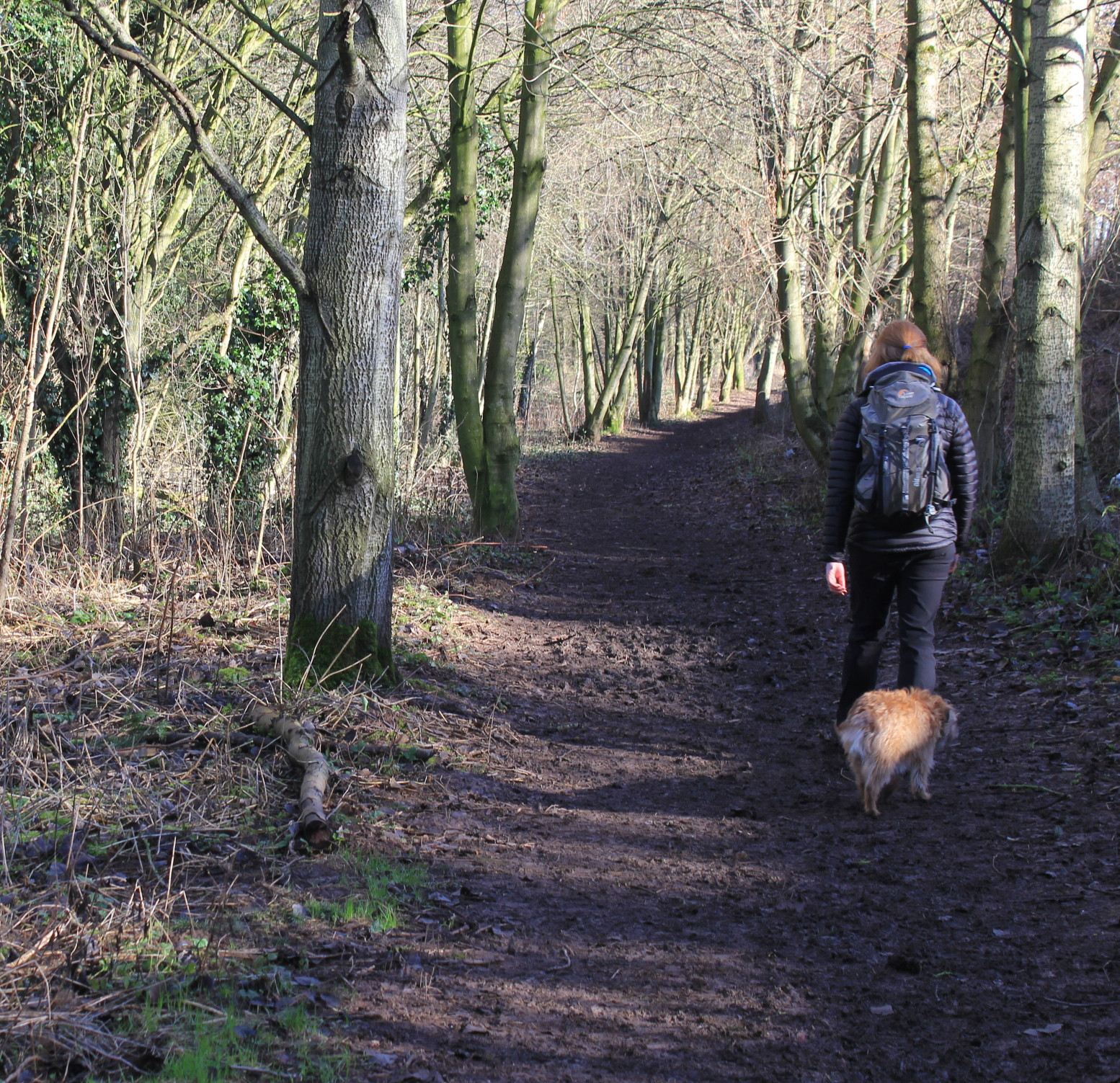
Those of you who have been following my blog since it first began will be aware of how it’s changed. Not the fact that blogs are becoming less frequent (sorry about that, I promise to do more soon!) but they’re now about a wider range of topics. Some of my very early blogs were mainly focused on the wildlife I saw and recorded, along with my outings. On multiple occasions I blogged about my experiences from the walks I’d been on. I still love going on long distance walks, whether that’s locally or further afield. It’s a fantastic way of delving deep into the countryside.

Below are a few examples of some of my first blogs about my walking adventures. You can view them by clicking on the titles:

Some of you may also be interested in the piece I recently wrote for A Focus on Nature’s (AFON) Christmas advent series. In the blog I explore where my enthusiasm for long distance walking began – http://www.afocusonnature.org/advent-calendar/my-grandad/

Later this year I plan to put all of this into action by taking on a long distance route. The North West Way. A 191 mile trek across the North of England. Starting in Preston: it follows parts of the Ribble Way, the Penine Way, through the rugged dales of Yorkshire via the thundering waterfalls of Teesdale and High Cup Nick and follows a section of Hadrain’s Wall before finishing in Carlisle.

It will be 11 days of back to back walking and although this may sound slightly mad, I’m really looking forward to it! Even better, in doing so, I have decided to raise funds for the BTO to help support their Swift tracking project.

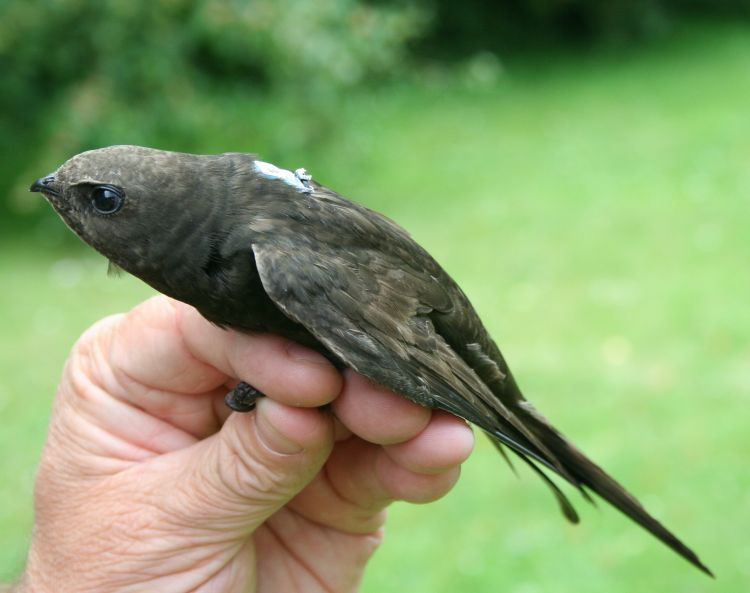
Swifts are remarkable birds. Watching them dazzling in the sky above me on a summer’s day never fails to put a smile on my face. They are very iconic and for some, a sign of summer. The sight of their dark, sooty brown streamline, forked tail silhouette and shrieking overhead is a memorising sight and a real spectacle!

Unfortunately, their breeding numbers have declined by 47% between 1995-2014 here in the UK. This is an alarming decline and making matters worse is the fact that no one is quite sure why. Although the loss of nest sites through modernisation of buildings is implicated, it is very likely that this is only part of the story.

During the breeding season, Swifts depend on large bursts of insects to collect enough food for themselves and their young. It’s likely that the decline in the abundance of invertebrates that has occurred in Britain due to climate change has reduced the amount of food available for breeding Swifts. However, little is known about their foraging behaviour during breeding due to the difficulty of following them over relatively large distances that they are thought to travel to feed.

Swifts are only present in the UK for 3 months a year, therefore it is possible that they are being affected by processes occurring elsewhere in the world, in the areas that they use outside of the breeding season. To find out more about this, the BTO plans to track Swifts on their migration.

By deploying miniature GPS tags on swifts at breeding colonies in England, the BTO will be able to track swifts both on their foraging flights during the breeding season and over their annual migrations. As each tag will be able to record around 300 locations per deployment, this will allow the BTO to quantify the amount of time spent over different habitats and the distances travelled from the colony through short-term deployments during the breeding season. Through longer-term deployments with different tag programmes, it will allow scientists to look in much finer detail at the use of the stopover points in West Africa on spring migration.

The money that I raise will go towards supporting the BTO to ensure that these tags are safe enough to be deployed on Swifts during the summer and winter so that scientists at the BTO can gather and store data on long term deployments to help them learn more about the challenges they face on migration. This is key, as if scientists can understand what’s going wrong, we know what we can do to reverse this.

To donate please click here.  All donations are greatly appreciated!

geoswift-crop

photo1

Christmas and into 2017

First of all I need to apologise for my lack of blogging over the last few months, my A-Level work load has become quite intense.

This year has been a very interesting one, to say the least. Different events and highlights will stand out to different people. For me, a few include: Britain’s vote to leave the European Union, the peregrine watch events I organised at Lichfield Cathedral, the Birdfair, Trump, the parliamentary debate of Driven Grouse Shooting, the sorrow loss of David Bowie, the Siberian Accentor invasion, contributing to Summer as part of the Seasons anthologies, all of my wonderful trips to Spurn, the fourth year of the badger cull which resulted in the largest slaughter of 10,886 animals, and the list goes on. These are just some thoughts off the top of my head, looking back it’s been quite a year. As much as there’s been some extremely negative and worrying things going on, there’s a few glimmers of hope in there.

Just this week the winners were announced for the Birdwatch ‘Birders’ choice awards 2016′. Mark Avery received Conservation Hero award, and the Driven Grouse Shooting campaign won Campaign of the Year, too. Both are very well deserved of these awards. They’ve been very prominent throughout this year and have further highlighted the persecution that is happening to an audience on a national scale. Another award given was Bird Book of the Year to Andy Roadhouse’s The Birds of Spurn. This didn’t surprise me in the slightest, it’s remarkable – it deserves to be bird book of the century! And I’m looking forward to my retreat back to Spurn next week for a week before going back to Sixth Form.

Just last week the government sneaked in the horrific figures of how many badgers were killed in the 2016 cull. They were very depressing. It was the fourth year of badger culling and who knows what next year will bring. More zones, more freedom, longer time periods to carry out the killing; I can only imagine that it will be bleak. However, on the other hand, from the first march I went on in Brighton this year to the one in Chester just a few weeks ago, the movement created in opposing the cull is incredible and still going strong. Petitions, people out in the streets, in the courts, using social media, out in the field and in the cull zones, the list goes on. I’ve seen numerous individuals dedicating all of their time to this cause. The merging of these groups is also very promising and something that has been needed for too long. The ‘badger army’, hunt saboteurs, authors, birders, campaigners against raptor persecution, as well as the rising of younger people standing up in conservation.

On that note, next week (2nd January) the first edition of the New Nature e-magazine will be published. A magazine written and created by young people, for other young people. I am very excited to read this as I’m sure it will be fantastic and that the editors (James Common, Alex Pearce, et al) will have done a superb job. The collection of writing, photographs and contributions from young people engaged with conservation and the natural world will give a real sense of hope as they showcase their ability. I will also be contributing with a piece about the badger cull, from when bovine TB and the badger ‘issue’ first rose in the 1970’s to now.

So, 2016 hasn’t brought all doom and gloom. It hasn’t been great though and I can’t help but feel how it’s just a warm up for what next year is going to bring. For a start, Trump stepping into office and the beginning of our exit from the EU. Some of us might be tempted to go and hide or sit back and see what happens but we mustn’t, we all have the power and capability of making change and controlling the direction we travel.

I hope you all have a wonderful Christmas and 2017. One that isn’t too apocalyptic and that we all survive.

IMG_0749

Where I hope to spend as much time as I possibly can in 2017 – Spurn.

Double mustelids

It hasn’t been since the spring that I’ve properly used my trail cameras and got stuck into filming nocturnal wildlife with them. When I got my first trail camera it started off with filming hedgehogs in my garden, which are still visiting, then moved onto filming at a local badger sett. It then progressed to filming anywhere I thought something interesting may be lurking. This has also included otters, foxes, garden birds and so on. My favourite time to film wildlife with my trail cameras though is overnight. Partly because one of my favourite animals is the badger and it’s also fascinating to know what’s about behind the scenes.

After spending the last few years actively filming a badger sett which was quite a way from my local patch, earlier this year in July whilst exploring a woodland on my patch I was delighted to come across some strange mounds of earth and a selection of holes. Badgers! I was so thrilled to find a sett so close to my house, just a ten minute walk in fact! Unfortunately over the summer I’ve spent more time away from home then I have at home so haven’t had many opportunities to spend time setting trail cameras up at the sett or spend time sat there. However now I’m back at school, I have more time to do so.

The time I spent on Thursday evening on my patch was a bit surreal. Now, my patch isn’t the most interesting place in the world. It’s an area of woodland and farmland that is just on the outskirts of the city I live and backs onto a housing estate. Nevertheless it’s my patch and I enjoy spending time there so to find a badgers sett on it was one of the best moments ever! On Thursday night though, I set out with the intention to put my trail camera up quick then get home as it was already getting dark. Instead of walking through the woodland I decided to cut off onto the field which runs along side as visibility was getting very poor. As soon as I scrambled under the barbed wire fence and brushed myself down, a barn owl appeared in the sky above me. Amazing, the first time I’ve seen a barn owl on my patch for quite a while.

By the time I got to the top of the field and made my way into the woodland where the sett is, it was pretty dark. Whilst I glared at the tree trying to work out how I was going to sett my camera up, at the base something moved. A badger. It looked right at me. Two metres away. Our staring competition must of lasted about 30 seconds before it furiously smelt the air. This continued for about 4 minutes before it established it could relax. I stood solid. The animal sniffled around in the overgrowth around the sett then came back into my view. It was that relaxed it decided to have a wee before rolling over to scratch its belly.

This experience lasted about ten minutes before it casually returned down the sett. I continued to stand still for around five minutes, just encase it decided to return back to the surface. It didn’t so I quickly strapped my camera to the tree and trembled down the path whilst trying to be as invisible as possible. I couldn’t believe what had just happened. Not until I got home and sat down did I get my heart rate back to normal.

I was up early yesterday morning to collect my camera. On my way to the sett  I spotted a Goldcrest. I don’t see them very often on my patch. Perhaps one of the first autumn visitors. I didn’t see very much on my way though. Not because it wasn’t there but because I was so eager to collect my trail camera. I do remember a Chiffchaff was still calling though!

Once I’d collected my trail camera this continued as I sprinted home, impatient to see what I’d recorded overnight. Even though I knew it would only be badgers, it was still very exciting. Are there more animals around compared to the last time I filmed them? Have I captured some interesting behaviour? What direction were the animals going off in?

Just my luck, the batteries had played up over night and only recorded five 30 second long videos. Still, I impatiently and randomly made my way through the clips. What was that? Polecat! A Polecat, I’d recorded a Polecat! I couldn’t believe it! A Polecat came into the frame, sniffed around then disappeared behind the left-hand side of the camera frame. This is the first time I’ve recorded one on my trail camera and recorded one on my patch. However I did know of them being in the area. In fact they have quite a healthy population. Quite a few times I’ve seen road casualties on nearby roads, plus I know local wildlife trail cammer’ Kate MacRae has also filmed them around her garden.

Why am I so excited to see that polecats are active on my patch though? Well only recently have Polecat populations began to increase which has resulted in them spreading across England, from Wales. North Wales was once the only stronghold of Polecats as up until the 1930s they were persecuted by gamekeepers due to being considered as a pest. So with numbers bouncing back, it’s important to celebrate a success story.

Here’s the video I got.

And a badger.