Badger Trust Seminar 2015

After collecting my trail camera I was thrilled to see that not only had I filmed the adult badgers but I had also filmed badger cubs for the first time this year! I set my camera up near the sett last Saturday and there was no sign of cubs so this was obviously one of the first times they had emerged from the sett. I was thrilled with the footage, It was fantastic to see the natural behaviour of badger cubs exiting the sett for one of the first times. I filmed a variety of activity from cubs playing, the adults having a good scratch and one of the adults dragging one of the cubs back in to the sett by the scruff of its neck. Here’s one of the clips, I’ll be doing a blog post with more later on in the week.

http://www.youtube.com/watch?v=z2EGg7Ko8V8

I didn’t have that much time to look through as I had a long journey ahead of me to the Badger Trust Seminar in Bristol. As I was eager to go and my parents were working I managed to get a lift from a member of the South Derbyshire Badger Group which was great and I was so pleased I went! There was a prompt start at 11 for the AGM then after lunch the afternoon of debates began.

First debate – The Badger Cull

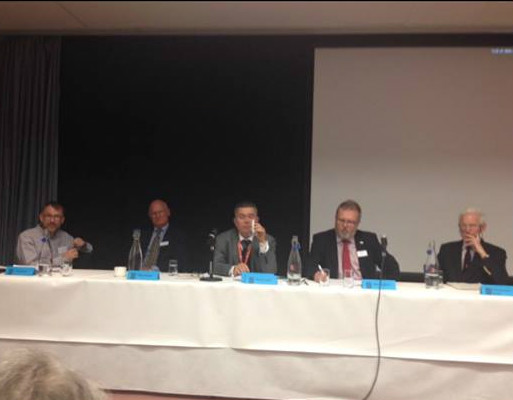
The first debate was on the badger cull. Sat on the panel was Professor John Bourne, the Chairman of Independent Scientific Group, Roger Blowey, Livestock Vet, John Blackwell, President of British Veterinary Association and Mark Jones, Vet and Wildlife Protection Campaigner. As you can see, from the variation of panel members, it was very interesting and resulted in a fantastic debate with a mixture of discussion from the panel and comments from the audience. This debate was very important as it’s not very often you get people like this together. Before comments from the floor the members of the panel introduced themselves and give a small introduction then Dominic Dyer, Badger Trust CEO, asked them a question on what they had said.

However before long this got a bit out of hand and the debate became very intense. For me it was a great experience and to hear so many people express their opinion in such a strong way, against the cull, was truly inspiring. Also the fact that they weren’t afraid to speak out against those on the panel which are in favour of the cull.

The first to speak was John Blackwell, President of British Veterinary Association. This was interesting as the British Veterinary Association had released their statement on the badger cull just a few days before the Seminar. In the statement they had made a U-turn from their original idea which was culling free running badgers was the way to go. Instead, in their latest statement, they stated that the pilot culls should continue but badgers should be caught in cages before shot as they believe it’s a ‘humane and effective’ way.

This was then followed by Roger Blowey, a recently retired Livestock Vet and author of report on the possible impact of culling lowering TB rates in cattle. I’ve read comments from him in many articles stating the fact that he believes ‘the culling of badgers in the county is the only reason why farmers are now testing negative for bovine TB for the first time in a decade’. Roger Blowey made many more comments and suggestions like this one throughout his introduction and in the debate.

Without a doubt, this fired the debate up. Many people in the audience got involved which was timed nicely with the great introduction from Professor John Bourne. It was obvious he knew what he was talking about as he destroyed any scientific, economic or animal welfare justification for the current badger cull policy. He went into great detail, along with giving examples from other countries, that the negligence and deceit within the Government, Farming and Veterinary Industry has led to the demonisation of badgers for spreading bTB when all the evidence points to poor bTb testing and cattle controls as a key factor for the increase in Btb. He also stated how millions of pounds has been wasted, wildlife destroyed and how farmers and tax payers have been let down by a disastrous bTb reduction policy which has focused on badgers far too much.

The last one to speak was Mark Jones who is a vet and wildlife protection campaigner. His introduction went through different reasons why the cull isn’t and won’t work. He presented his points in a very organised way and put his points across clearly. He also made the very valid points on how badger persecution is rising which is no doubt related to the badger cull.

Overall it was an extremely interesting and tense afternoon, I was very pleased to be there. Obviously, as you all know, I’m against the cull, full stop. So being there during the debate was a fantastic experience. The atmosphere was incredible and I felt privileged to be surrounded by people that care so passionately. Going to an event like this makes me realise, more so, why I am against the cull and makes me more determined to help do my bit to rule it out and resort to other ways to reduce bTb.
11169840_739399219504704_144552064817865544_n

Second debate – Wildlife Crime

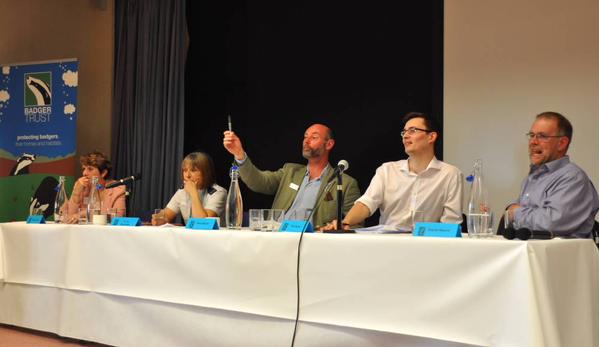
The afternoon didn’t stop there though as there was another debate which was on wildlife crime. I must say, this debate wasn’t as intense but it was still very interesting. The panel was chaired by the new Badger Trust chairman, Peter Martin, and on the panel was Charlie Moores, Birders Against Wildlife Crime, Tom Quinn, Director of Campaigns at League Against Cruel Sports, Pauline Kidner, Founder of Secret World Wildlife Rescue and Lee Bainbridge who is the wildlife Crime Officer from the area.

Starting it off was Charlie Moores who is the Chair of Birders Against Wildlife Crime. He gave a summary about what BAWC is about, his views on wildlife crime and tackling wildlife crime. Birders Against Wildlife Crime is a campaign group which was set up last year by a group of experienced birders and conservationists who are sick of the number of crimes being committed against wildlife. I went along to BAWC’s first conference a few weeks back which was a fantastic day and you can read more about it by clicking here.

This was followed by Tom Quinn who is the director of campaigns at League Against Cruel Sports. He spoke about how reducing wildlife crime is a massive priority for The League, wildlife crimes including fox hunting and badger persecution, increased promotion of wildlife crime on social media, how the badger cull is having an impact on badger persecution and how wildlife crime data is uncoordinated and underfunded. He also spoke about the work The League do and convicting the wildlife criminals.

For this debate, most likely due to the fact that we all had mutual feelings, it was more organised and the speakers had the chance to speak before the debate. Next up was the wildlife crime officer for Avon and Somerset, Lee Bainbridge. She spoke about reporting wildlife crime, the role and increase of wildlife crime officers and how the training is improving. I think the talk from Lee Bainbridge could relate to most of us as if you’re one for being outdoors and observing wildlife you come across wildlife crimes. I came across one which had been committed at a badgers sett last year and got in touch with my local wildlife crime officer and the Badger Trust. Fortunately the result was very good.

Before the audience could ask questions there was one more talk which was from the Founder of Secret World Wildlife Rescue, Pauline Kidner. She spoke about the increase of injured badgers which is linked to the cull, wildlife traps and snares and reporting and recording wildlife crime. Another thing she spoke about was something that she believes is important that we need to do to help tackle wildlife crime and that is by starting with educating the youth. I was pleased she brought this up as it’s a subject which is also very important to me.

When I go to school I’m surrounded by young people that have no idea about the ongoings in our countryside. This is partly to do with things like technology which have taken over. If young children aren’t able to go out and engage with the outdoors from a young age and learn about it when they grow up then how are they supposed to be able to report wildlife crime, help protect species and habitats, and most of all put their opinion across on what they think should be going on in the countryside and to our wildlife, without being brainwashed.

This debate was different to the one on the badger cull as everyone on the panel had mutual feelings. However there was a lot of discussion about the problems with reporting wildlife crimes and how it isn’t being taken seriously enough. There was also a discussion about fox hunting and the illegal on goings which aren’t dealt with.
CC9UQ89XIAA-1Lt

After a fantastic day it was finished perfectly with a talk from the actor and animal ambassador, Peter Egan. He gave his comment from the discussions which had gone on and read out a very inspirational poem about Moon Bears.


Twenty First Century Badgers

As I’ve been off for the last two weeks I’ve made the most of it and tried to get out as much as I can. Whether it be on my local patch, nature reserves or setting my trail camera up. Unfortunately I have some important exams approaching so I’ve had to make time to revise for them too.

However a few nights ago I returned back to a badgers sett which I hadn’t filmed at since last Autumn. This time last year I managed to film a few of the adults but it wasn’t until the end of the month when the cubs first appeared. When I collected my trail camera on Sunday morning it was pretty much the same, adults but no cubs yet. I set two cameras up, one of my normal ones that I use and a new one which my Dad has been working on recently. It works through something called a Raspberry Pi, not an actual pie but a type of computer. He then added the camera, motion detector and then printed out a case with his 3D printer. It’s very clever and it was great to try it out for the first time. Unfortunately It didn’t go completely to plan but he’s made some adjustments and we’re going to set it up again soon.

Here’s some of the footage I got. It includes badgers and a tree climbing rat. I hope to film the cubs in the upcoming weeks.

http://www.youtube.com/watch?v=u7zDFsoGBtU

http://www.youtube.com/watch?v=xmAsqkAgSSo

http://www.youtube.com/watch?v=Yd69ihh-EIw

http://www.youtube.com/watch?v=-AlhLjNWrKE

http://www.youtube.com/watch?v=bLJK7Waf1Ak

http://www.youtube.com/watch?v=kCHOv9S9d1s

United Against Wildlife Crime

The wildlife you see whilst out and about is without a doubt our real national treasure. These species were here a long time before us or any of our man-made national treasure and this is an important reason why we need to preserve them and stop them suffering due to wildlife crime.

This was illustrated with the first talk of the day by Broadcaster and Naturalist, Chris Packham. He destroyed a copy of a George Constable painting by attacking it with spray paint and tearing it apart. A painting by the artist George Constable is considered a national treasure and if someone was to destroy the original painting they’d be considered to have destroyed a national treasure. Due to this there would be all sorts of havoc. It would most definitely be top headlines on the news, in newspapers, online and the offender would get into serious trouble. But what about those people who go out and destroy the British countryside by killing species within it, surely they should be getting the same punishment however this isn’t the case.

image1


Yesterday I attended the Birders Against Wildlife Crime ‘Eyes in the Field’ conference in Buxton, Derbyshire. I arrived at about 8.20 and straight away I was able to engage with like minded people. This theme carried on throughout the day as I spoke to plenty of fantastic people and listened to a variety of inspirational and interesting talks. To pick a favourite talk would be impossible as they were all very good and including a range of important topics, from policing and the public engagement to investigations and politics.

After the talk by Chris Packham it was then onto the next one from CEO Badger Trust and Policy Advisor Care for the Wild, Dominic Dyer. He spoke about the badger cull and his recent meeting with the Environmental Secretary, Liz Truss which was very interesting and you can read more about it by clicking here. I found his talk very interesting as I feel very passionate about badgers and I am strongly against the suffering they put up with including the cull. I’m really looking forward to helping out with badger vaccinating soon. Next it was a talk about bats, how they suffer from wildlife crime and the laws to do with them. This talk was given by Malcom Hopton from Derbyshire Bat Conservation. Again I found this talk very enjoyable, as in the past I have done conservation work for bats which included going out with the East Staffordshire Bat Group and monitoring the bats at one of my local patches, Cannock Chase.

After the morning coffee break the day resumed with talks from two different investigation officers. One was Bob Elliot who is Head of Investigations for the RSPB and the other was Paul Tillsley who is Head of Investigations for the League Against Cruel Sports. These two talks were a real eye opener about wildlife crime as they made me realise how serious it is and how some people can be so evil against our national treasures. They both spoke about different case studies along with methods wildlife criminals use and how both organisations help to stop and solve wildlife crimes. They also gave an important message about how we all must remember to report wildlife crimes as if it wasn’t for people like you and me reporting them then they wouldn’t be able to stop the criminals committing their crimes.

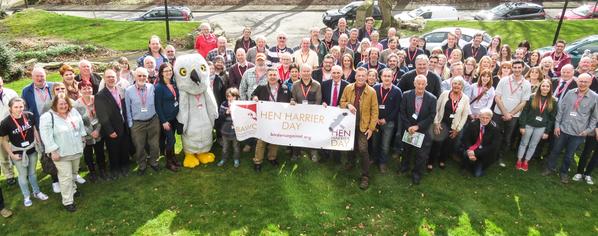
It was then time for lunch and during the lunch break all the people who had attended, including the speakers all made their way to the front of the hotel to have a photo with the new Birders Against Wildlife Crime Hen Harrier Day banner. The Hen Harrier is a bird that has suffered incredibly from wildlife crime and due to this they have been pushed to near extinction in England. There are a number of different things that you can do to help our hen harriers, one of them is by voting for it for the National Bird and you can do so by clicking here.

CAoHfHbWsAAIGfv

Here’s the photo and there you can see Henry the Hen Harrier!

After lunch, the afternoon started off with three different talks about wildlife crime and the police. As you can imagine this was a very important and interesting start to the afternoon. Obviously without the police we wouldn’t be able to punish the criminals who commit crimes against wildlife. The first talk was by Craig Fellows and he spoke about police wildlife crime training which was very interesting and similar to the local meetings that I attend about wildlife crime and strategies they undertake in my area to deal with wildlife crime. The next talk went against this slightly as Ruth Tingay spoke about the failure of wildlife crime enforcement in Scotland. The final talk of this part was by Alan Charles who was the Derbyshire Police and Crime Commissioner. Like the others, his talk was very interesting and he spoke about how his force is dealing with wildlife crime.

It was then onto the last group of talks for the day which were about politics and public engagement. It consisted of two talks, one from Chris Williamson who is the North Derbyshire Labour MP and the other from conservationist Mark Avery. These talks were both very engaging and between them they spoke about a range of subjects from the Badger Cull to Hen Harrier Day 2015. Chris Williamson was another passionate speaker who shared some great stories about his times out with the hunt saboteurs. So was Mark Avery who spoke about Hen Harrier Day 2015, which I’m very much looking forward to!

As you can see Saturday was a very inspirational day for me, it was also very important. As I stated at the start we need to preserve and stop our real national treasures from being destroyed. With help from enough people like those who I met on Saturday we can do that. After the conference I realised how those wildlife criminals, pro-hunting politicians etc have no chance and we will win.

Adopt a Sett

I’m always hearing about crimes against badgers, especially at badger setts. But in the last few weeks I’ve heard about more then usual, one of which was in my local area.

A badger sett is what a badger calls home. It is usually situated in or near small clearings in woodland. A simple sett is made up of a single tunnel, with a sleeping chamber at the end. However, most setts have several entrance holes, and lots of tunnels which link up with each other. The tunnels also link up with sleeping and nursery chambers.

There are numerous horrific crimes which people commit against badgers. For centuries badgers have been victims of persecution by man, and in the old days, badger baiting was a popular spectator sport. It was made illegal in 1835, but never completely died out and has become more common in the last 20 years. Badger diggers use dogs and digging equipment to take badgers from their setts. The captured badgers are then attacked by dogs for sport, whilst the spectators gamble on the performance of the dogs. Badger baiting is extremely cruel and the badgers suffer severe injuries before they are killed. The dogs are often badly injured as well.

It is estimated that 10,000 badgers are killed in this way every year.

Along with these disgusting offences against badgers, they are also victims of crimes such as disturbance, damage and destruction of their setts. A recent example of destruction and damage at a badgers sett was at Stevenage, Hertfordshire. The sett was bricked in and scorched which prevented the badgers getting out to find food and would of caused unnecessary suffering. Another example of a horrible act of cruelty against a badger was at a sett not far from where I live. A snare was set up on a badger sett. One of the badgers got caught in the snare and slowly strangled to death as it tried to escape. These are just two examples of sick acts of cruelty against badgers.

Adopting a sett

By adopting a local sett or a sett on your local patch, where you might go and watch badgers there regularly, you can keep an eye on the sett. What I mean by this is making sure there hasn’t been any recent disturbance or there isn’t anyone about that looks suspicious. Now, this isn’t a formal thing. It’s just doing something of your own back to look out for badgers and help prevent crimes against them. I have my own example of this as last year I went to a sett that I set my camera up at regularly and I noticed that some of the wholes had been filled in, trees had been cut back by the sett and overall, the sett had been disturbed. Due to this I got in touch with my local wildlife crime officer and the Staffordshire Badger Group. Even though though this was not as serious as something as terrible as badger baiting etc, it was still important to have it dealt with in case the problem progressed. Fortunately it was dealt with.

Of course badgers aren’t the only species that suffer from such horrible acts of cruelty.

I’m also very much looking forward to a Wildlife Crime conference that I am going to on Saturday, it’s run by BAWC (Birders Against Wildlife Crime) and should be a very interesting day!