Wacky Wednesday!

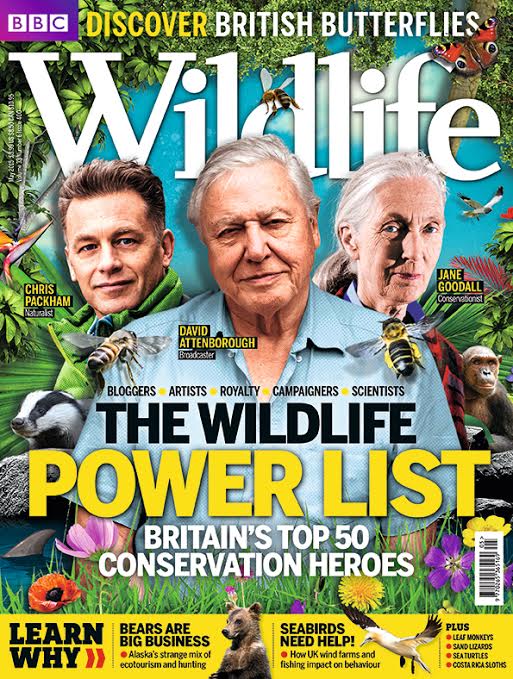
A few days back the BBC wildlife magazine announced their wildlife power list which consists of Britain’s top 50 conservationist. If you subscribe to the magazine you would of got your copy a few days ago but for those who don’t subscribe you can buy your own copy from the shops tomorrow.

I feel very pleased and honoured to appear on the list, number 48, as there are some well deserving individuals which I admire considerably on there. Whilst reading through I straight away thought some were a great choice, some could have been listed higher up and I could think of probably another 50 people to feature on the list too! Obviously it’s not just myself who has an opinion on the list, on social media pages its been causing quite a stir and has been very controversial. I know from what they have tweeted, the BBC Wildlife Magazine have received a lot of comments about it too.

Personally I think it’s a very good idea but nothing that serious. A bit of fun! The list is based around people who they think will make a considerable difference for wildlife over the next decade. I think a list of people who are going to make a bad impact on wildlife over the next decade would be a good idea too, wouldn’t be too hard to put together either!

Everyone on the list is very worthy to be there in my opinion. Every one has made a great impact to the environment in different ways and will undoubtedly go on and do so in years to come. It was great to see some fellow young people listed too, these were Findlay Wilde and Jack McGowen-Lowe. It was also a good idea to have a mixture of people on there, from broadcasters and scientists to MPs and artists.

As I mentioned before though I can think of quite a few which should definitely be on the list but they’re not. Some include individuals which may keep themselves quiet but they are most definitely deserving wildlife heroes. As I said it was great to see two fellow young people on the list but I could think of quite a few others which are also true wildlife heroes.

One thing that did disappoint me was the amount of women on their compared to men. There was 14 girls on the list compared to 36 male which is quite a big difference!

Never the less I think the list will really inspire those who read it!

bbc wildlife mag


I would also like to say that on this Wednesday evening, 13th, I will be appearing on a documentary called the Great British Garden Watch. It will be on at 9pm on BBC 2 and should be a great hour! It will also be including a few other wildlife nuts like Findlay Wilde, and his younger brother Harley, and the wildlife gadget man, Jason Alexander.

You can read more about it here – http://www.bbc.co.uk/programmes/b05vmxn2

What now?

Unless you’ve been hiding away since 10pm last night (I wish I had) you’ll know that the party that took the majority in the 2015 election are the Conservatives. They needed 326 seats and they just managed to scratch that with 331, hardly an “impressive election victory” but they got the majority they needed and a hundred more seats then Labour.

Last night I was happily getting on with my revision when I decided to have a quick look at what was going on so turned the news on. It read that the Exit polls were predicting Conservative to be the biggest party. I was very very surprised and thought no chance, Labour will get it! Therefore got back to my revision. Just before I decided to stop with my revision, about 11.30, I had another look at what was going on and watched the news for a while. To be honest, I was very puzzled. Over the last few weeks and months I have really taken an interest to the election and done my part in hoping the Tories don’t win as if they do they will continue with the badger cull, repeal the hunting act and god knows what else! The recent polls had shown neck and neck between Tory and Labour and they had done for weeks.

However when watching the General Election coverage this was a different story. I eventually went to bed when there had been a few seats announced. This morning I woke up at about 5.30 eager to find out but unfortunately it wasn’t a very nice surprise. I felt like going back to bed, the exit poll was obviously right after all! One thing I was most amazed with was the amount of seats SNP had, clearly indicating Labour had no chance at all. I watched patiently and kept checking my phone, the Tory seats were gradually rising. I felt sick to the stomach. All I could think about was the poor wildlife, never mind the British people!

I was so hopeful in thinking Labour could pull it off but obviously not. I was amazed with the amount of votes the Tories had, I thought there could be a chance of them getting a few more votes but not that many! I then had a look at some of my local seats, all Tory. I wasn’t surprised at all when it said Tory for Lichfield though as it’s been Conservative since 1997. The other parties had campaigned hard but unfortunately Fabricant had won with a 55% vote.

Even though I would of liked to have seen it unfold more it was good to get out of the house and go to school, perhaps forget about it a bit for a few hours. Unfortunately this wasn’t the case though, even though I was expecting fellow students to be talking about it, I did hear some distressing comments. Obviously everybody has their own opinion and I respect that, I believe the voting age should of been lowered to 16 for the election but unfortunately it wasn’t. But after hearing some of these comments, not necessary about party policy but to do with the election, it’s obvious that if they ever do lower the voting age it’s vital that they educate the 16-18 year olds about the General Election and so they know where each party stands. With this they could have an even better view on how they think the country should be run and why they actually think that. Rather then some repeating what their parents may have said to them or things they read at a glimpse on the TV or on the front of papers.

Anyway enough about the actual election, what exciting surprises have the Tories got in-store for us over the next five years? Well I wouldn’t get too excited as for wildlife, and most other things, it’s doom and gloom. Britain is supposed to be a country of animal lovers. A country which values its animals and takes good care and pride in them. Whoever voted Tory obviously doesn’t though! Unless they believe tearing a vulnerable, helpless, beautiful creature to pieces by its limbs is that.

Over the next 5 years the Tories have said that they will protect hunting, shooting and fishing. That’s even more bad news after this weeks awful news about another THREE Hen Harriers going missing.  They’ve also said they’ll give Parliament the option to repeal the hunting act. This basically means they will try to scrap the ban on hunting with hounds so majestic animals like the much loved fox which will torn apart in the most gruesome way you can possibly imagine by men on their horses who see this as ‘fun’ or ‘entertainment’. Along with this they still believe that HS2 is a fantastic idea and will go ahead with it. This will cut through our countryside like a ‘white elephant’ and affect many habitats and species. Once again no thought or consideration for animal welfare or wildlife. As well as all of this they will be going ahead with the barbaric, inhumane and inefficient badger cull which has and will again result in thousands of badgers lives lost. Not just due to the cull but for those who see the cull as a green light to persecute them in the most horrific way they possibly can.

I worry so much for the next five years (and after), what will it bring and how bad will it be? But I must remember that even though they’ve won the election that doesn’t mean they’ve won. We must carry on as we were but with a lot more strength. We will win and our wildlife will be safe but we have to push and fight harder then ever, and before they get their murdering hands all over it! I care deeply and passionately about all wildlife and therefore I will never stop fighting for it. It has no voice so if we stop then they win but we can’t let that happen.

So get up and get involved. If you care, show it. Go on a street march or protest, bombard your local MP with letters, write to your local paper, spread the word, get involved with social media, and most of all show you care and don’t give up.

GE2015 Day Six: Inspiring The Next Generation

If you read my introduction blog you’ll know that throughout this week, running up to the general election, I am doing a blog a day about some key issues which affect wildlife in the UK and in some cases on a world wide scale. As I only have six days and I’m currently taking my GCSEs I’ve only been able to include six topics but of course there are many more. With these blogs I hope to show people the problems our wildlife faces, what we can do, who it affects, what will happen if we don’t address the problem, see if there’s been any mentions in party manifestos and much more! I’m also trying to exaggerate the fact that we should be voting for nature and the environment. Along with sending the posts to party leaders, MPs etc. It’s key that we address problems facing wildlife now so it’s not too late as when it is too late we’ll be in serious trouble.

This is the last blog of my General Election posts. Although it’s taken up a lot of my time writing them and my revisions been slightly pushed I have enjoyed doing them very much. The response has been great!

This is a topic that I’ve blogged about quite a lot in the past but that’s because I think it’s a really important issue. What first provoked me to get interested in this issue is the fact that everyday I go to school and I’m surrounded by kids that have no idea of the natural world around them. I’m not expecting them to become experts but when they have no idea about how it benefits us in a number of ways it’s quite distressing. Instead they abuse it, take it for granted, don’t appreciate or understand it. As I’ve explained in previous blogs nature is very important, it does a number of things for us humans. For example it provides clean water, stops erosion, pollinates crops and much more. It’s also a fantastic and very enjoyable wonder.

It’s very important that we inspire and educate the next generation, here are a few examples why…

  • Over the last 40 years Earth has lost half of its wild animals
  • 1 in 3 species have halved in the last century
  • In the UK alone 60% of species have declined over the last 50 years
  • Turtle doves have declined by 93% since 1970
  • Hedgehogs have declined by around a third since the last millennium
  • The small tortoiseshell butterfly has declined in abundance by 77% in the last ten years
  • Of the 3,148 species analysed for the State of Nature report, one in ten face extinction
  • 97% of lowland meadow vanished between the 1930s and the 1980s

Why is this happening?

Some of the causes to why our wildlife is declining include the intensification of farming, this includes no areas left for nature and the use of dangerous pesticides and chemicals. Also the loss of meadows, hedgerows, and ponds. As well as the building development, cutting down trees faster then they can re-grow, harvesting more fish than the oceans can re-stock, and emitting more carbon than oceans and forests can absorb. These are just a few reason why our wildlife is declining here in the UK and on a world wide scale. There are many other reasons too, some on a much smaller scale. For example the idea of people tarmacking their garden or not having holes in the fence where hedgehogs can come in.

As you can see the problem is getting worse, our wildlife has declined dramatically over the past few decades and you can read more about this on the State of Nature report. On some articles I’ve recently read they have said things like decline and extinction of species can lead to ’empty landscapes’, just imagine how awful that would be! Even though lots of charities and organisations are doing fantastic jobs with the public’s backing, there is still work to be done. For example educating people.

Why education?

Well obviously there are lots of other things that we can do to reverse this decline but one that I think is a major factor is through educating people, especially younger people and children. Therefore I decided to choose it as a topic as part of my General Election posts.

Where to start, why is education important? Well that’s a difficult question to break down as all in all, it’s vital! Whilst at school some of the more interesting and important things that we learn tend to stick with us, or the idea behind it. Also when educated it opens us up, we want to learn more about that subject and it makes us more interested. Therefore education is a way forward. If a child was to grow up with gadgets and have no real experiences of the natural world around them then when they went to school and they are introduced to the wonders of the natural world just imagine how fascinated they’d be! Not only would it be a first but as a young child budding to find out what the world is about their curiosity could go on and on. I’m 16 and every time I go out whether it be on a walk on my local patch after school, setting my trail camera up or going out with my camera at the weekend there is never a time I’d either be willing to come home or come home regretting I ever went out.

Not only would this get the child interested but it would bring their imagination to life and the enjoyment of it all could make them very happy too. Then as the child grows up they’re introduced to different aspects, without a doubt when they’re older they’ll remember these experiences and be willing to share them with their own children or pass the memories and experiences on.

Overall, we all know nowadays that there’s more gadgets about and lots more opportunities etc so children don’t get the joy of going outdoors and enjoying nature for what it is but with this extra push whilst they’re at school that could trigger the enthusiasm off.

The link between decline and education

First of all, as I mentioned before, it is teaching and showing the child to go and explore. With this they’ll learn to appreciate what it’s all about and respect it. If they do this then they’ll pass it on to their friends and their own children in the future. Respecting and enjoying the outdoors could become ‘cool’ and they’ll begin to learn if they respect nature then they need to do other things too. For example basic things like using less energy, water and not dropping litter along with recognising a wildlife crime and sticking up for what they belief in for the environment.

Local candiates replies

A few weeks back I did a blog for the group A Focus On Nature where I spoke again about why we need to inspire the next generation. You can read it here. After writing my post I emailed it round to all of my local candidates for their reply and take on inspiring the next generation. I was very pleased to have a reply from all of them, but unfortunately not from the UKIP candidate.

Labour (Chris Worsey) – he replied by saying that my blog was on a much needed subject and agreed with the fact that children need to be out and about more enjoying the natural world. He said how some of his childhood memories include exploring the outdoors – much better then being sat in front of a computer screen!

Conservative (Michael Fabricant) – I didn’t get as much as a reply from this candidate but he did say that if he is re-elected that he’d be willing and happy to take the issue further, especially on educating people about local wildlife.

Liberal Democrats (Paul Ray) – He agreed with my idea of that natural habitats need to protected. He also sent me some information about the parties record of delivery on this subject and what they promise to do more of in the future. This included ‘putting nature at the heart of the Government’, access to nature and, safeguarding forests and planting more trees.

Greens (Robert Pass) – He agreed with the post and made the point of “We need many more young people to engage with the natural world and with the fight to save it.” He also made the point about more and more people are waking up and realising that a lot of this technology ‘progress’ wasn’t progress at all and are busy rediscovering the wisdom of stewardship and respect for the living earth. As well as this he attached an article called ‘Rewild the Child’ which was a great read.

It was great to be able to get a reply from some of my local party candidates, of which I am very thankful for.
IMGP7059

GE2015 Day Two: Snares

If you read my introduction blog you’ll know that throughout this week, running up to the general election, I am doing a blog a day about some key issues which affect wildlife in the UK and in some cases on a world wide scale. As I only have six days and I’m currently taking my GCSEs I’ve only been able to include six topics but of course there are many more. With these blogs I hope to show people the problems our wildlife faces, what we can do, who it affects, what will happen if we don’t address the problem, see if there’s been any mentions in party manifestos and much more! I’m also trying to exaggerate the fact that we should be voting for nature and the environment. Along with sending the posts to party leaders, MPs etc. It’s key that we address problems facing wildlife now so it’s not too late as when it is too late we’ll be in serious trouble.

Unfortunately there are many ways that people have the opportunity to persecute and discriminate the wildlife in our countryside, whether it be legal or illegal. This doesn’t just happen in the UK though, it happens all over the world. You would think a terrible device, which can chew through the limbs and bones of those animals which get caught in them, would be illegal. However that isn’t the case, free running snares are legal while self-locking snares are illegal. A free running snare is supposed to slacken when the animal stops struggling, while a self-locking snare can only become tighter. However, these terms are not clearly defined and a rusted, kinked, or knotted snare quickly becomes self-locking. Either way they cause extreme suffering to animals and often a painful, lingering death.

As you have probably guessed the aim of this post is express that fact that snares should be banned altogether, free running and self locking.

What is a snare and what are they supposed to be used for?

Snares are thin wire nooses which are set to trap wild animals perceived to be a pest or threat. They are usually made of steel, or sometimes brass, stranded wire. The aim of a snare is to allow the target animal’s head to enter then as it moves forward the noose becomes tighter. Their actual use, in the UK, isn’t to kill the animal but to capture and restrain the animal until a person can attend and humanely kill it. In Britain, they’re largely used by gamekeepers to control fox numbers and also used to a lesser extent by farmers and landowners to control rabbits. Snares are usually set up along runs or pathways thought to be used by the target species. They are also sometimes placed over the entrances to rabbit burrows or fox earth. Defra estimated that nearly 6,000 landholders use fox snares across England and Wales, and rabbit snares are used over 1,500.

 The suffering

If a snare is attached to a post the captured animal in its efforts to escape will end up wrapping the wire round and round the post until the noose is so tight that if causes serious injury. Snares have also been found positioned on the top of walls or banks, so that when they catch their victims, the animals fall and are hung to death. Even when a free-running snare is set properly the wire can easily become kinked or tangles in such a way that the snare acts like a self-locker. A self-locking snare continues to tighten as its victim struggles but does not relax when the animal stops pulling. This causes the nooses to cut through the animal’s skin and into its flesh, causing terrible suffering.

A slow death by strangulation is bad enough but snares do not only capture the animals by the necks. Some animals get their legs caught in snares and end up with the snare cutting down in the bone. Such animals may attempt to escape by gnawing off their own limbs. Other animals are caught around the body. Both badgers and foxes have been found with snares that have almost cut them in half.

There are always stories in the news about snares, here are a few recent ones

Peak District estate under pressure to remove snares after spate of injuries

Stoke-on-Trent badger “strangled to death” in Fegg Hayes snare

Cats caught in homemade snares at St Athan, RSPCA warns

As you can see snares are awful things which cause animals to suffer incredibly. In my opinion, they should of been banned years ago. The UK is the one of the only countries in Europe where they’re still legal.

Manifestos

When looking through all the manifestos there was no mention of banning snares except for from the Green Party. It said they will end the use of snares. It’s very disappointing that the Greens are the only party which say they will ban the use of snares.

wpid-wp-1430471630200.jpeg