Adopt a Sett

I’m always hearing about crimes against badgers, especially at badger setts. But in the last few weeks I’ve heard about more then usual, one of which was in my local area.

A badger sett is what a badger calls home. It is usually situated in or near small clearings in woodland. A simple sett is made up of a single tunnel, with a sleeping chamber at the end. However, most setts have several entrance holes, and lots of tunnels which link up with each other. The tunnels also link up with sleeping and nursery chambers.

There are numerous horrific crimes which people commit against badgers. For centuries badgers have been victims of persecution by man, and in the old days, badger baiting was a popular spectator sport. It was made illegal in 1835, but never completely died out and has become more common in the last 20 years. Badger diggers use dogs and digging equipment to take badgers from their setts. The captured badgers are then attacked by dogs for sport, whilst the spectators gamble on the performance of the dogs. Badger baiting is extremely cruel and the badgers suffer severe injuries before they are killed. The dogs are often badly injured as well.

It is estimated that 10,000 badgers are killed in this way every year.

Along with these disgusting offences against badgers, they are also victims of crimes such as disturbance, damage and destruction of their setts. A recent example of destruction and damage at a badgers sett was at Stevenage, Hertfordshire. The sett was bricked in and scorched which prevented the badgers getting out to find food and would of caused unnecessary suffering. Another example of a horrible act of cruelty against a badger was at a sett not far from where I live. A snare was set up on a badger sett. One of the badgers got caught in the snare and slowly strangled to death as it tried to escape. These are just two examples of sick acts of cruelty against badgers.

Adopting a sett

By adopting a local sett or a sett on your local patch, where you might go and watch badgers there regularly, you can keep an eye on the sett. What I mean by this is making sure there hasn’t been any recent disturbance or there isn’t anyone about that looks suspicious. Now, this isn’t a formal thing. It’s just doing something of your own back to look out for badgers and help prevent crimes against them. I have my own example of this as last year I went to a sett that I set my camera up at regularly and I noticed that some of the wholes had been filled in, trees had been cut back by the sett and overall, the sett had been disturbed. Due to this I got in touch with my local wildlife crime officer and the Staffordshire Badger Group. Even though though this was not as serious as something as terrible as badger baiting etc, it was still important to have it dealt with in case the problem progressed. Fortunately it was dealt with.

Of course badgers aren’t the only species that suffer from such horrible acts of cruelty.

I’m also very much looking forward to a Wildlife Crime conference that I am going to on Saturday, it’s run by BAWC (Birders Against Wildlife Crime) and should be a very interesting day!

My Wild Life

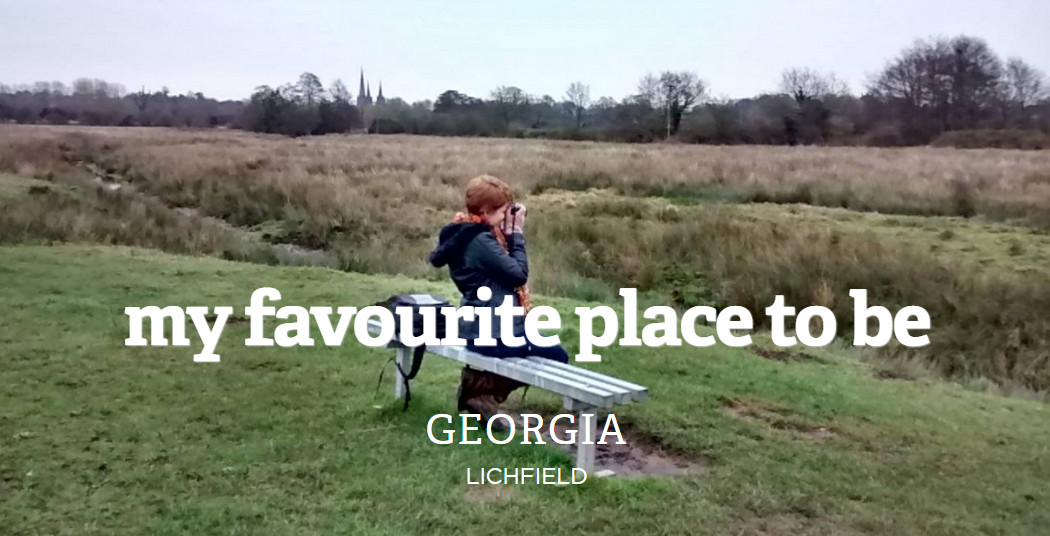
A few weeks back I heard about The Wildlife Trusts ‘My Wild Life’ campaign. The aim is to show how much nature matters to our lives. They’re doing this by showcasing stories of hundreds of peoples daily experiences with nature and how it is helping us all. The more people who add their story and make nature part of their life, the bigger the voice for wildlife, and it’s really important that we do this. As I’ve mentioned numerous times, over the last 40 years Earth has lost half of its wildlife. People need to realise this, how scary this decline is and that we all need to do something to reverse it.

I decided to do a blog about it as I think it’s fantastic a campaign. I’ve seen the stories everywhere, lots of different people have been getting involved and their stories are really heartwarming. Here is a link to the My Wild Life website where you can read more about it and some of the stories, where you can also add your own  – http://www.mywildlife.org.uk/

MyWildLife

Wildlife and Brownfields

Yesterday, Saturday 7th March, I went along to the Staffordshire Invertebrate Fair at the Staffordshire University Science Centre in Stoke.

We arrived at about 11.30 and attended the first talk which was given by Dr Sarah Henshall from BugLife all about the importance of Brownfield Sites for Invertebrates which was very interesting and a real eye opener. The second talk was straight after and all about gardens and bees. Then after looking around the stalls we went along to an identification session on solitary bees which was also very interesting.

One subject I became most aware of today was how important some Brownfield sites are for wildlife. I’d never really thought about it before, I thought that because there had been a lot of human activity in the past and the soil wouldn’t be pure it would be no good but that certainly isn’t the case. I remembered that wildlife can make home pretty much anywhere! Of course not all Brownfields are thriving with wildlife however some are, and some are very important as they are home to rare and endangered species.

What are Brownfield sites?

Brownfields are land that has been altered by human activity (not including farmland or commercial forestry). That doesn’t just include derelict urban areas, but quarries, gravel pits, old railway lines and disused airfields.

They are also known as open mosaic habitats, with pioneer plants, more established flower-rich grasslands, scrub such as heathland, swamp, temporary pools and wet grasslands.

Why are Brownfields so important?

The diversity of species Brownfield sites can support is surprising. For example you may be surprised to hear that Brownfield sites can have as many rare invertebrates species as Ancient Woodlands. Not only that but these areas, often seen a useless or derelict, can form important corridors for wildlife, linking up other habitats.

Brownfield sites provide ‘surrogate’ habitats for species that would be found in other habitats if it were not for human interference. With disturbed soils and bare ground they are excellent for invertebrates and lizards. The burrowing and ground-nesting invertebrates will make their home here along with common lizards that can be spotted basking in the sun and slow worms sheltering under old tins.

They have become the last resort for some species after the intensification of farming which has led to the loss of flower-rich grasslands from the countryside, as well as car parks, warehouses, shopping centres, housing and flood defenses which have left bare ground species with nowhere else to go but Brownfields.

Why are they so rich in biodiversity?

Brownfield sites have gone through cycles of disturbance and abandonment, combined with low nutrient soil which has resulted in a rise to a wide variety of habitats, supplies of water, flowering and a variety of plant species. Many invertebrates have complex life cycles, needing different things at different stages, so they require two or more habitats close to each other, which is what Brownfields provide for them.

Then if there’s one species it’s going to attract other species which builds up a whole ecosystem, meaning not only are Brownfield sites important for invertebrates but they are also important for other animals too. Birds which are attracted include linnet, goldfinch, skylark, song thrush and kestrel. These dynamic landscapes have also attracted rare birds like black redstarts. The flower-rich grasslands provide hoverflies, bees and butterflies with nectar and pollen. Flowers include thistles, ragwort, fairy flax, blue fleabane and rarer orchids, such as fragrant and pyramidal. Along with this, 30 different species of butterfly are associated with brownfield sites, including many common and familiar ones, such as the red admiral, peacock and small tortoiseshell.  Brownfield sites are also key habitats for scarce and declining butterflies such as the Dingy Skipper, Grizzled Skipper, Green Hairstreak, Small Blue, Silver-studded Blue and Grayling. Many species of moths are also found on brownfield sites, including Burnet Companion, Mother Shipton, Latticed Heath, Six-spot Burnet, as well as scarcer species such as the Wormwood Shark. Temporary pools support plants such as horsetails, rushes and the sulphur-coloured yellow flag iris, and are used by common frogs, great crested newts and natterjack toads to live and breed in.

As you can see they are fantastic for a variety of different species, common and rare. Another example which proves that they are very important is the small ranunculus moth which disappeared from the UK before World War II, but it has now recolonised in brownfield habitats throughout England and Wales.

Another feature of Brownfield sites is the open, bare ground. This warms up rapidly in sunshine so it is good for basking on. It is also used by burrowing and ground nesting invertebrates, and provides a foraging area for visual predators.

Plant-eating invertebrates often live in places such as inside leaves, strems, flower heads or seeds and overwinter in places like under logs or stones, or in ground litter. As Brownfield sites aren’t very often disturbed they are perfect places for these species.

How you can help

Various people are interested in Brownfield sites and from an animals point of view, for the wrong reasons. To reduce urban sprawl, government policy adopts a ‘brownfield first’ approach, targeting new developments on available sites within urban areas. This is a good idea in principle, but it doesn’t take wildlife into account.

There are lots of different charities which are supporting the biodiversity of Brownfield sites. You can visiting the BugLife, The Wildlife Trust or Butterfly Conservation websites for more information on how you can help.

Town and city bird roosts

Recently I’ve been very busy with school work and a couple of other things but that hasn’t stopped me from getting out and about. One wildlife spectacular that I have been observing in my local city centre is a pied wagtail roost. In Lichfield city centre, as it gets dark, all the nearby pied wagtails group together to form a roost for the night.

Not only does this happen in my city centre or with pied wagtails but they take place everywhere and with other bird species too, like starlings. They are really worth looking out for as they are fantastic to watch. The noise they make when they’re settling down is incredible. If you watch all the individual birds closely you’ll see how they’re all trying to get their own spot, then settle down for the cold night ahead.

There are many reasons why they gather in our towns and cities like this. For example by roosting here they are less vulnerable to predators and in rural areas temperatures can be several degrees above those in the open countryside. This can be a difference between life or death to a small bird in the winter.

You’re most likely to see these roosts in the trees right outside the shops. So next time you’re in town at night or just as it’s getting dark during the cold months look up at the tress and you’ll be in for a real treat!

Here’s a video I got of the pied wagtail roost in Lichfield city centre.