Excitement all round – Birdfair 2015

For the past few years Birdfair has always been one of the highlights of my year. This year was particularly special after also being given some fantastic opportunities, which was very exciting!

Over the weekend, whenever I was on Twitter, I was seeing lots and lots of comments about Birdfair. Everyone seemed to be enjoying it greatly. That’s one fun aspect of the Birdfair, putting faces to the Twitter handles. Along with meeting new people, and chatting with old friends too. All are like-minded and very friendly. I’d love to name all the fantastic and inspirational people I met over my two days at the Birdfair but there was just too many!

I also thoroughly enjoyed looking around a lot of the marques and learning more about the work of different organisations, charities and so on. On a more serious note, it’s a great place where these orgs can network, join together in raising awareness, promote what they do and get more people involved. There’s always so much to do at the Birdfair, unfortunately I could only make Friday and Saturday so I didn’t get to do everything I planned to, like go out onto the reserve, but it’s top of my list for next year!

I was also taken back by all the excitement, and my nerves, for the two events I was involved with. The Friday evening event was brilliant! If you didn’t see it, myself and Josie Hewitt were compering the evening lecture with Chris Packham, Simon King and Nick Baker. They came out with some brilliant stories, which were very funny and entertaining. This was mixed with the second half consisting of some more serious stuff which was really interesting. Then just when I thought the evening event was all over, myself and Josie were presented with some Zeiss binoculars which was a massive surprise but nevertheless just amazing!

Once back at our digs, I got very little sleep after all the excitement. I was trying to decide if I was more looking forward to going out with my new bins for the first time or nervous for my talk the next day. I think it was a bit of both!

The next morning we went for a walk around and I met with some friends before heading to the Events Marque for my short talk with Chris Packham and two other young birders, Josie Hewitt and Connor Coombes. Josie was up first, she spoke about the great work she does, bird ringing and the science behind it. Then it was Connor who spoke about his photography and how he got into it all. Then I gave my talk which was about some of my campaigning work, getting people involved and involving young people. Then afterwards, Chris spoke and summed it all up.

It was definitely a fantastic experience and one I won’t forget! Plus it was the Birdfair which is always very enjoyable. A big thank you to Tina and Nigel who were backstage and calmed my nerves to some degree. Along with helping us prepare for the event, making it happen and much much more. As well as Chris who was brilliant and involved with giving us the opportunity to talk on Saturday, and the BTO too.

Unfortunately I didn’t manage to get many photos but I’m told that videos of the events will be put online so when they are I’ll post them!

#Inglorious12th

People want upland wildlife to return. Us nature lovers, birders, walkers, the general public (if only they knew what goes on!), and us yoofs’ do too! Just look…

If you do anything today, please tweet with #inglorious12th. If you need some motivation, which I’m sure you don’t, then please read this – http://www.independent.co.uk/news/uk/home-news/rspb-issue-appeal-for-information-after-hen-harrier-illegally-shot-dead-on-scottish-moor-10449819.html

A weekend for skydancers

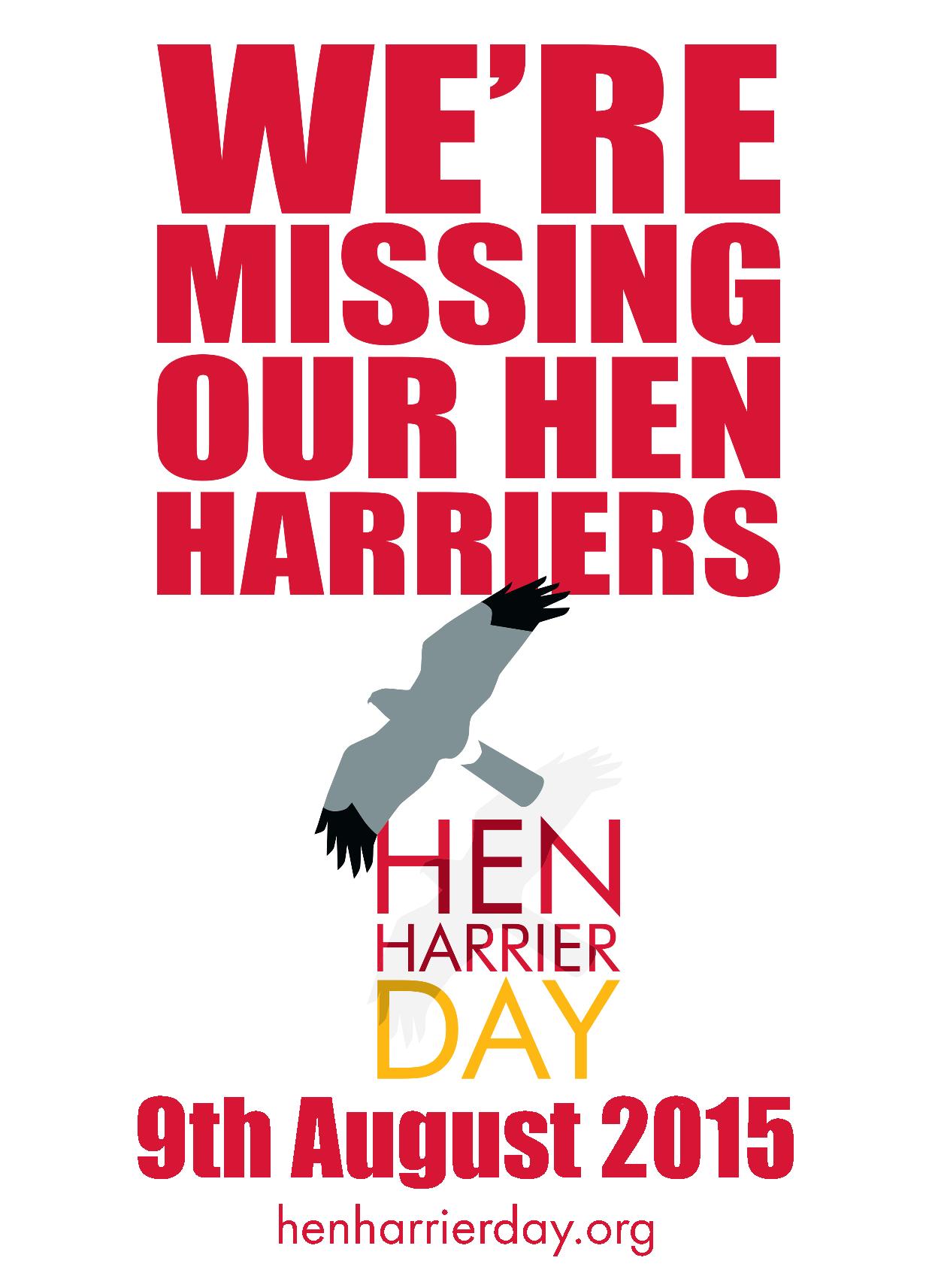
From my latest post you’ll know that this Sunday is Hen Harrier Day. Not only that but on Sunday a thunderclap will be sent out stating that we’re missing our Hen Harriers which has so far got a social reach of just over 5.5 million people which is amazing! Don’t forget to add your support by clicking here, it all helps!

As well as people meeting all around the UK to show their support, anger and make it clear that we won’t tolerate wildlife crime, there is also an evening event in Buxton tomorrow which I’m also sure will be great fun and inspirational too.

If you can’t make any of the events this weekend then there’s still plenty you can get on with that WILL make a difference. Even if it’s just posting a selfie with a ‘we’re missing our Hen Harriers’ poster on your Facebook and someone who knew nothing about the issue saw it, that’s one more person that’s now aware and could potentially show their support. Other ways you can help include…

Adding your name to the Thunderclap – https://www.thunderclap.it/projects/28786-hen-harrier-day-2015

Adding a twibbon to your profile photo on social media – http://twibbon.com/support/hen-harrier-day

Buy a Lush Hen Harrier bath bomb. They came out today and look amazing – https://www.lush.co.uk/products/bath-bombs/skydancer-far-madding-guns

Sign the petition against driven grouse shooting, already over 10,000 signatures! – https://petition.parliament.uk/petitions/104441

Post a selfie with the ‘We’re missing our Hen Harriers’ poster – http://henharrierday.org/gallery-missing.html

So, altogether, just get the message out there in any way you possibly can.

I also advise you listen to this superb Talking Naturally podcast featuring Charlie Moores and Chris Packham – http://www.rarebirdalert.co.uk/v2/content/talking_naturally.aspx?s_id=282761936

hen_harrier_day_poster_2015-page-001


You can read more about Hen Harrier Day, why it’s such an important day and much more on my latest blog, with a poem I wrote too – https://georgiaswildlifewatch.wordpress.com/2015/08/01/join-hen-harrier-day-2015/


Raptor ringing and monitoring in Wiltshire

Earlier this year I gave a talk at a workshop at the Bath Royal Literary and Scientific Institution, which was run by Dr Emily Joachim. When I met Emily she told me a lot about the work she does which sounded very interesting! Emily has been monitoring nest boxes for eight years. She has recently been awarded her C license for raptors and owls and was trained by a man called Nigel who set up a raptor and owl nest box project in 1983, I speak more about his work later on. She has completed a PhD on little owl breeding ecology so she’s a real expert! She decided to focus on little owls because they are rapidly declining and she wanted to learn more about their ecology. Few people study little owls in the UK. Emily is fascinated by raptors and studies and monitors barn owls, little owls, kestrels and tawny owls. She has recently set up a UK Little Owl Project which works to celebrate the species and encourage people to record their sightings, you can see more about it here – http://www.littleowlproject.uk/

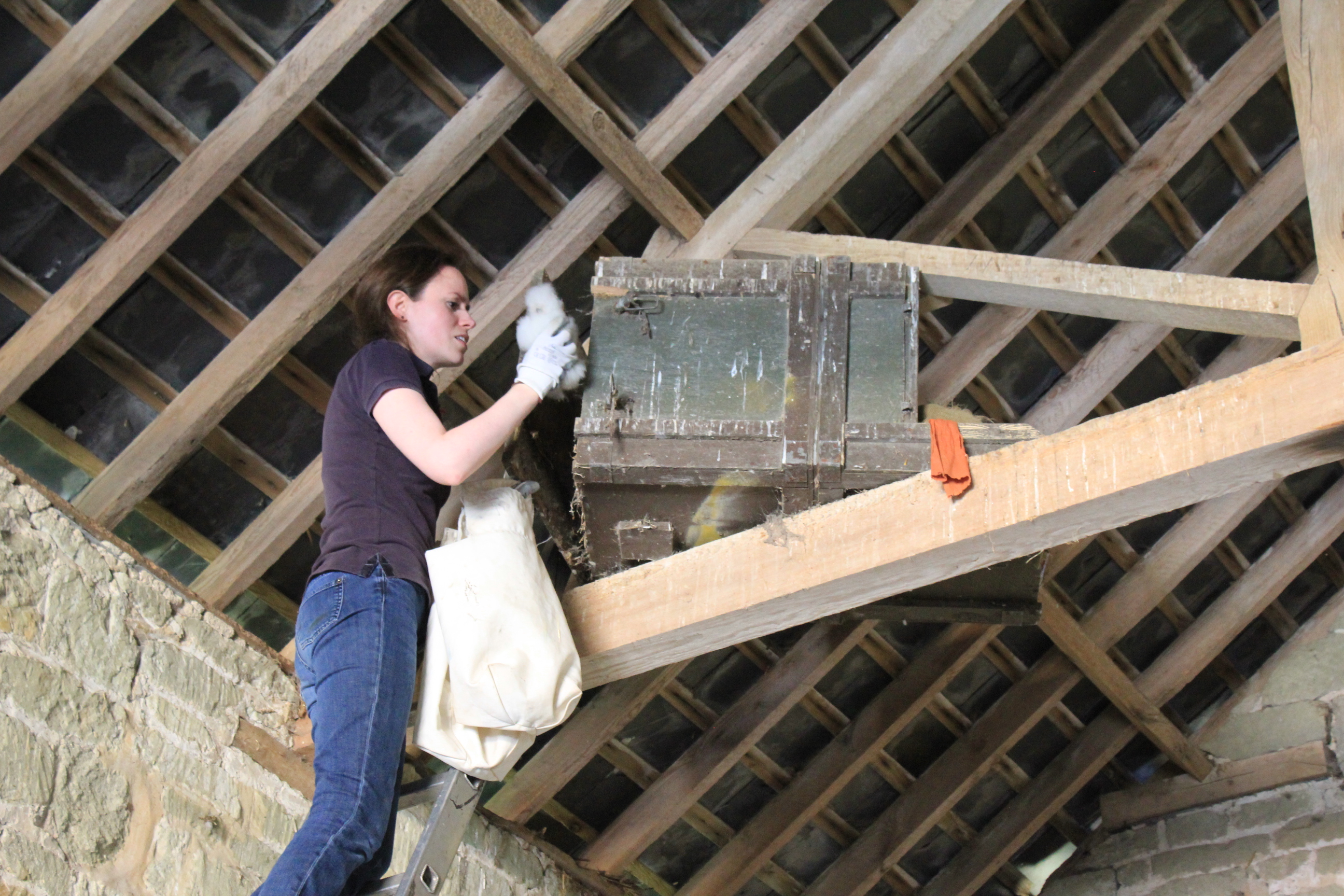
When I visited she also invited me to come out with her and some others, who are part of the team, later in the year to see what they do and get up to when spending the day ringing and monitoring raptors in the South Wiltshire area. Through the year they monitor and ring different birds at different times, altogether they check around 700 nests. First of all it’s the tawny owls in February, then kestrels in late March, little owls in late April then barn owls in May.  These are just the first checks. If they discover any signs of breeding they record the number of eggs then return later on in the year to ring the young, if the nest has been successful.  As I was visiting later on in the year, the day was all about ringing and monitoring barn owls however we did come across some late kestrels.

On Tuesday morning, we met with the man who runs the project, Nigel, before we all went out together to the first nesting site. Altogether there were four of us but Nigel is supported by a big team of dedicated volunteers. Major (Rtd) Nigel Lewis MBE initiated his raptor and owl nest box project in 1983. The project extends across south Wiltshire, south England. The project covers an area of 700km2. There are a total of 1100 nest boxes for barn owls, kestrels, little owls and tawny owls; 500 boxes are on the MOD land, Salisbury Plain Training Area.

During the breeding season the team spend 3-4 days a week monitoring nest sites. I joined them on one of these days which was a full day of hard work, not just a couple of hours! When we arrived at the first box we weren’t sure what to expect as it was a ‘lucky dip’ so hadn’t been checked this year. Quite surprisingly there were three kestrels in the box, this was unusual as it’s quite late for them. However they were in good condition and doing well. This was great to see as it was such a surprise and I wasn’t expecting to see any.

I’m told it is hugely satisfying to monitor the raptor nests, but can be difficult if there are a high number of nesting failures due to poor weather and low prey availability. This year there are low vole numbers and many pairs of barns owls have not bred. They’ve had a 100 pairs and the average brood size is only 1.2 chicks. As well as this they’ve had 60 pairs of kestrels use their boxes this year and the mean brood size is lower than average due to a shortage of food. Overall the average brood size is only 2.3 chicks. Little owls are also continuing to decline in Wiltshire. This year only 11 pairs used the boxes. They also had 30 pairs of tawny owls using their boxes this year.

After visiting the kestrel site we were then on our way to the next site where we checked three boxes. In one there was some eggs, another had an old jackdaw nest in then the last had an adult, which was already ringed, a chick then an egg which was rotten and hadn’t hatched. We had to empty the box with the jackdaw nest in as jackdaws fill the box up with sticks which would put of an owl nesting in there next year but if the jackdaw went back next year it could build the nest again in no time at all.

Whilst travelling around to the different sites we travelled across a lot of privately owned land to get to them. This was a great experience as we got to see areas of the countryside which many others won’t. I also felt privileged to be travelling around this this area of the country as the views were amazing. The team work with 100’s of landowners across south Wiltshire. Many manage habitat for wildlife and try to ensure that strips of rough grassland are kept for barn owls to hunt for their main prey, which is short-tailed voles.

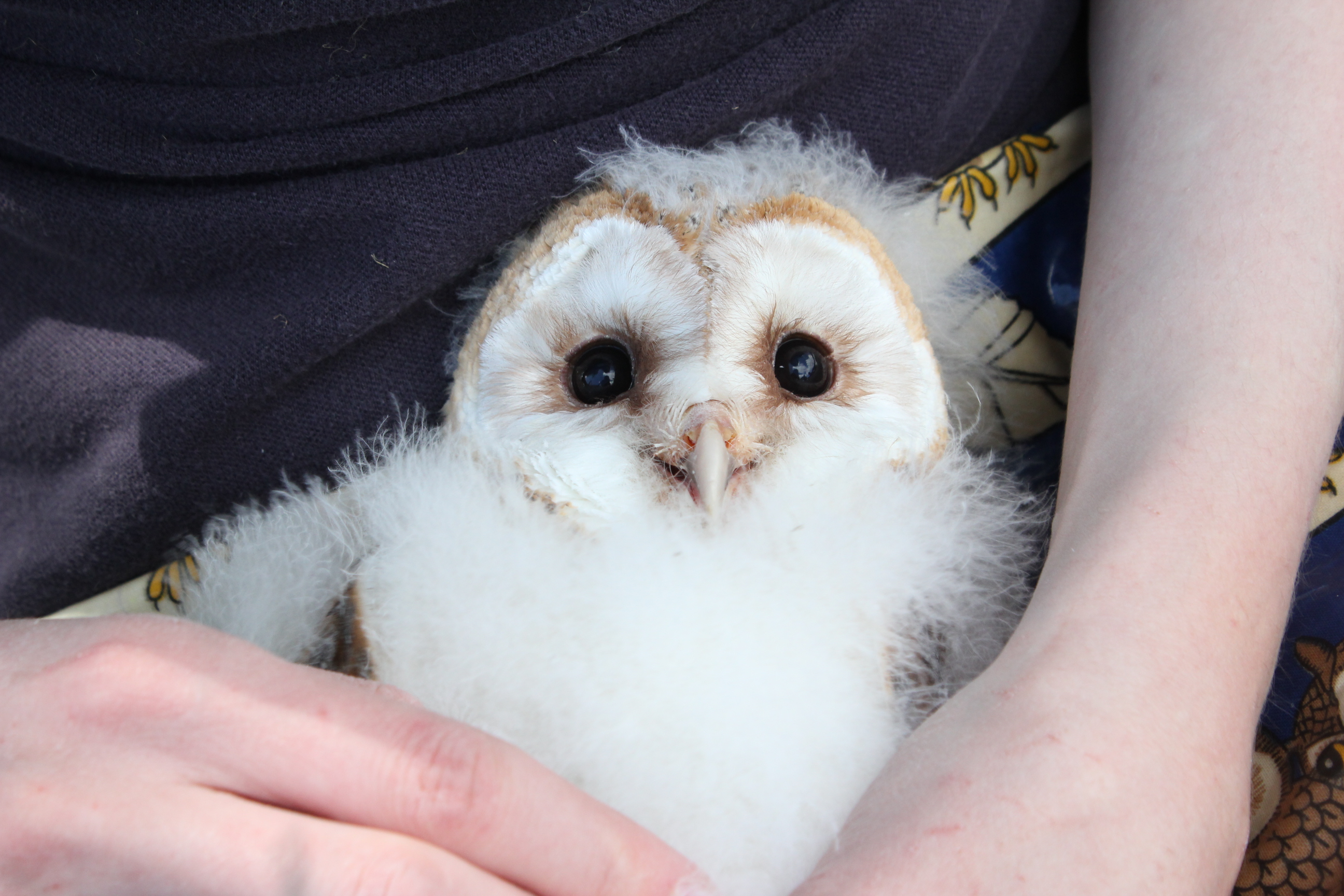
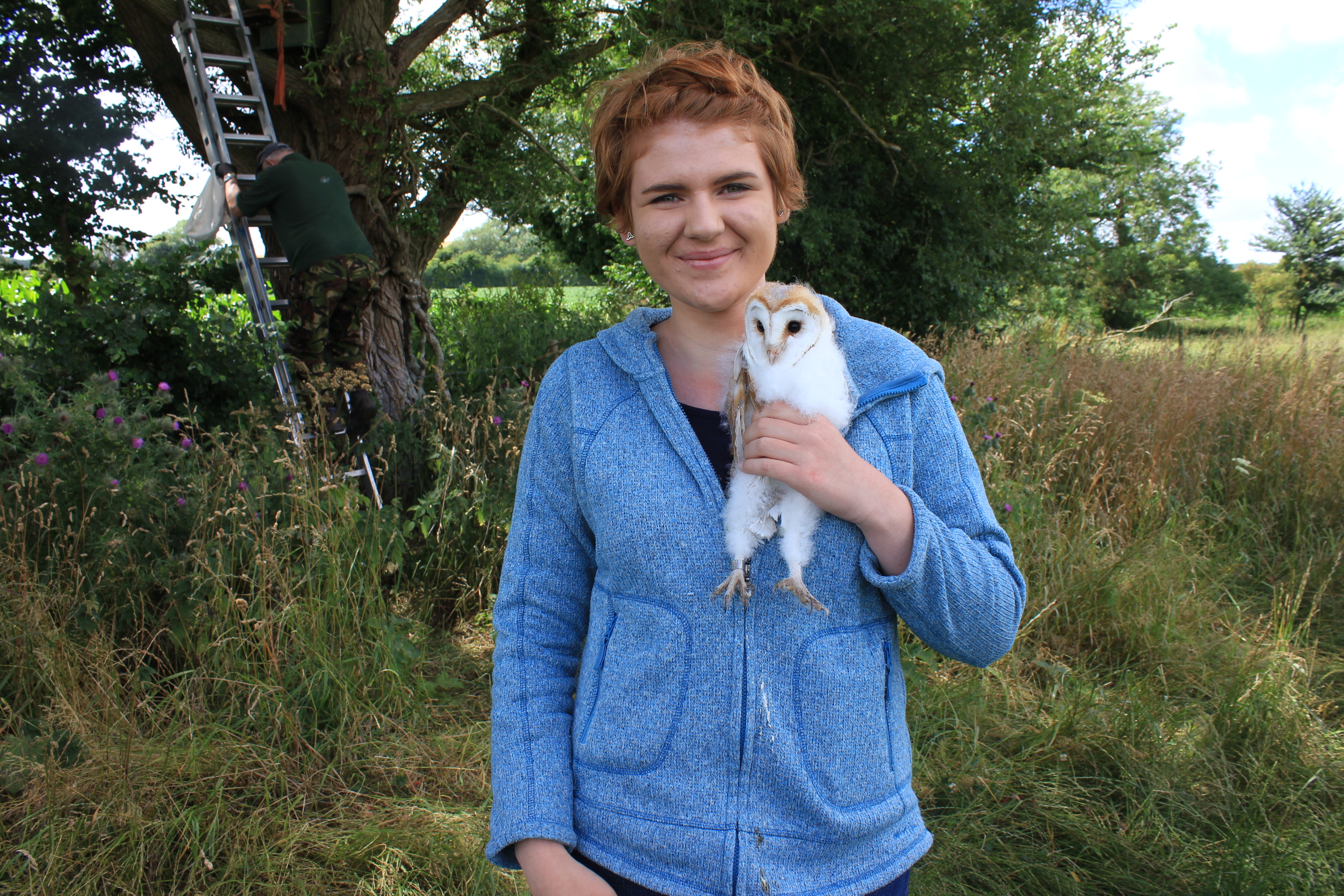
Throughout the day we visited 11 boxes at 9 different sites. They normally visit more but these were all at the edge of their study area so it took longer to travel. I got a brilliant first hand experience of the work they do which was fantastic and very inspiring. I also got a detailed view of the life of the barn owls, from how they look close up and small details like the parents brood patch to how their nests look. You can see some of the photos I took and what it was like below.

The volunteers were incredibly dedicated people who do some amazing work in the area and contribute to records from the rest of the UK. They send their records to the BTO.

Their nest box team won the MOD’s Silver Otter and Environmental Project Awards in 2014 and Nigel has won Wiltshire Life’s 2015 Outstanding Contribution to Conservation Award. Very well deserved for a fantastic project.

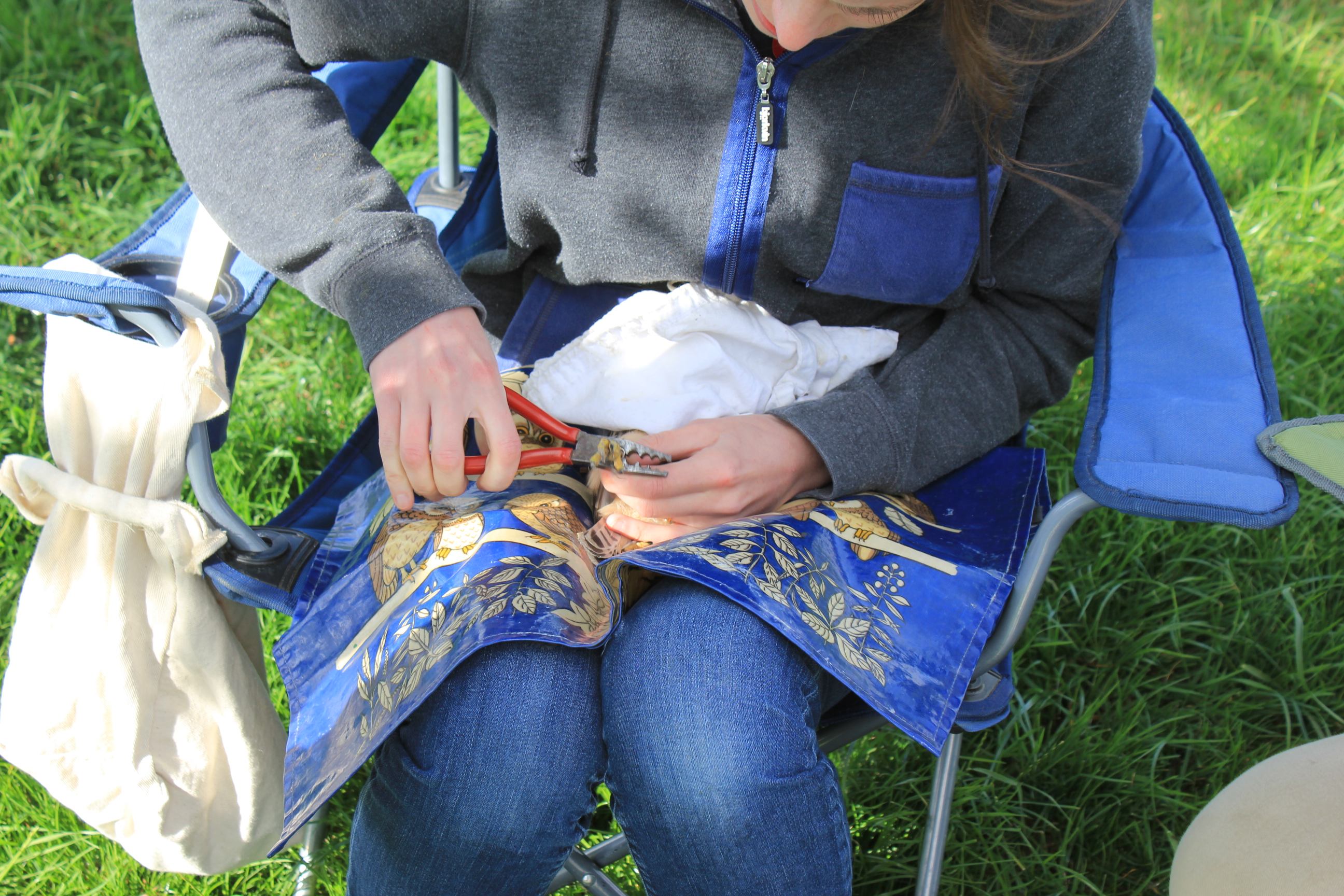
IMG_8201Emily ringing a kestrel.


IMG_8212

IMG_8217

Adult barn owl with young.

IMG_8223

The talons of a barn owl.
IMG_8230

The brood patch of an adult barn owl.

IMG_8231

IMG_8239

IMG_8248

IMG_8255

IMG_8267

IMG_8283

IMG_8299

On the way back we stopped off at the little owl area to change the camera and found two of this years young roosting in there.

A big thank you to Emily and the rest of the team for letting me come along!